Bhairav Battalion and Suryastra Debut Signal a New Era of India’s Battlefield Readiness

Bhairav Battalion and Suryastra Debut marked a powerful moment during the 77th Republic Day celebrations at Kartavya Path, as the Indian Army revealed two major additions that reflect a clear shift in its operational thinking. Instead of focusing only on ceremonial display, this year’s parade highlighted combat readiness, indigenous strength, and modern battlefield realities. The presence of new combat formations and advanced weapon systems sent a strong message about India’s evolving military doctrine and future direction.
Thank you for reading this post, don't forget to subscribe!The parade presented a picture of a force that is becoming faster, smarter, and more flexible. It also showcased how India is steadily building home-grown solutions to meet complex security challenges. From agile infantry units to long-range rocket systems, every element underlined the Army’s focus on practical warfighting capability.
A Parade That Spoke the Language of Modern Warfare
Unlike traditional parades that emphasise pageantry, the 77th Republic Day parade reflected a more operational tone. Army columns and platforms moved in phased battle arrays, representing how troops and equipment would actually deploy in real combat situations. This approach offered a glimpse into how the Indian Army plans and executes missions, from reconnaissance and surveillance to firepower and logistics support.
The overall theme highlighted a military that is no longer preparing only for set-piece battles, but for fast-moving, multi-domain operations across mountains, deserts, plains, and urban spaces. This shift mirrors global trends in modern warfare, where speed, precision, and adaptability matter as much as numbers.
Bhairav Light Commando Battalion Steps Forward
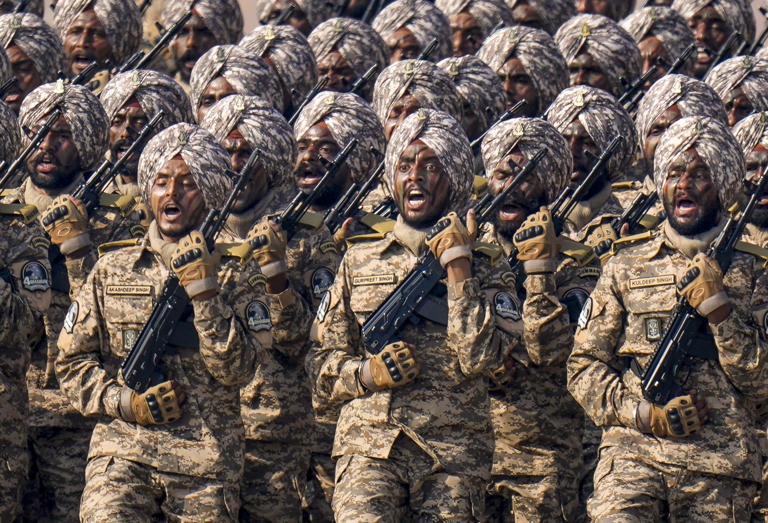
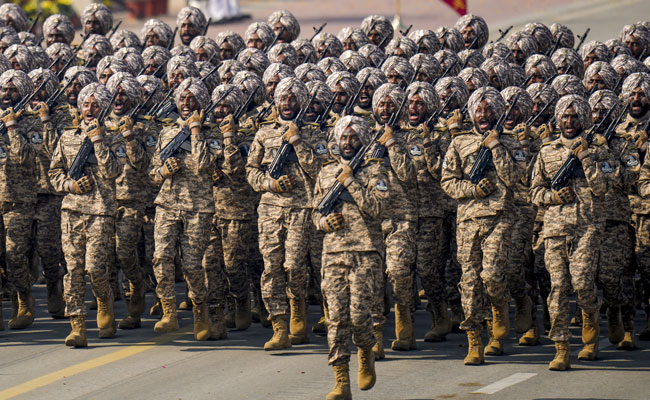
One of the most striking moments of the parade was the first public appearance of the Bhairav light commando battalion. Raised in October 2025, the 4 Bhairav Battalion of the Sikh Light Infantry Regiment has been created to fill a critical operational gap.
This battalion is designed to bridge the space between conventional infantry and special forces. While regular infantry units focus on holding ground and large-scale operations, and special forces specialise in covert, high-risk missions, the Bhairav battalion sits in between. It is meant for swift, high-intensity tasks that demand speed, surprise, and strong combat skills.
The battalion is trained to operate in small, agile teams capable of rapid insertion and extraction. Its soldiers are prepared for missions such as:
- Quick assaults on key enemy positions
- Raids behind enemy lines
- Counter-terror operations
- Specialised reconnaissance
By creating such units, the Army gains greater flexibility in choosing the right force for the right mission. This reduces overdependence on special forces and improves overall operational efficiency.
Designed for Tough Terrain and Fast Action
India’s security environment includes high mountains, dense forests, deserts, and long borders. The Bhairav light commando battalion is structured to perform effectively in all these conditions. Soldiers are equipped with lighter gear, advanced personal weapons, and modern communication systems that allow them to move fast and stay connected.
Their training focuses on endurance, close-quarter combat, marksmanship, and battlefield awareness. This makes them suitable for sudden deployment during crises, where time and precision are crucial.
The public unveiling of this battalion signals that India is investing in smaller, more capable units that can deliver strong results without large troop movements.
Suryastra Rocket System Showcases Indigenous Firepower
Another major highlight of the parade was the first public display of the Universal Rocket Launcher System, known as ‘Suryastra’. This system represents a significant leap in India’s indigenous artillery development.
Suryastra is India’s first universal multi-calibre long-range rocket launcher. It has been designed to launch different types of rockets and missiles from a single platform, giving commanders greater flexibility on the battlefield.
The system is capable of delivering precision surface-to-surface strikes at ranges of 150 kilometres and 300 kilometres. Such reach allows Indian forces to target enemy assets deep inside hostile territory without moving too close to the front line.
One Launcher, Many Options
Traditional rocket systems are usually designed for specific types of rockets. Suryastra breaks this limitation by allowing multiple rocket and missile variants to be integrated on the same launcher.
This means the Army can:
- Switch between different calibres depending on mission needs
- Use both guided and unguided munitions
- Adapt quickly to changing battlefield conditions
This flexibility reduces logistical complexity and improves responsiveness during combat. It also enhances survivability, as launchers can fire quickly and relocate before enemy counter-fire.
Strengthening Artillery Modernisation
The introduction of Suryastra fits into India’s larger push to modernise its artillery arm. Over the past few years, the Army has focused on replacing older systems with advanced, indigenous platforms.
Long-range rocket artillery plays a vital role in modern warfare by suppressing enemy defences, destroying supply lines, and supporting advancing troops. With Suryastra, India gains a powerful tool that combines range, accuracy, and adaptability.
The system also highlights the success of India’s defence manufacturing ecosystem, which is increasingly capable of delivering complex weapon systems.
Scouts and Cavalry Embrace Combat Look
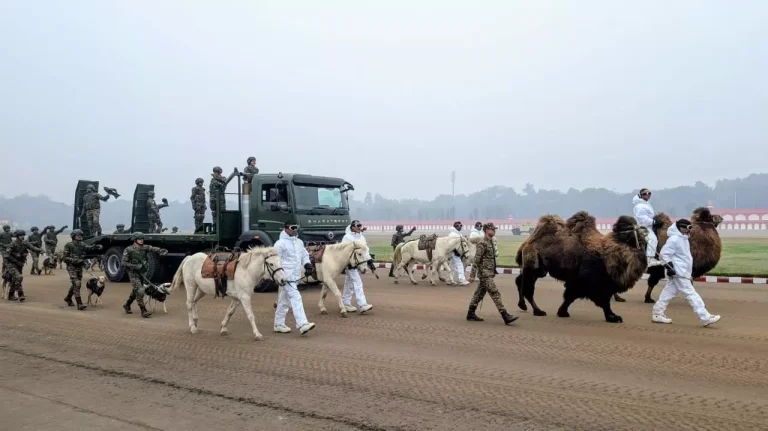
The parade also featured a mixed scouts contingent wearing heavy thermal combat gear. Led by Lieutenant Amit Choudhary of the 2 Arunachal Scouts, this group represented elite infantry units trained for high-altitude surveillance and frontier reconnaissance.
Their appearance underlined the importance of specialised troops who operate in extreme cold and rugged terrain. These units play a crucial role in monitoring border areas and providing early warning of enemy movement.
In another significant change, the mounted contingent of the 61 Cavalry appeared in full battle gear instead of traditional ceremonial dress. This symbolised a shift from purely ceremonial roles to a focus on operational relevance, even in long-standing regiments.
Battlefield Realism in Every Detail
Army vehicles and equipment moved in formations that mirrored actual combat deployment. Reconnaissance elements led the way, followed by fighting units and logistics support. This visual presentation gave spectators a clearer idea of how modern military operations are structured.
Such realism reflects an Army that wants to communicate its readiness and seriousness about contemporary warfare. It also sends a strong signal to both domestic and international audiences about India’s growing military capability.

Republic Day Ceremony and Global Attention
The celebrations began with a cultural performance themed “Vishwaguru Bharat – Ek Bharat Shreshtha Bharat,” highlighting India’s unity and global outlook. President Droupadi Murmu presided over the ceremony, unfurled the National Flag, and received the salute.
A 21-gun salute was fired using indigenous 105-mm Light Field Guns, further reinforcing the emphasis on home-grown defence equipment.
The presence of European Council President Antonio Costa and European Commission President Ursula von der Leyen added international prominence to the event. Their attendance reflected global interest in India’s strategic transformation.
A Clear Message of Transformation Through Bhairav Battalion and Suryastra Debut
From the unveiling of new combat formations to the display of advanced indigenous weapon systems, the parade communicated one clear idea: the Indian Army is changing to meet future challenges.
Bhairav Battalion and Suryastra Debut together represent this transformation. One strengthens the human element of combat through agile, specialised soldiers. The other enhances firepower with long-range, flexible, and precise artillery.
Together, they point towards an Indian military that is more agile, more self-reliant, and better prepared for the complex nature of modern conflict.