Bactrian Camels Republic Day Debut Showcases Ladakh’s Living Heritage and Strategic Strength

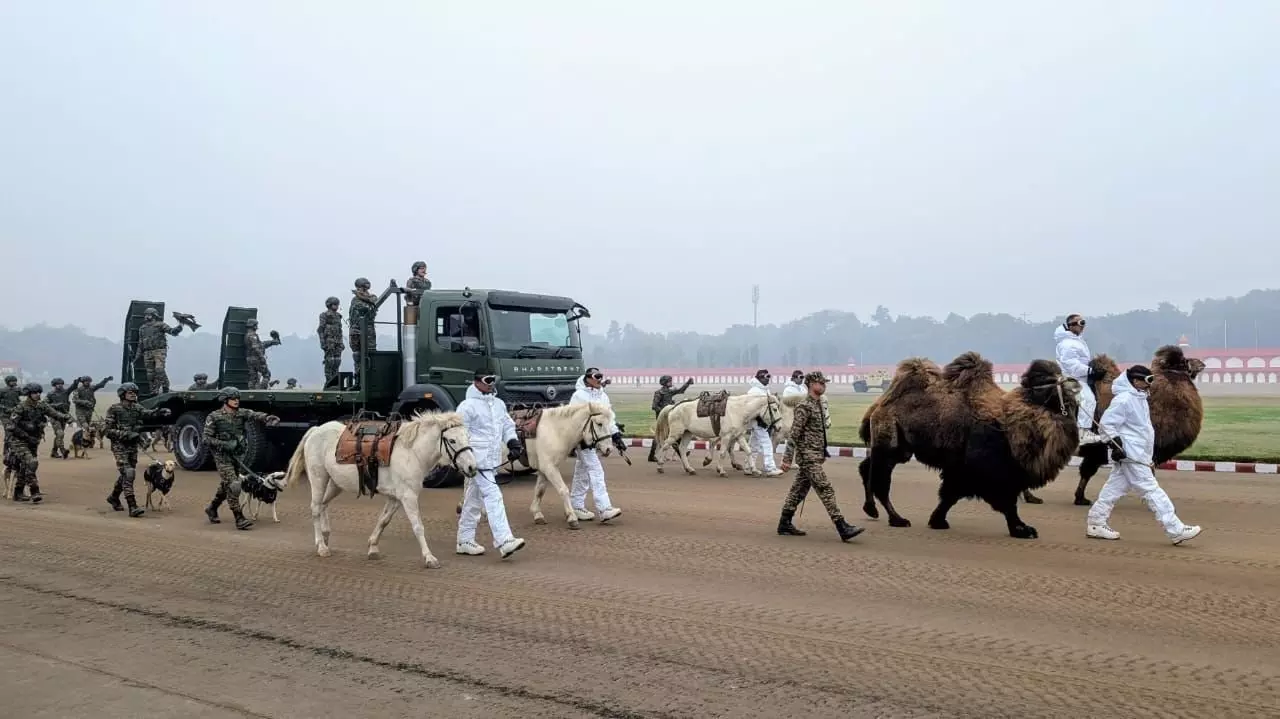
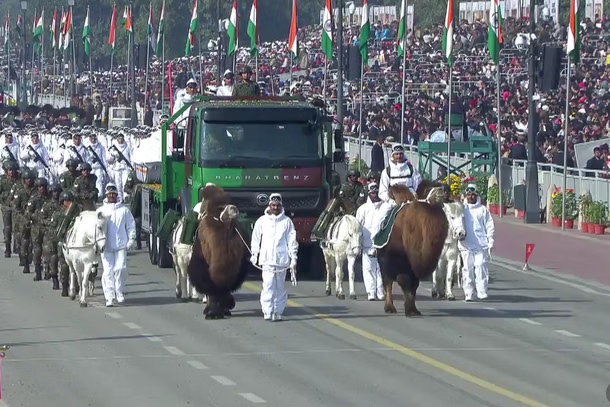
Bactrian Camels Republic Day Debut became one of the most memorable moments of India’s Republic Day Parade when two double-humped camels from Ladakh proudly marched down Kartavya Path. Named Galwan and Nubra, these rare animals were not just part of a ceremonial display. Their presence carried deep meaning, highlighting a unique Himalayan species, its historical importance, and its growing relevance in India’s border and logistics strategy.
Thank you for reading this post, don't forget to subscribe!For the first time in the nation’s history, these cold-desert camels stood alongside modern military equipment and marching contingents, sending a powerful message about how tradition, nature, and national security can work together.
A Rare Sight from the Cold Desert of Ladakh
Bactrian camels, locally called Mundri camels, are native to the cold deserts of Ladakh. Unlike the more common single-humped dromedary camels found in hot deserts, Bactrian camels have two humps and are built for icy, high-altitude environments.
India is home to only about 365 of these camels, and most of them live in the Nubra Valley. This makes their appearance in the Republic Day Parade even more special. Many people across the country had never seen a Bactrian camel before, making the moment both educational and inspiring.
Their calm walk along Kartavya Path symbolised resilience and survival in some of the harshest landscapes on Earth.
Built to Survive Where Machines Struggle
Life in Ladakh is not easy. Temperatures can fall below minus 30 degrees Celsius in winter, oxygen levels are low, and vegetation is scarce. Yet Bactrian camels thrive in these conditions.
Their thick fur protects them from freezing winds, while their wide, strong feet help them walk over snow, sand, and rocky ground. They can travel 10 to 12 kilometres a day at heights of 14,000 to 15,000 feet, carrying heavy loads with ease.
Each camel can carry around 150 kilograms, and during trials, some were shown to handle even heavier loads. Their ability to function in such extreme environments makes them a natural choice for difficult terrain where vehicles often fail.

The Science Behind Their Two Humps
The two humps of Bactrian camels are one of their most fascinating features. These humps store fat, not water. The fat acts as an energy reserve, allowing the camel to survive without food for two to three weeks if necessary.
As the stored fat is used, the humps slowly shrink, showing how the animal is drawing on its internal energy supply.
These camels can also tolerate temperatures as low as minus 40 degrees Celsius. In winter, they sometimes eat snow to meet their water needs. Their bodies are designed to conserve moisture, making them highly efficient survivors.
Tested for Modern Military Needs
India’s Defence Institute of High Altitude Research (DIHAR), which works under the Defence Research and Development Organisation (DRDO), has conducted extensive trials on Bactrian camels.
These trials were carried out at altitudes of around 17,000 feet to study how well the camels perform under real operational conditions. The results were impressive. Bactrian camels were able to carry loads of up to 170 kilograms and showed better endurance in certain terrains compared to mules and ponies.
Based on these findings, standard procedures have been created for their feeding, healthcare, breeding, and load management. This ensures that the animals can be used safely and effectively in high-altitude areas.
Silent Partners in Border Logistics
In modern warfare, advanced vehicles, drones, and helicopters play a major role. Yet animals still hold an important place, especially in mountainous border regions.
Bactrian camels offer several advantages. They do not need fuel, cannot be jammed electronically, and make very little noise. This makes them useful for transporting supplies quietly in sensitive areas.
Along the Line of Actual Control, where terrain is rugged and weather unpredictable, such qualities are invaluable. The camels’ presence at the parade highlighted how India combines traditional methods with modern technology to strengthen its defence capabilities.
A Link to the Ancient Silk Route
Long before roads and railways existed, Bactrian camels were the backbone of trade across Central Asia. They carried silk, tea, spices, metals, and other goods along the 6,400-kilometre Silk Route, connecting China, Mongolia, Central Asia, and India.
Their ability to travel long distances through deserts and mountains made global trade possible centuries ago.
By featuring these camels in the Republic Day Parade, India paid tribute to this rich historical legacy. It reminded people that the same animals which once supported ancient trade routes are still serving the nation in new ways.
Raising Awareness About a Rare Species
The parade appearance also drew attention to the fragile status of Bactrian camels in India. With such a small population, conservation is essential.
Local communities in Nubra Valley have traditionally cared for these animals, using them for transport and tourism. Increased awareness can encourage better protection, breeding programs, and support for herders who maintain this living heritage.
Seeing Galwan and Nubra on a national stage helped spark interest in preserving this unique species.
Bactrian Camels Republic Day Debut: Pride, Heritage, and Practical Value
The Bactrian Camels Republic Day Debut was more than a visual highlight. It represented the spirit of endurance, adaptation, and quiet strength.
These camels stand as symbols of Ladakh’s harsh beauty, India’s ancient trade history, and the practical realities of defending difficult borders. Their slow, steady march alongside soldiers and modern equipment showed that progress does not always mean replacing the old. Sometimes, it means recognising the lasting value of what has worked for centuries.
As India continues to balance tradition with innovation, the presence of Bactrian camels on Kartavya Path will be remembered as a powerful reminder that nature, culture, and national security can walk forward together.