Arunachal New Plant Species: Rare Flowering Plant Discovered in Eastern Himalayas

Arunachal New Plant Species has once again drawn national attention to the rich and largely unexplored biodiversity of India’s northeastern frontier. Scientists have formally documented a new flowering plant species from Arunachal Pradesh, underlining the ecological importance of the region and the value of continued botanical research in remote landscapes. The discovery not only adds to India’s growing list of native plant species but also highlights how much remains unknown about the flora of the Eastern Himalayas.
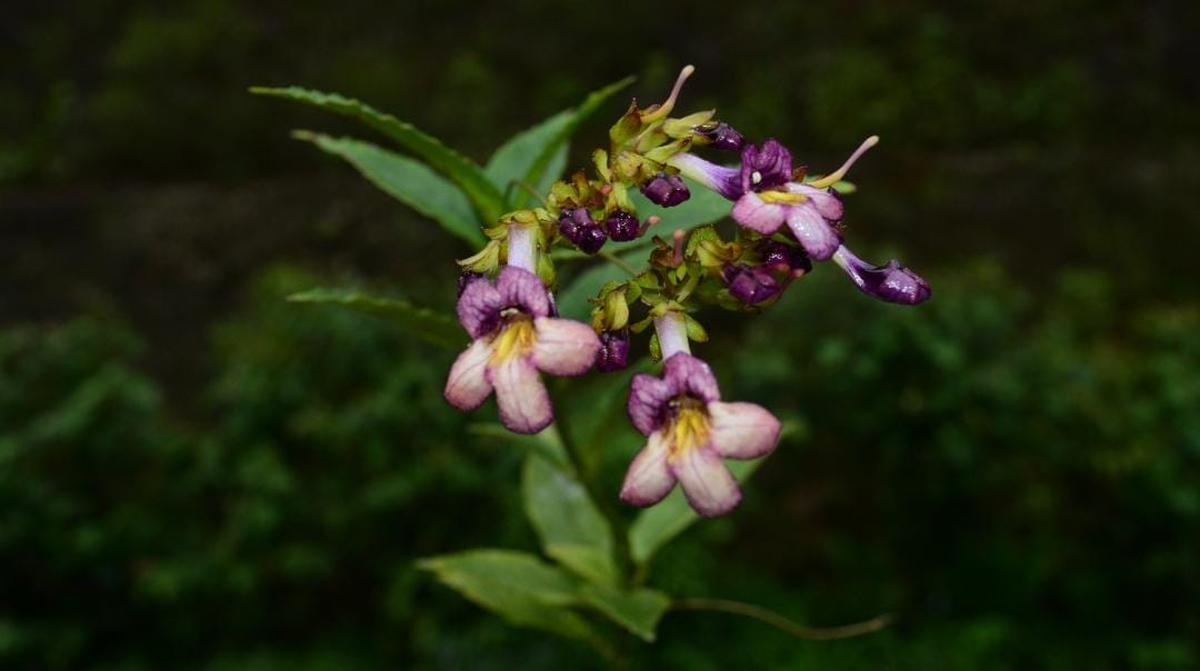
Thank you for reading this post, don't forget to subscribe!This newly identified species, named Strobilanthes riteshii, belongs to the family Acanthaceae and was recorded from East Kameng district. The finding reinforces Arunachal Pradesh’s reputation as one of the most species-rich states in India, home to forests, mountains, rivers, and valleys that support remarkable plant and animal diversity.
Discovery in East Kameng District
The new species was discovered during floristic surveys carried out at Chayangtajo in East Kameng district. The research team included scientists from the Botanical Survey of India (BSI), Arunachal Pradesh Regional Centre, along with experts from the Agharkar Research Institute.
Floristic surveys involve detailed fieldwork where scientists explore different habitats, collect plant specimens, and study their physical features. During one such survey, researchers noticed a flowering plant that showed clear differences from known species of the genus Strobilanthes. After careful examination and comparison with existing records, the plant was confirmed as a new species.
So far, Strobilanthes riteshii is known only from this single location. This limited distribution suggests that the plant may have a very narrow range, making it especially important to study and protect.
Arunachal Pradesh: A Biodiversity Treasure
Arunachal Pradesh lies within the Eastern Himalaya biodiversity hotspot, one of the most biologically rich regions on Earth. The state’s wide range of altitudes, from lowland forests to high mountains, creates many different ecosystems. These conditions allow thousands of plant species to thrive, many of which are found nowhere else.
Despite this richness, large parts of Arunachal Pradesh remain under-explored due to difficult terrain and limited access. Each new discovery, such as this Arunachal new plant species, shows that many more unknown plants may still exist in these forests.
The state is already known for hosting rare orchids, medicinal herbs, and wild relatives of crop plants. The addition of Strobilanthes riteshii strengthens the scientific understanding of the region’s floral diversity.
Habitat and Growing Conditions
Researchers found that Strobilanthes riteshii grows at an elevation of around 1,600 metres above sea level. It thrives along open hill slopes and roadsides, especially near small waterfalls and streams. These areas are usually part of evergreen forest patches, where moisture levels remain high throughout the year.
The plant flowers between August and October, producing attractive blooms that help distinguish it from related species. Fruiting occurs from September to December, when seeds develop and disperse.
Such specific habitat requirements mean that the species depends heavily on stable environmental conditions. Changes in water flow, forest cover, or land use could affect its survival.
Unique Botanical Features
Although the plant belongs to the well-known genus Strobilanthes, it has a combination of characteristics that set it apart. Differences in leaf shape, flower structure, and other morphological features helped scientists identify it as a separate species.
The genus Strobilanthes is known for its diversity in India, with many species occurring in the Himalayas and northeastern states. Some members of this genus are famous for their mass flowering events, while others are valued for their ecological and ornamental importance.
The careful documentation of physical traits ensures that future researchers can correctly identify the species in the wild and distinguish it from similar plants.
Naming the Species
The plant has been named Strobilanthes riteshii in honour of Dr Ritesh Kumar Choudhary, a plant taxonomist at the Agharkar Research Institute. He has made significant contributions to the fields of plant taxonomy and molecular systematics.
Naming new species after scientists is a long-standing tradition in biology. It recognises their dedication to expanding knowledge and encourages further research in taxonomy, the science of classifying living organisms.
This naming also reflects the collaborative nature of modern scientific discovery, where institutions and experts work together to uncover new knowledge.
Conservation Status and Concerns
Based on current information, Strobilanthes riteshii has been given a provisional status of “Data Deficient” under the IUCN Red List criteria. This means there is not enough data to determine whether the species is threatened, endangered, or relatively secure.
The Data Deficient status highlights the need for additional field surveys to locate more populations and estimate population size. It also calls for studies to identify possible threats such as habitat loss, road construction, and forest disturbance.
Since the species is known only from a single location, even small changes in land use could have serious consequences. Protecting natural habitats in East Kameng district will therefore play a crucial role in safeguarding this Arunachal new plant species.
Importance of Continued Exploration
Discoveries like Strobilanthes riteshii show that systematic botanical exploration remains essential. Many areas of the Eastern Himalayas have not been thoroughly surveyed, and new species continue to be found every year.
Such findings have wider importance beyond academic interest. Plants can have medicinal properties, ecological roles, or potential uses in agriculture and horticulture. Understanding plant diversity also helps scientists study climate change, ecosystem health, and evolutionary processes.
The detailed research on this species, including its morphological description, genetic analysis, and photographs, has been published in the Indian Journal of Forestry. This provides a reliable scientific record and serves as a reference for future studies.
A Step Forward for Indian Botany
The discovery of this Arunachal new plant species adds another chapter to India’s rich natural history. It reminds us that even in the 21st century, nature still holds many secrets waiting to be uncovered.
As researchers continue to explore remote regions and document their findings, each new species strengthens the case for conserving forests and supporting scientific institutions. Protecting biodiversity today ensures that future generations can learn from, benefit from, and appreciate the natural heritage of regions like Arunachal Pradesh.