BRICS Environment Meetings 2026

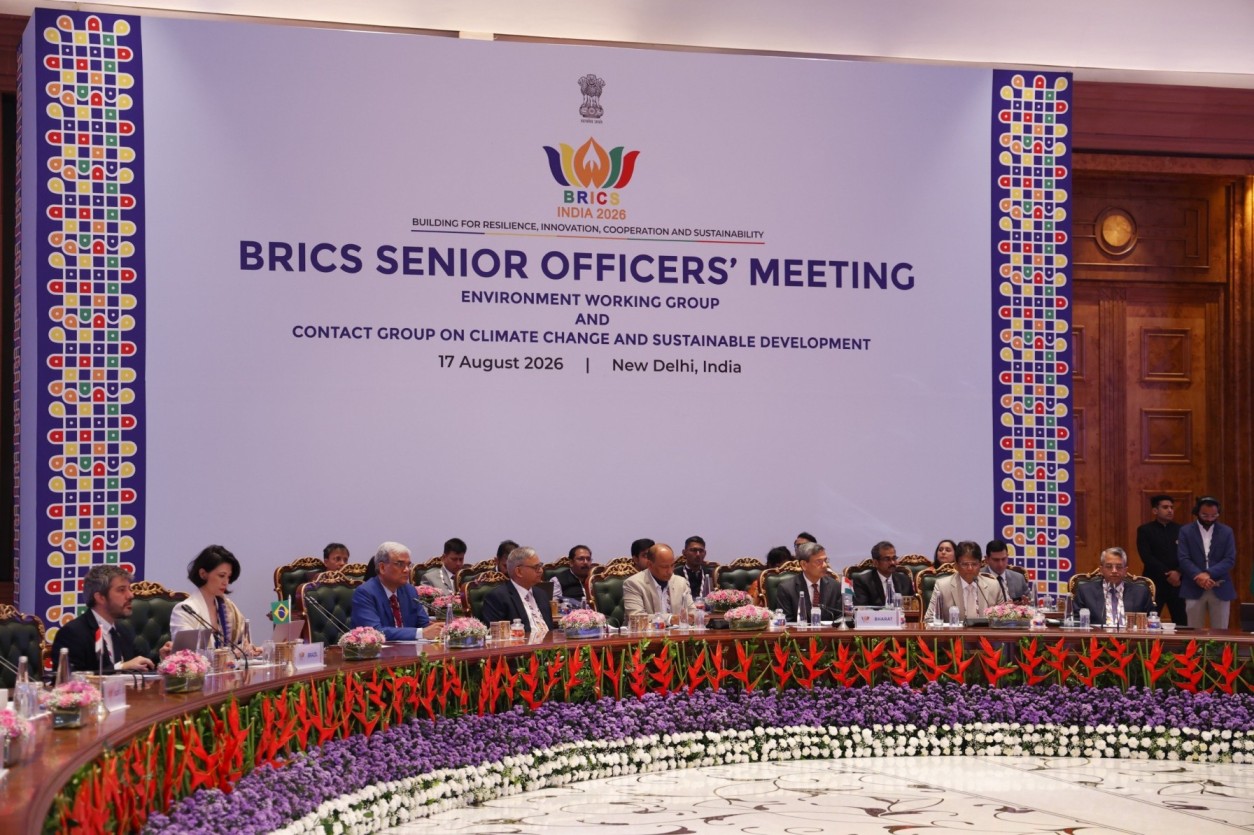
BRICS Environment meetings are being hosted by India in New Delhi on August 17 and 18, 2026, bringing senior officials and environment ministers together to discuss climate action, sustainable development and environmental cooperation. The meetings are part of India’s BRICS Chairship for 2026, which is being guided by the theme “Building for Resilience, Innovation, Cooperation and Sustainability.” India has made climate change, biodiversity, disaster resilience and sustainable development important areas of cooperation during its chairship.
Thank you for reading this post, don't forget to subscribe!Meetings at Bharat Mandapam
The BRICS environment discussions are being held at Bharat Mandapam in New Delhi. The programme includes the meeting of senior officials under the BRICS Environment Working Group and discussions through the Contact Group on Climate Change and Sustainable Development.
The environment ministers’ meeting is expected to provide a platform for BRICS countries to exchange views on common environmental challenges and explore practical areas of cooperation. Climate-related risks, increasing pressure on natural resources and the need for sustainable development have become important issues for developing economies.
India’s 2026 BRICS programme includes cooperation across several areas, with environment and climate change forming one of the important thematic tracks under the country’s chairship.
India’s BRICS Chairship and Green Priorities
India assumed the BRICS Chairship for 2026 on January 1 and is using the four broad ideas of resilience, innovation, cooperation and sustainability to shape its programme. The theme was officially presented when India launched its BRICS 2026 logo, theme and website in January.
In the environment sector, discussions are expected to focus on issues that affect both economic development and the natural environment. These include climate adaptation, sustainable lifestyles, forest protection, disaster resilience and better use of resources.
Such cooperation is becoming more important as countries face heatwaves, floods, forest fires, water stress and other climate-related challenges. BRICS countries have different economic structures and environmental conditions, but many face similar problems related to sustainable growth.

Focus on Climate Change and Sustainable Development
The Contact Group on Climate Change and Sustainable Development provides a platform for cooperation on climate-related matters within BRICS. Its work connects environmental protection with wider development goals.
Climate change is no longer only an environmental issue. It can affect agriculture, food security, water supplies, cities, energy systems and public infrastructure. For developing countries, adapting to changing weather patterns while continuing economic growth is a major challenge.
The New Delhi meetings therefore come at a time when international cooperation on climate action remains important. BRICS countries can share experiences in areas such as renewable energy, climate-resilient infrastructure, sustainable agriculture and efficient use of natural resources.
Forests and Disaster Resilience
Forest protection and fire management are also important parts of environmental cooperation. Forests help store carbon, protect biodiversity, support communities and regulate water systems. At the same time, rising temperatures and changing weather conditions can increase the risk of forest fires in several regions.
Disaster resilience is closely linked to these concerns. Stronger early-warning systems, better infrastructure and improved emergency planning can help communities deal with floods, storms, heatwaves and other extreme events.
India has already identified disaster risk reduction as an important area of cooperation across its wider BRICS programme. The country’s chairship has also highlighted resilience in agriculture, health, energy and supply chains.
Circular Economy and Sustainable Growth
Another major area connected with environmental discussions is the circular economy. Unlike the traditional model of taking resources, making products and throwing them away, a circular economy aims to keep materials in use for longer through recycling, reuse, repair and better resource management.
This approach can reduce waste and pressure on natural resources while creating opportunities for new industries and jobs. Cooperation among BRICS countries could help in sharing technologies, policies and practical methods for improving resource efficiency.
BRICS Cooperation on Environmental Issues
Environmental cooperation is not new within BRICS. The BRICS Environment Working Group was established in 2015 to strengthen cooperation on environmental matters. Earlier BRICS environment meetings have covered climate change, biodiversity, sustainable consumption and production, pollution control and other environmental challenges.
India’s 2026 chairship gives these discussions a fresh focus as the group works on resilience, innovation and sustainability. The New Delhi meetings are expected to contribute to the broader BRICS agenda and strengthen cooperation on environmental challenges that increasingly affect economies and communities across the world.