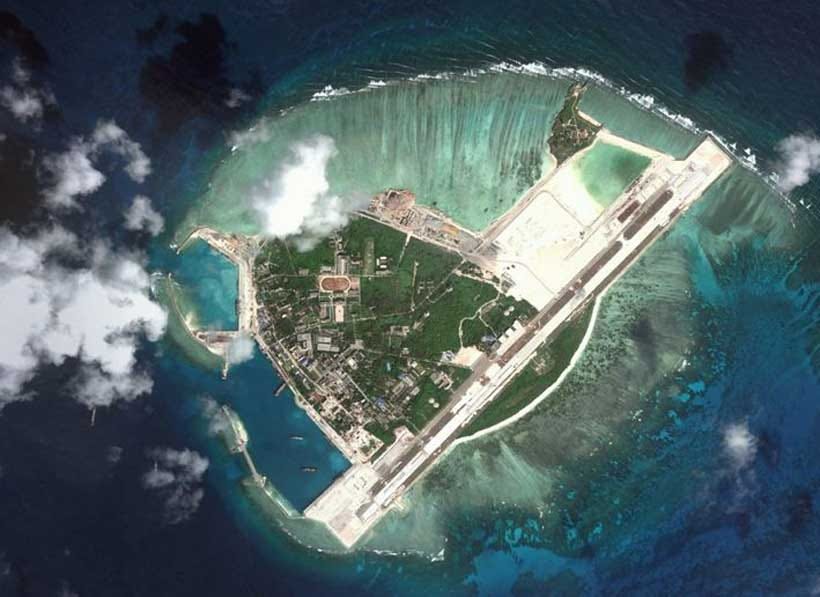
China Floating Artificial Island: Major Deep-Sea Project Sparks Global Attention

China Floating Artificial Island has become a major topic of global discussion after China officially began constructing a massive mobile floating platform designed for long-term deep-sea operations. Expected to be fully functional by 2028, this advanced structure is being seen as one of the most ambitious maritime projects ever undertaken. With its nuclear-resistant design, long operational endurance, and planned presence in the South China Sea, the floating island carries both scientific and geopolitical significance.
Thank you for reading this post, don't forget to subscribe!China states that the project is aimed at enhancing deep-sea research, ocean monitoring, and marine technology. However, its scale, durability, and strategic location have led to increased global curiosity and concern over its potential dual-use capabilities.
A New Kind of Maritime Base
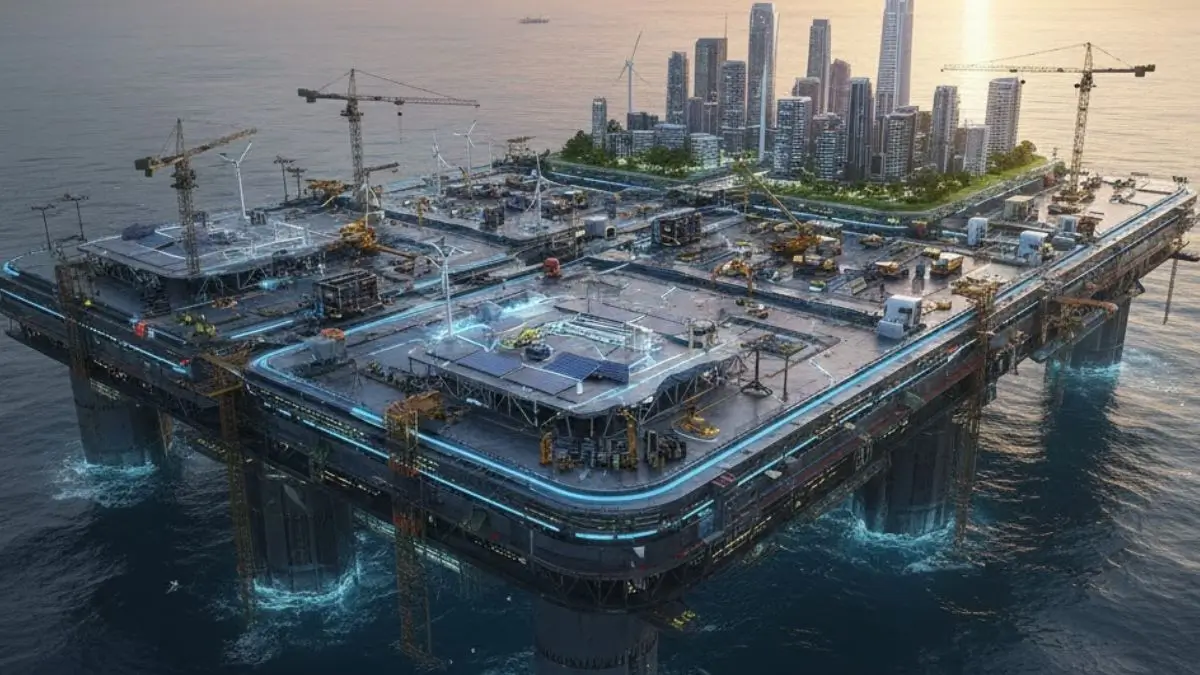
The China Floating Artificial Island is formally known as the Deep-Sea All-Weather Resident Floating Research Facility. It is being built to function as a long-term floating base capable of remaining at sea for extended periods without the need for resupply. Designed to act almost like a mobile ocean city, it blends advanced engineering, ocean science, and strategic planning into a single massive structure.
Weighing nearly 78,000 tonnes, the platform is comparable to the displacement of large aircraft carriers. This gives it extraordinary stability and the ability to support a vast range of operations from scientific missions to potential strategic deployments.
Design and Technical Structure
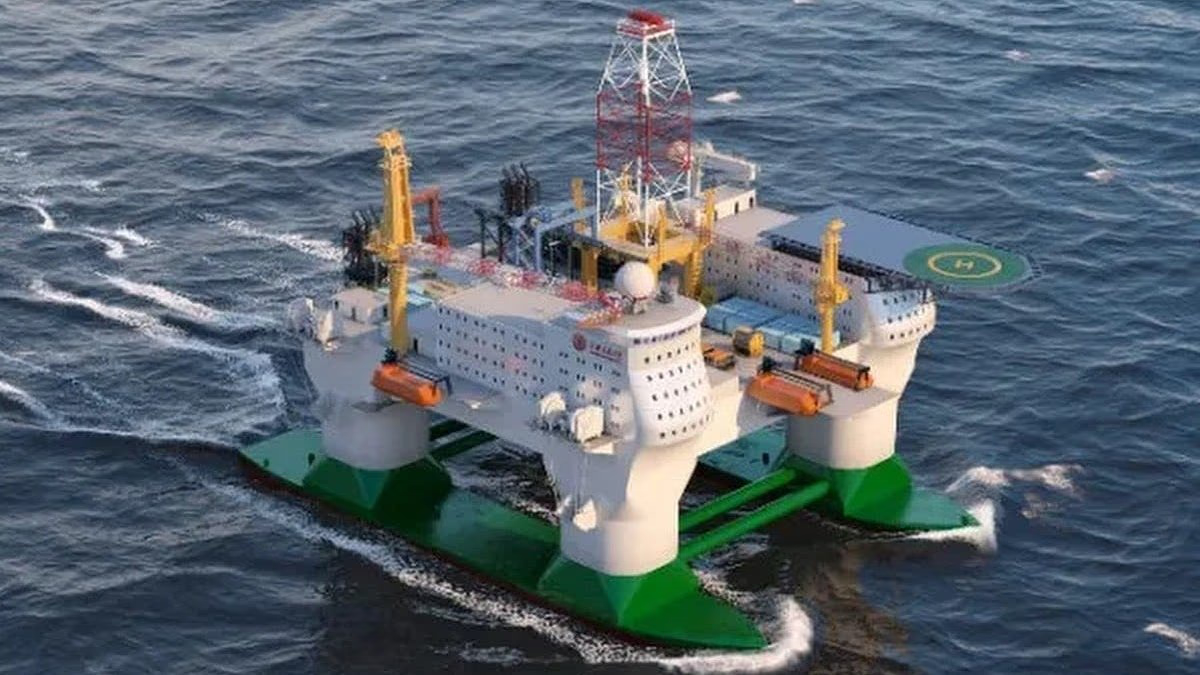
The core of the China Floating Artificial Island is its semi-submersible twin-hull design. This structure is widely used for offshore rigs and deep-sea vessels because of its superior ability to withstand rough waters, strong winds, and severe waves.
Key structural details include:
- Length: 138 metres
- Width: 85 metres
- Deck height: 45 metres above sea level
- Personnel capacity: 238 people
- Endurance: Up to 120 days without external support
This endurance is especially noteworthy. Many naval vessels including some nuclear-powered carriers cannot maintain sea operations for such a long continuous period. The floating island is being engineered with strong foundations, large living spaces, laboratories, communication hubs, and emergency systems. Because of its semi-submerged structure, much of its mass remains below the water surface, increasing stability during tropical cyclones or extreme ocean weather.
Advanced Materials and Nuclear-Resistant Structure
One of the most remarkable aspects of the China Floating Artificial Island is its reported ability to withstand nuclear blast shockwaves. Engineers are using a cutting-edge structural material made from a microscopic lattice of folded metal tubes arranged in perfect geometric patterns. This unique material:
- Compresses under extreme impact
- Increases density when stressed
- Absorbs and dissipates enormous amounts of energy
- Returns to shape without structural failure
This makes the floating island more resilient than most traditional naval structures. In addition to this anti-shock material, the platform will feature:
- Emergency power units
- Reinforced navigation systems
- Multiple communication layers
- High-end stabilisation systems
Together, these technologies make the island capable of functioning in sensitive environments and surviving attacks or natural disasters.
Strategic Significance in the South China Sea
The deployment of the China Floating Artificial Island in the South China Sea is the primary reason international reactions have been strong. Even though China repeatedly describes the project as purely scientific, many analysts believe the island could serve several strategic functions.
The South China Sea is one of the world’s most contested maritime areas. Strong maritime claims by China, Vietnam, the Philippines, Malaysia, and other countries have created decades-long tensions. In this sensitive context, a massive, durable, mobile floating platform could:
- Support ocean surveillance operations
- Serve as a logistics hub
- Act as a forward monitoring base
- Assist in deep-sea mining or energy exploration
- Strengthen China’s long-term maritime presence
Because the platform is technically a civilian research structure, it gives China a non-military method to maintain influence without directly deploying warships in disputed areas.
Comparison to Other Major Vessels
To give perspective, the China Floating Artificial Island has a displacement close to the Fujian aircraft carrier, which is also around 80,000 tonnes. Its endurance 120 days surpasses many large carrier groups and expeditionary ships. It is designed to travel at speeds of up to 15 knots, similar to many research platforms and offshore vessels.
The floating island is part of China’s 14th Five-Year Plan, a period during which the country aims to expand its scientific and maritime capabilities dramatically.
Regional Reactions and Growing Maritime Competition
The project has triggered reactions across the region. Countries such as Vietnam, the Philippines, and Malaysia are monitoring developments closely.
At the same time, Vietnam has been accelerating its own efforts, rapidly expanding artificial structures in the Spratly Islands using dredging and landfill methods. These competing developments highlight an emerging trend: nations in the region are racing to strengthen their presence through advanced engineering and maritime expansion.
The China Floating Artificial Island may also help China increase its role in:
- Offshore oil and gas exploration
- Deep-sea mineral extraction
- Long-term marine research
- Blue economy development
As global interest in deep-sea resources grows, China’s floating island could give it a major head start in controlling future ocean-based industries.