



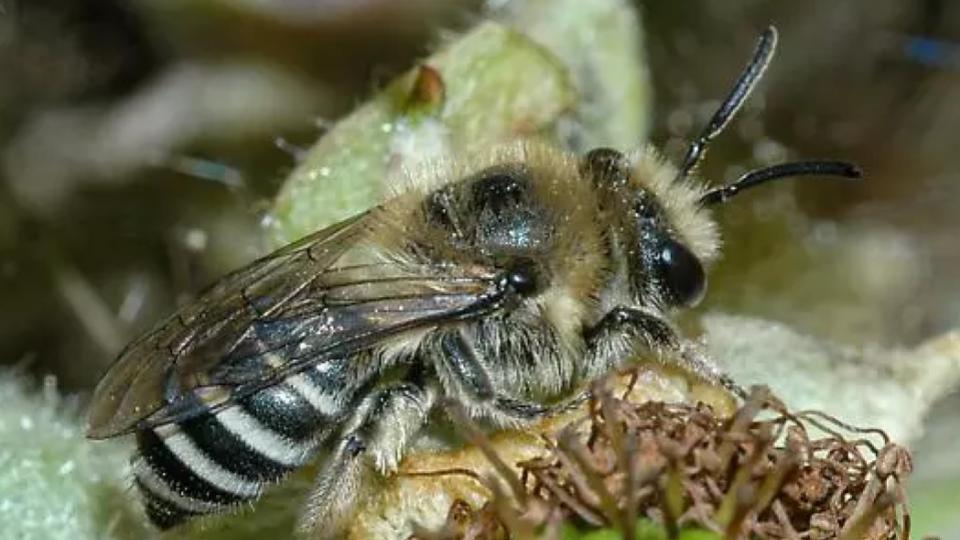
Colletes bhutanicus Found in Arunachal Pradesh

Colletes bhutanicus has been recorded in India for the first time in Tawang district of Arunachal Pradesh, adding a rare Himalayan bee to the country’s known biodiversity. Scientists from the Zoological Survey of India documented the bee during surveys in the Eastern Himalayas. The first Indian record extends the known distribution of the species beyond Bhutan and China and brings attention to the importance of high-altitude ecosystems in the region.
Thank you for reading this post, don't forget to subscribe!The discovery was reported in August 2026 after researchers studied bee populations across different parts of the Eastern Himalayas. The bee has been found at elevations ranging from about 1,500 metres to 3,800 metres in Tawang. Its presence in these mountain habitats also provides useful information about pollinators living in changing high-altitude environments.
A Rare Himalayan Solitary Bee
Colletes bhutanicus belongs to a group of solitary bees commonly known as plasterer bees. Unlike honeybees, which live together in large colonies with a queen and different worker groups, solitary bees generally live and nest individually.
Female solitary bees usually create their own nests and prepare them for their young. This lifestyle makes them different from highly social bees and gives them an important role in natural ecosystems.
The species was first described from Bhutan in 2003. It was later recorded from high-altitude areas of China, including the Xizang region. Its discovery in Arunachal Pradesh now adds India to its known geographical range.
Bee Recorded in Tawang
The bee was identified during field surveys carried out in the Eastern Himalayan region. Records from surveys between 2019 and 2022 showed the presence of Colletes bhutanicus in Tawang at different elevations.
Tawang is known for its mountainous landscape, forests and rich biodiversity. The district forms part of the Eastern Himalayas, a region that supports a wide variety of plants, insects, birds and other wildlife.
Finding a rare bee in this environment shows how much remains to be documented in India’s mountain ecosystems. Small insects can be difficult to detect because of their size, seasonal activity and dependence on particular plants.
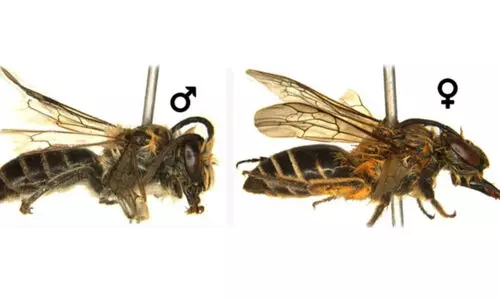
Important Role in Pollination
One of the most interesting features of Colletes bhutanicus is its connection with flowering plants. Researchers observed the bee visiting around 25 flowering plant species belonging to 10 botanical families.
The plants visited by the bee include mustard, buckwheat, coriander, beans, chilli and eggplant. These plants include both crops and other flowering species found in mountain landscapes.
Bees carry pollen from one flower to another while feeding on nectar and pollen. This movement helps flowering plants reproduce and can also support agricultural production. Wild pollinators are particularly valuable because they can work alongside managed honeybees and other insects.
Why Solitary Bees Matter
Solitary bees are often less visible than honeybees, but they can play an important role in pollination. A large number of wild bee species do not live in permanent colonies.
Each female generally manages her own nest and provides food for her offspring. Depending on the species, nests can be made in soil, plant stems, wood or other natural spaces.
Protecting habitats for solitary bees therefore requires more than protecting traditional bee colonies. Natural vegetation, flowering plants, nesting areas and healthy soil can all support wild bee populations.
Eastern Himalayas and Biodiversity
The Eastern Himalayas are among the most biologically diverse mountain regions in the world. Arunachal Pradesh, in particular, contains forests and landscapes spread across different elevations.
Changes in temperature, rainfall, land use and vegetation can affect insects and the plants they depend on. Pollinators can be especially sensitive to changes in flowering seasons because their food sources are closely linked with plant cycles.
The discovery of Colletes bhutanicus provides researchers with another species to study while examining how Himalayan insects survive across different elevations and environmental conditions.
First Indian Record Adds Scientific Value
The first Indian record is significant because it expands the known range of the species. Before the discovery in Tawang, Colletes bhutanicus had been documented from Bhutan and parts of China.
The species was described scientifically in 2003, but records from different parts of the Himalayas can help researchers understand its distribution, habitat preferences and ecological role.
The Indian record was published in the International Journal of Tropical Insect Science in August 2026. Scientific records such as this help create a clearer picture of India’s insect diversity.
Pollinators and Agriculture
The bee’s visits to crops such as mustard, beans, chilli and eggplant also highlight the relationship between wild insects and agriculture. Pollination can improve the reproduction of many flowering plants and support the production of fruits and seeds.
Mountain communities depend on a range of agricultural crops, and maintaining natural habitats around farming areas can help provide food and shelter for wild pollinators.
The record of Colletes bhutanicus in Arunachal Pradesh therefore adds not only to India’s biodiversity database but also to the growing understanding of wild pollinators in Himalayan ecosystems.
The discovery gives scientists another opportunity to study how solitary bees live at different elevations and how pollinator populations may respond to environmental changes across the Eastern Himalayas.