

Cristiano Ronaldo Retirement: Portugal Farewell

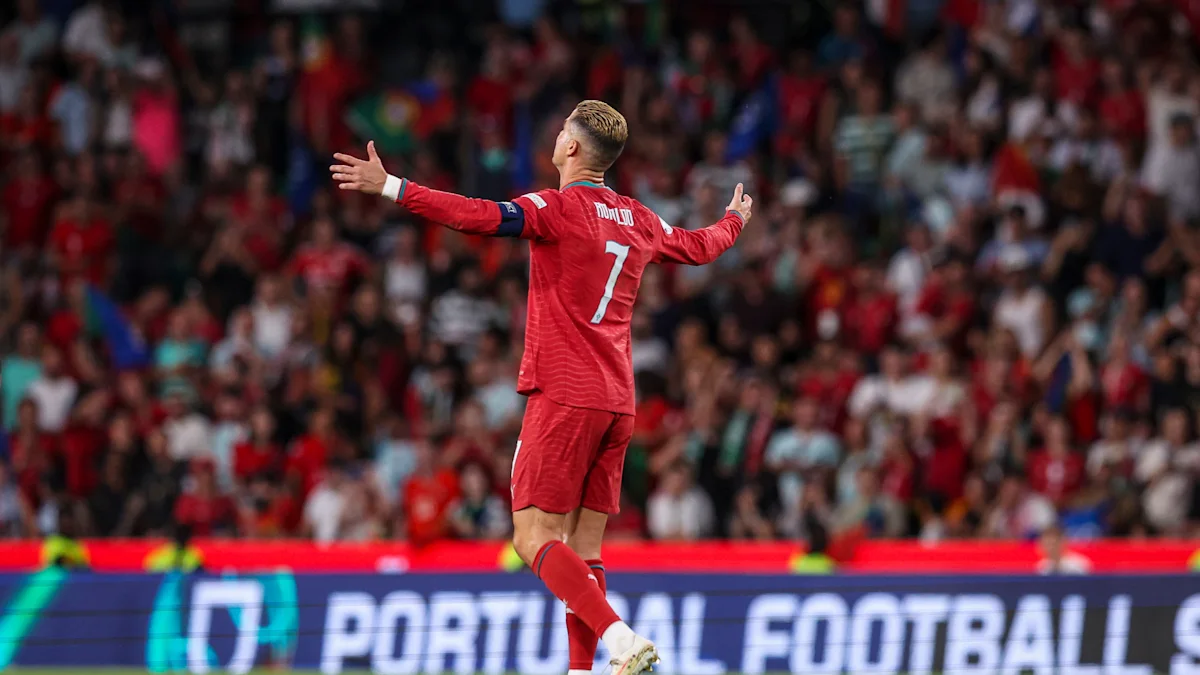
Cristiano Ronaldo Retirement marks the end of a remarkable chapter in Portuguese football. Cristiano Ronaldo has announced his retirement from international football after 23 years representing Portugal. He leaves the national team with 146 goals in 234 appearances, making him one of the most successful international players in football history.
His departure, however, has not been as peaceful as many supporters expected. Unlike Lionel Messi, who recently received a warm farewell from Argentina, Ronaldo’s exit has been surrounded by questions about his relationship with Portugal coach Jorge Jesus and his changing role in the team.

A Retirement After a Disagreement With the Coach
The announcement came after a disagreement between Cristiano Ronaldo and coach Jorge Jesus. The Portuguese forward reportedly left the team’s training camp without permission after learning that he would not be included in the starting line-up for an upcoming match.
The incident resulted in a 30-day sanction and a fine of 255 euros. Ronaldo had already served the suspension by the time his international retirement was announced.
Jesus had kept him on the bench for one match and indicated that he did not plan to start him in the following game. Ronaldo then left the camp and returned home.
His last appearance for Portugal came against Wales on September 24. Although the coach had suggested that the door remained open for him, Ronaldo was no longer guaranteed a place in the starting eleven.
This change in status may have played an important role in his decision. Throughout his career, Ronaldo has been known for his strong competitive nature and desire to influence important matches.
From a Young Talent to Portugal’s Captain
Cristiano Ronaldo joined the Portuguese national team as a young and talented player. In his early days, he was known for his confidence, energetic personality and attention to his appearance.
Former coach Luiz Felipe Scolari recognised his footballing ability but also felt that he needed to become more mature. Scolari reportedly advised him to improve his attitude and suggested that he could become Portugal’s captain one day.
At that time, Luis Figo was the team’s leading number seven. Ronaldo therefore wore the number 17 shirt until Figo left international football in 2006. After that, the famous number seven became Ronaldo’s.
His early international career also included a painful experience at Euro 2004. Portugal hosted the tournament and reached the final against Greece. Many supporters expected the home team to win, but Greece secured a surprising 1-0 victory through a goal from Angelos Charisteas.
Ronaldo was only 19 years old when Portugal lost the final. His emotional reaction after the match became one of the most memorable images of the tournament.
Personal Loss and His Bond With Portugal
Cristiano Ronaldo also experienced a major personal loss during his early international career. In September 2005, before a World Cup qualifying match in Russia, Scolari and Figo informed him that his father had died.
Scolari offered to let him return home, but Ronaldo decided to remain with the team and play. He asked his teammates to treat him normally and continued spending time with them in the dressing room.
Ronaldo later described Scolari as a father figure. Their relationship showed how important the national team had become in his life, beyond football.
However, his relationships with other coaches were not always smooth. A disagreement with Carlos Queiroz followed Portugal’s exit from the 2010 World Cup. After a disappointing performance against Spain, Ronaldo told journalists to ask the coach about the team’s display.
These incidents reflected a recurring challenge in his career: his strong personality and desire to take responsibility sometimes created tension with managers.
Euro 2016 Changed His Leadership Role
One of the most important periods of Cristiano Ronaldo’s international career came under coach Fernando Santos. At Euro 2016, he showed a different side of his leadership.
Instead of always playing in his preferred position, he accepted the coach’s tactical decisions and worked alongside Nani in attack. He also encouraged teammates and took a more active role in motivating the squad.
Portugal had a difficult start to the tournament, including a draw against Iceland and a missed penalty by Ronaldo against Austria. Despite these setbacks, the team continued its journey.
During the final against France in Paris, Ronaldo suffered an injury and had to leave the pitch in tears. Nani took over the captain’s armband, while Ronaldo continued encouraging his teammates from the sidelines.
Before extra time, he reportedly encouraged Eder and expressed confidence that he could score. Eder eventually scored the winning goal, giving Portugal its first European Championship title.
The victory changed how many supporters viewed Ronaldo. He was no longer seen only as a talented individual player but also as a leader who could inspire the entire team.
Major International Achievements
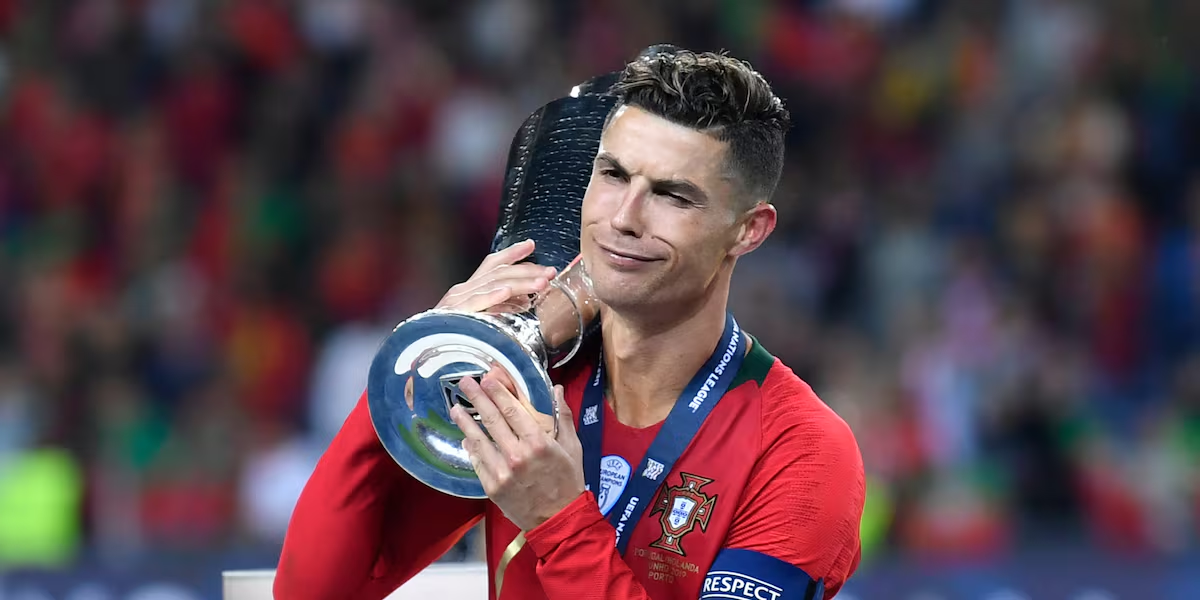
Ronaldo continued to deliver important performances after the 2016 European Championship. In 2019, he scored a hat-trick against Switzerland in the Nations League semi-final, helping Portugal reach the final. Portugal went on to win the first edition of the competition.
He later lifted another Nations League trophy in 2025, adding to his international achievements.
His record includes several major milestones:
| Achievement | Record |
|---|---|
| International goals | 146 |
| Portugal appearances | 234 |
| European Championship titles | 1 (2016) |
| UEFA Nations League titles | 2 |
| World Cup tournaments | 6 |
| Euro 2004 | Runner-up |
Ronaldo also became the highest-scoring men’s international footballer, setting a record that reflects his long career with Portugal.
Ronaldo’s Impact on Portuguese Football
Ronaldo’s importance to Portugal goes beyond goals and trophies. When he made his international debut in 2003, the country had not yet won a major senior men’s international title.
Over the following two decades, Portugal became a regular contender in major competitions. His performances helped attract worldwide attention to Portuguese football and inspired a new generation of players.
His influence also created mixed feelings among supporters. Some admired his confidence and ambition, while others questioned his individual style and strong personality.
Football sociologist João Nuno Coelho has discussed how the national team became an important symbol of Portuguese identity. For a relatively small country, success on the international stage offered a way to gain recognition around the world. Ronaldo became one of the most visible faces of that success.
As his career progressed, the discussion also changed. Instead of asking whether Portugal depended too much on Ronaldo, supporters began to consider how the team would perform without him.
A New Chapter for Portugal
Cristiano Ronaldo’s retirement brings an end to an international career that lasted more than two decades. His departure creates an opportunity for younger Portuguese players to take greater responsibility and build their own identity within the national team.
The Portuguese football federation has announced plans for a special tribute to recognise his contribution. Such recognition reflects the scale of his achievements, even though the circumstances surrounding his departure have created mixed emotions.
For millions of supporters, Ronaldo was more than a footballer wearing the national shirt. They watched him grow from a young player at Euro 2004 into a captain who lifted major international trophies.
His final chapter with Portugal may have been complicated, but his records, achievements and influence will remain a major part of the country’s football history.