Devnimori Buddha Relics to Sri Lanka: India’s Sacred Gesture of Faith and Friendship

India is set to take an important spiritual and cultural step by sending the Devnimori Buddha Relics to Sri Lanka for a special public exposition in Colombo. This historic event will take place from February 4 to 10 and is being seen as a powerful symbol of shared heritage, faith, and goodwill between the two neighbouring nations. Rooted in ancient Buddhist traditions, the journey of these sacred relics reflects India’s deep respect for Buddhism and its enduring cultural ties with Sri Lanka.
Thank you for reading this post, don't forget to subscribe!The holy relics, currently preserved at The Maharaja Sayajirao University of Baroda in Vadodara, Gujarat, will return to India on February 11 after the conclusion of the exposition. Their temporary journey abroad carries immense spiritual meaning for millions of Buddhists and highlights India’s role as a guardian of Buddhist heritage.
A Ceremony Marked by Reverence and Honour
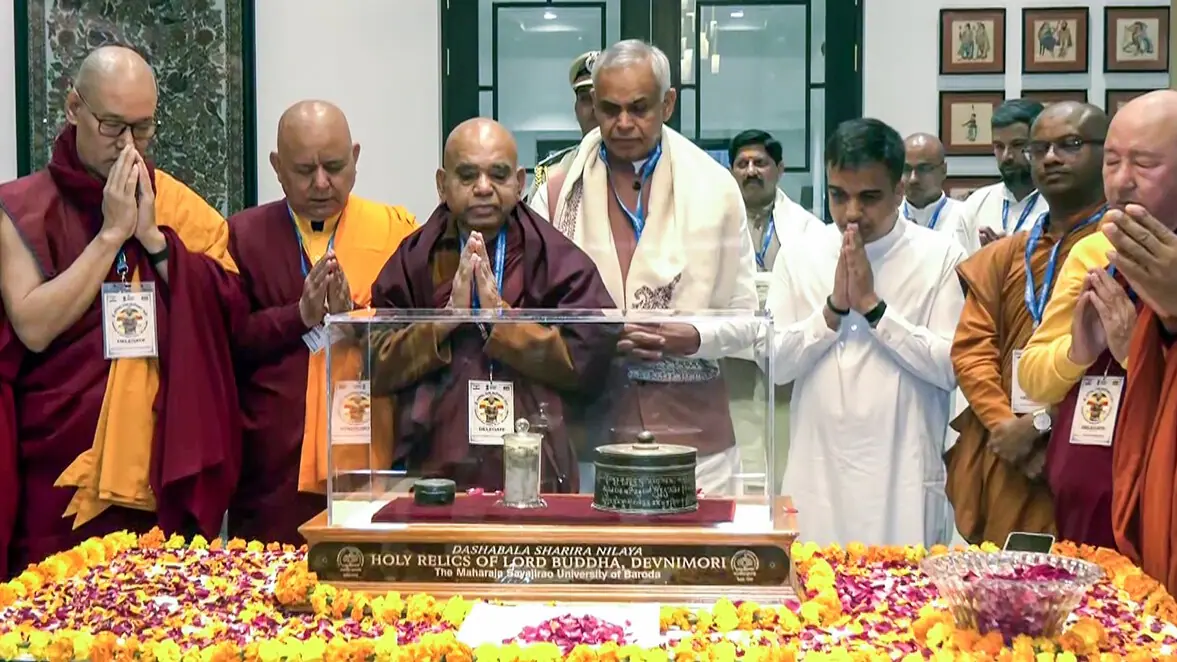
The departure of the Devnimori relics will be marked by a high-level ceremonial send-off in Vadodara. Gujarat Chief Minister Bhupendra Patel will flag off the sacred journey, accompanied by floral tributes and a formal guard of honour. This solemn ceremony reflects the reverence associated with the relics and the respect accorded to them by the Indian state.
A distinguished delegation will accompany the relics, including Gujarat Governor Acharya Devvrat, Deputy Chief Minister Harsh Sanghavi, senior Buddhist monks, and government officials. In keeping with long-established tradition, the relics will travel with full state honours aboard a special Indian Air Force aircraft. The journey will take place via Delhi before reaching Colombo, underscoring the importance India attaches to this spiritual mission.
Deep Spiritual Roots and Shared Civilisation
The transfer of the Devnimori Buddha Relics to Sri Lanka goes beyond a ceremonial exchange. According to official statements, this journey reflects India’s civilisational responsibility as the birthplace of Buddhism. Buddhism originated in India over 2,500 years ago and spread across Asia, deeply shaping cultures, philosophies, and societies.
Sri Lanka has been one of the strongest torchbearers of Buddhist traditions, and the bond between Indian and Sri Lankan Buddhism stretches back centuries. Ancient monks, scholars, and pilgrims once crossed the seas, carrying teachings, texts, and relics that strengthened spiritual connections. This modern-day exposition continues that age-old tradition in a contemporary diplomatic setting.
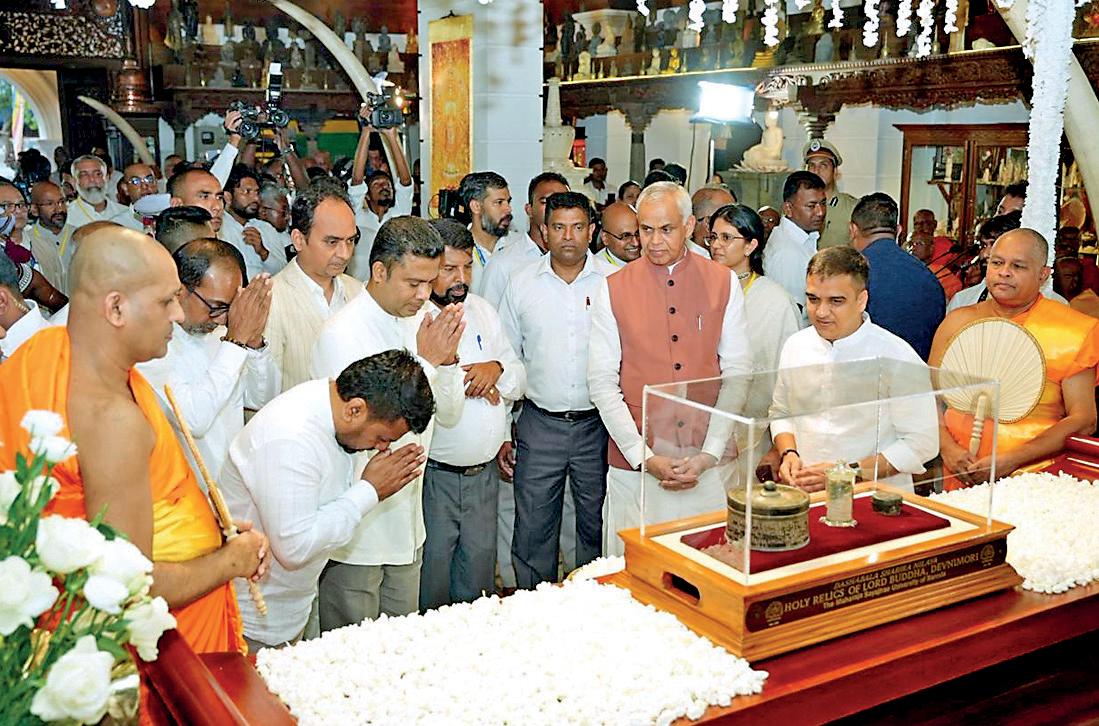
Public Veneration at Gangaramaya Temple
During their stay in Sri Lanka, the sacred relics will be enshrined at the renowned Gangaramaya Temple in Colombo. This temple is one of the most revered Buddhist institutions in the country and attracts devotees from around the world. For six days, thousands of worshippers are expected to visit the temple to pay their respects and seek blessings.
The public exposition offers Sri Lankan Buddhists a rare opportunity to venerate relics linked directly to Lord Buddha. Such events are deeply meaningful, as relics are considered living symbols of the Buddha’s presence and teachings. The atmosphere around the temple during the exposition is expected to be one of devotion, peace, and spiritual reflection.
The Story of the Devnimori Relics
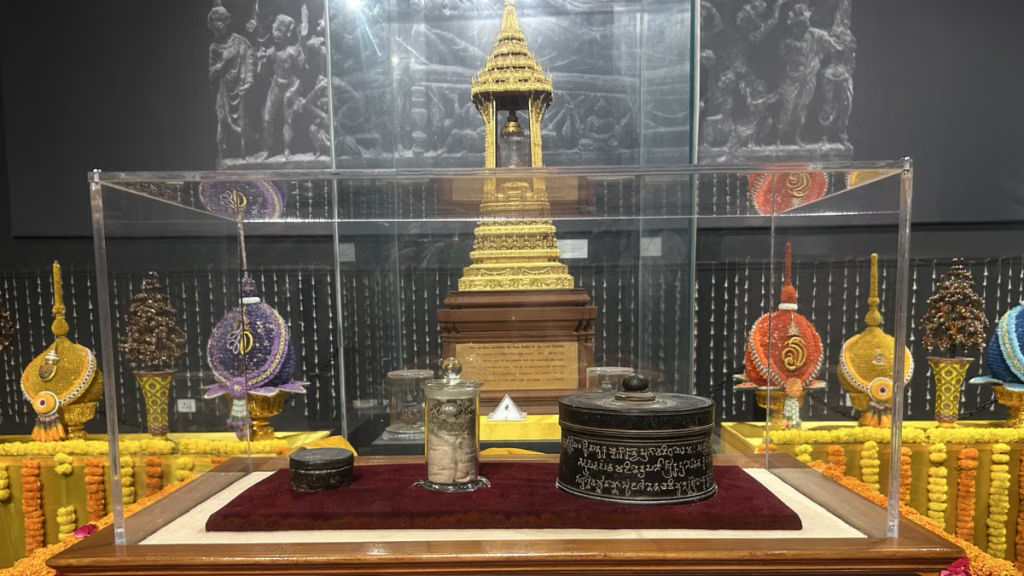
The Devnimori relics originate from the Devnimori archaeological site near Shamlaji in Gujarat’s Aravalli district. The site gained national importance in 1957 when archaeologist S. N. Chowdhry led excavations that uncovered significant Buddhist remains dating back to the early centuries of the Common Era.
Among the discoveries was a remarkable relic casket made of green schist stone. The casket bears inscriptions in Brahmi script and Sanskrit, including the phrase “dashabala sharira nilaya,” which translates to “the abode of the Buddha’s bodily relic.” Inside the casket, archaeologists found a copper box containing holy ashes, fragments of silk cloth, beads, and a gold-coated silver-copper bottle. These items have been preserved with great care for decades and are regarded as priceless spiritual treasures.
A Bridge of Culture and Diplomacy
The journey of the Devnimori relics is also an example of cultural diplomacy in action. By sharing its most sacred Buddhist heritage, India strengthens people-to-people connections and builds trust at a human level. Such gestures often have a deeper and longer-lasting impact than formal agreements or official statements.
In recent years, India has organised similar exhibitions of Buddha relics in countries such as Thailand, Mongolia, Vietnam, Bhutan, and Russia. Each event has helped reinforce cultural ties and promote shared values of peace, compassion, and harmony. The exposition in Sri Lanka continues this tradition and highlights India’s commitment to fostering regional goodwill.
A Message of Peace for the Region
The exposition of the Devnimori Buddha Relics to Sri Lanka carries a quiet but powerful message. At a time when the world faces conflict and division, the teachings of Lord Buddha remind humanity of the importance of non-violence, understanding, and coexistence. The shared veneration of these relics brings communities together across borders and beliefs.
By opening its sacred heritage to a close neighbour, India reaffirms its role as a custodian of global Buddhist culture. The event is expected to deepen spiritual bonds, strengthen cultural understanding, and promote a sense of unity across South Asia and the wider Indian Ocean region. As devotees gather in Colombo to pay homage, the ancient message of the Buddha will once again travel across seas, inspiring peace in the modern world.