


Dharma Guardian 7th Exercise Strengthens India–Japan Military Cooperation

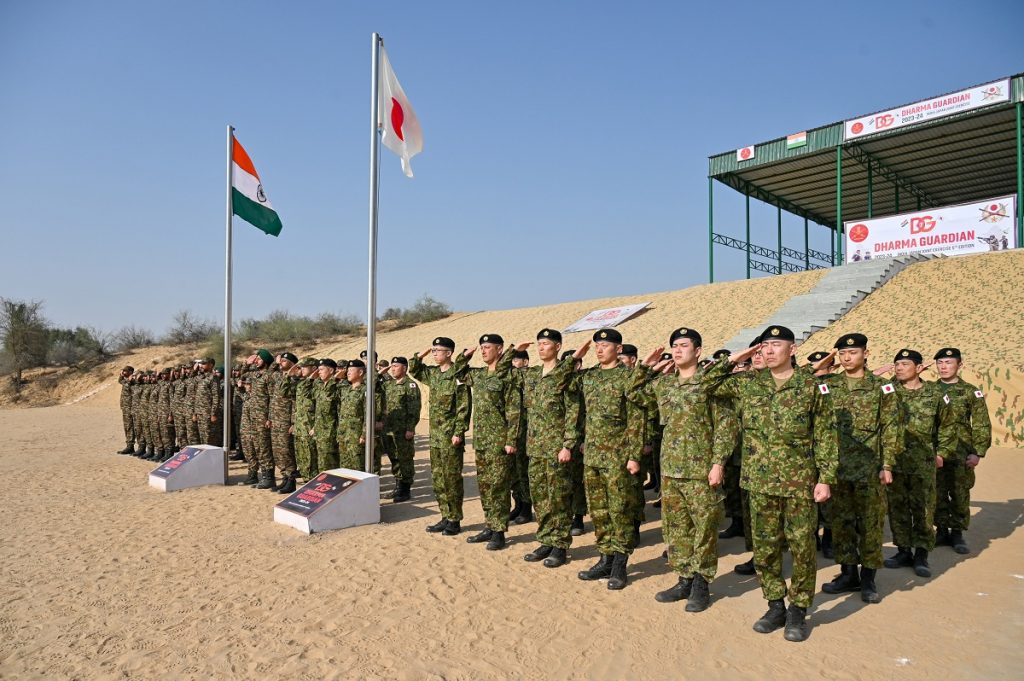
The Dharma Guardian 7th Exercise marks another important step in the growing defence partnership between India and Japan. The seventh edition of the annual joint military exercise began on 24 February 2026 at the Foreign Training Node in Chaubattia, Uttarakhand, and will continue until 9 March 2026. Conducted alternately in both countries, this exercise has become a strong symbol of trust, cooperation, and shared strategic interests in the Indo-Pacific region.
Thank you for reading this post, don't forget to subscribe!This year, the exercise brings together 120 soldiers from each side. The Indian Army is represented by the Ladakh Scouts, while the Japanese contingent comes from the 32nd Infantry Regiment of the Japan Ground Self-Defense Force. The Dharma Guardian 7th Exercise focuses on improving joint operational capabilities, especially in semi-urban and complex environments that reflect modern security challenges.
Growing Defence Ties Between India and Japan
India and Japan have steadily expanded their defence and security cooperation over the past decade. Shared democratic values, respect for international law, and concerns over regional stability have brought the two nations closer. Joint exercises like Dharma Guardian play a vital role in turning diplomatic understanding into practical military coordination.
Held in the hill region of Chaubattia in Uttarakhand, the location offers realistic terrain for training. The surroundings allow troops to practice movement, planning, and coordination in conditions that resemble real-world operational areas. For both armies, the exercise provides a valuable chance to understand each other’s working style, command structure, and operational thinking.
Aim and Vision of the Dharma Guardian 7th Exercise
The main aim of the Dharma Guardian 7th Exercise is to strengthen interoperability between the two armies. Interoperability means the ability of forces from different countries to operate together smoothly during joint missions. This includes shared procedures, common communication methods, and coordinated decision-making.
Another key focus is joint operations in semi-urban environments. Such areas present unique challenges, including civilian presence, narrow spaces, and mixed terrain. Training in these conditions helps soldiers prepare for peacekeeping missions, counter-terror operations, and humanitarian assistance tasks where coordination and precision are critical.
The exercise also highlights the use of modern technology and updated operational concepts. As security threats evolve, both countries recognise the importance of adapting training methods to match current and future challenges.
Participating Units and Their Strengths
The Indian Army contingent is drawn from the Ladakh Scouts, a unit known for its expertise in high-altitude warfare and tough terrain operations. Their experience in extreme weather and challenging landscapes adds great value to the training activities.
On the Japanese side, troops from the 32nd Infantry Regiment of the Japan Ground Self-Defense Force bring strong experience in ground-based defence and disciplined operational practices. The interaction between these two highly skilled units allows for the exchange of best practices and practical lessons.
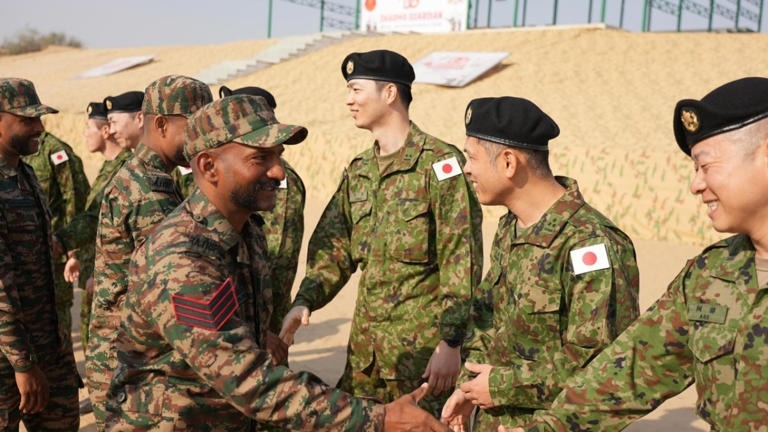
Through daily interaction, joint drills, and shared routines, soldiers develop mutual respect and a deeper understanding of each other’s strengths.
Training Activities and Tactical Engagements
During the two-week exercise, the focus remains on realistic and mission-oriented training. Troops take part in physical conditioning sessions, joint planning exercises, and coordinated tactical drills. These activities are carefully designed to build trust and improve teamwork.
Key tactical elements include setting up a Temporary Operating Base, which serves as a central point for planning and operations. Soldiers also work on creating an Intelligence, Surveillance, and Reconnaissance grid to gather and analyse information in simulated hostile situations.
Other important activities include establishing Mobile Vehicle Check Posts and conducting cordon and search operations. These drills help troops practice area control, identification of threats, and coordination between different units in a controlled environment.
Advanced Drills and Modern Warfare Skills
The Dharma Guardian 7th Exercise also includes advanced operational modules. Heliborne operations allow troops to practice rapid deployment and movement using helicopters. Such skills are crucial for quick response missions and disaster relief operations.
House intervention drills form another major part of the training. These exercises simulate close-quarter combat and urban search operations, helping soldiers improve coordination, communication, and decision-making under pressure.
By training together in these advanced scenarios, both armies enhance their readiness to deal with real-life challenges, including counter-terrorism and urban security operations.

Strengthening Regional Security Cooperation
Beyond tactical benefits, the exercise carries strong strategic importance. It reinforces the commitment of India and Japan to work together for peace and stability in the region. Joint military activities send a clear message of cooperation, trust, and shared responsibility toward maintaining a free and open Indo-Pacific.
The Dharma Guardian 7th Exercise also contributes to people-to-people ties between the armed forces. Cultural exchanges, informal interactions, and shared experiences help build long-lasting bonds between soldiers, which are essential for successful future cooperation.
As the exercise continues until 9 March 2026, it stands as a clear example of how joint training can strengthen defence ties and improve preparedness for future challenges.