



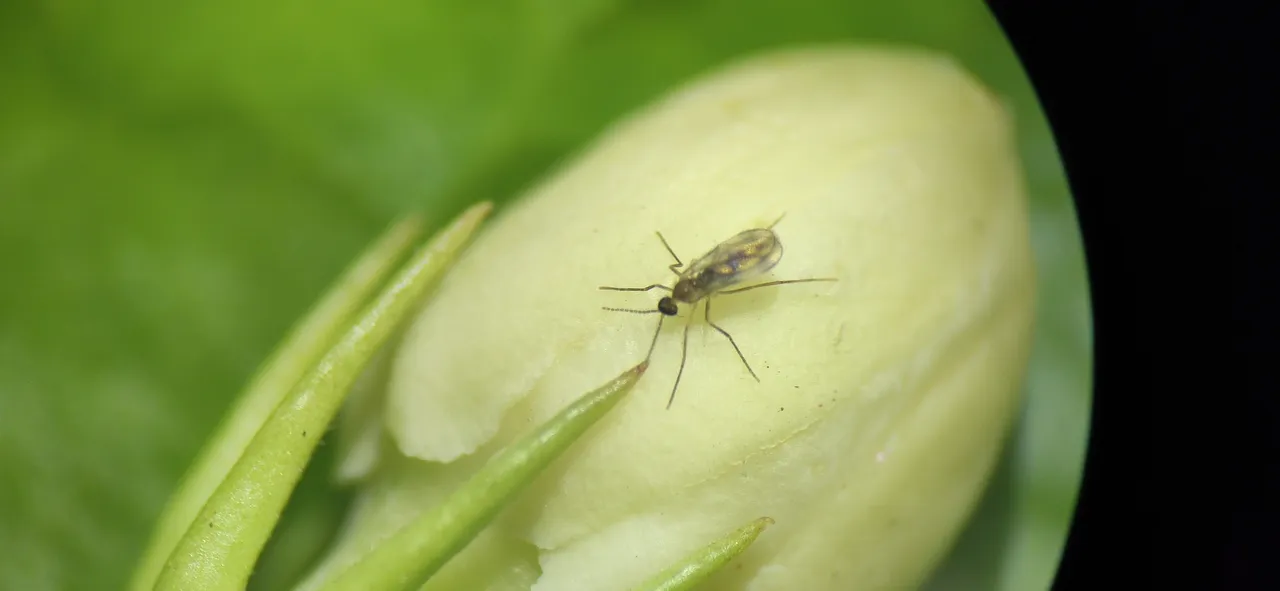
Jasmine Midge Discovery: New Pest Species Found Attacking Jasmine Flowers in India

The Jasmine Midge Discovery has brought new attention to the growing challenges faced by India’s floriculture sector. In a major scientific breakthrough, researchers from ICAR-Directorate of Floricultural Research have identified a new species of blossom midge that attacks jasmine flower buds. This discovery is important not only for scientists but also for farmers who depend on jasmine cultivation for their livelihood.
Thank you for reading this post, don't forget to subscribe!The newly identified species has been named Contarinia icardiflores sp. nov. It was found infesting Jasminum sambac, one of the most commercially valuable jasmine varieties grown in India. Jasmine flowers are widely used in perfumes, religious rituals, garlands, and the floral trade, making this discovery highly relevant for agriculture and commerce.
Discovery by Indian Scientists
The research was carried out by a team led by Dr. D. M. Firake, Senior Scientist at ICAR-DFR. The institute is located in Pune and is a leading center for floriculture research in the country. The species name “icardiflores” was chosen to honor the contributions of the Indian Council of Agricultural Research and its Directorate of Floricultural Research.
This is the first time this particular midge species has been recorded in India. Until now, only one blossom midge species was known to infest jasmine plants. The discovery adds new knowledge to India’s insect biodiversity and highlights the need for continuous monitoring of crop pests.
Why the Jasmine Midge Discovery Matters
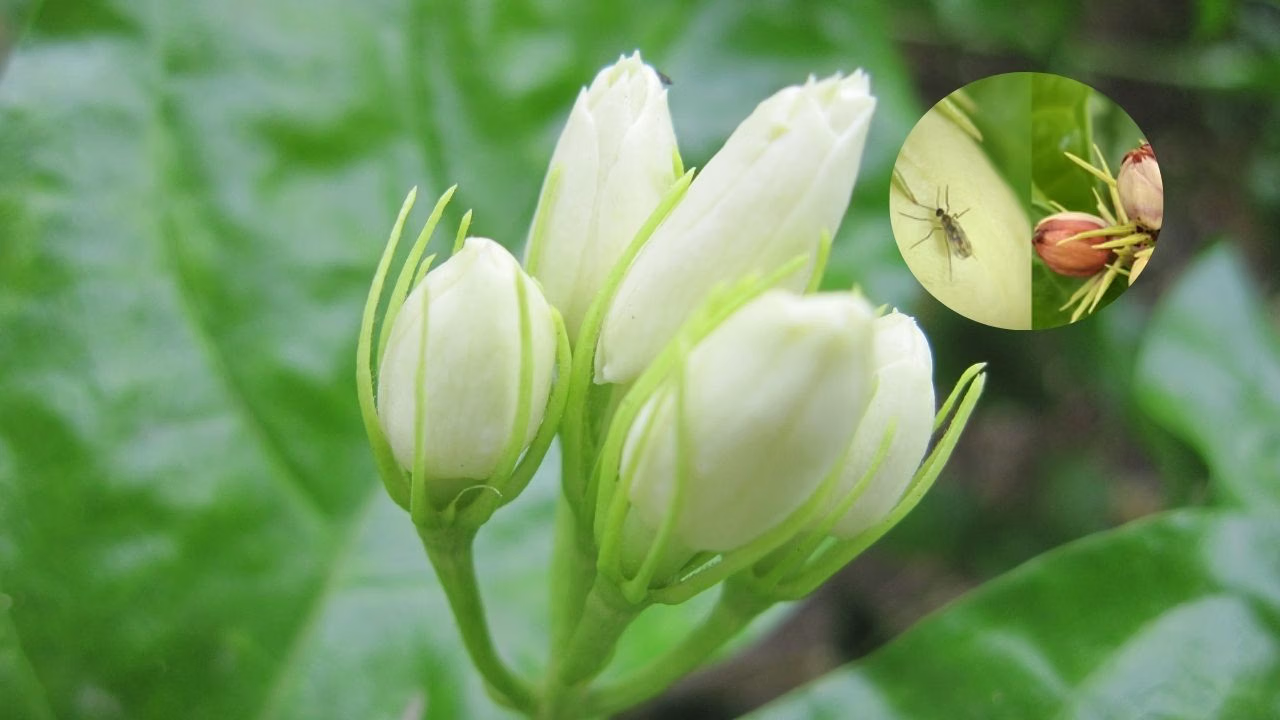
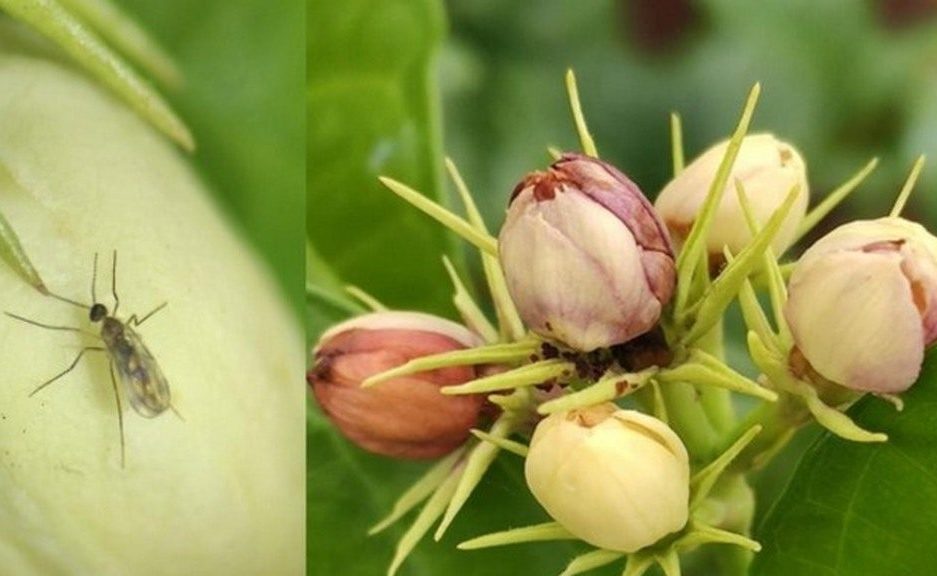
Blossom midges of the genus Contarinia are known worldwide as serious pests of both food and ornamental crops. The newly discovered jasmine midge causes damage by attacking flower buds. Infested buds fail to open properly, leading to reduced flower production and poor quality blooms. This directly affects farmers’ income, as jasmine flowers fetch good prices only when they are fresh and healthy.
India is one of the world’s leading producers of jasmine. States such as Tamil Nadu, Karnataka, Andhra Pradesh, and parts of eastern and northeastern India have large areas under jasmine cultivation. Any new pest threat can therefore have wide economic effects. The Jasmine Midge Discovery serves as an early warning for growers and agricultural planners.
How the New Species Was Identified
At first glance, the newly discovered midge looks very similar to an already known jasmine-infesting species. However, scientists noticed subtle differences during close examination. To confirm their findings, the research team used an integrative approach that combined traditional morphology with modern genetic analysis.
Under the microscope, differences were observed in specific body parts of both male and female insects. These included variations in the structure of the female antenna segments, reproductive parts, and the male aedeagus. Such small differences are important in insect classification, especially among closely related species.
In addition to physical features, the team analyzed a segment of the mitochondrial cytochrome oxidase subunit I gene, commonly known as the COI gene. This gene is widely used for DNA barcoding because it helps scientists accurately distinguish one species from another. The genetic data clearly showed that this was a new and distinct species, confirming the Jasmine Midge Discovery.
Life Cycle and Rapid Spread
One of the most concerning aspects of this new jasmine midge is its short life cycle. The insect completes its development in just 16 to 21 days. This means several generations can occur within a single flowering season. Such rapid reproduction allows the pest population to build up quickly, making infestations harder to control.
The larvae develop inside jasmine flower buds, where they remain protected from external conditions. By the time damage becomes visible, the pest may already be well established. This makes early detection and timely management extremely important for farmers.
Impact on Farmers and the Floral Industry
Jasmine cultivation supports thousands of small and marginal farmers across India. Flowers are harvested daily and sold in local markets or supplied to perfume and garland industries. When buds are damaged by midges, farmers suffer immediate losses due to lower yields and reduced market value.
The Jasmine Midge Discovery highlights the need for awareness among growers. Recognizing early signs of infestation, such as deformed or unopened buds, can help in taking quick action. Extension services and agricultural departments can use this new information to train farmers and improve field surveillance.
Steps Toward Better Pest Management
The identification of this new species provides valuable information for developing effective and environmentally friendly pest control methods. Accurate species identification is the first step in designing targeted management strategies. With the help of molecular tools, rapid diagnostic tests can be developed to detect infestations at an early stage.
Researchers believe that integrated pest management approaches, combining monitoring, biological control, and need-based interventions, will be essential to manage this pest. The Jasmine Midge Discovery strengthens India’s ability to respond to emerging threats in floriculture and protect an important agricultural sector.