Tripura Agarwood Scheme 2026 Boosts Northeast Economy

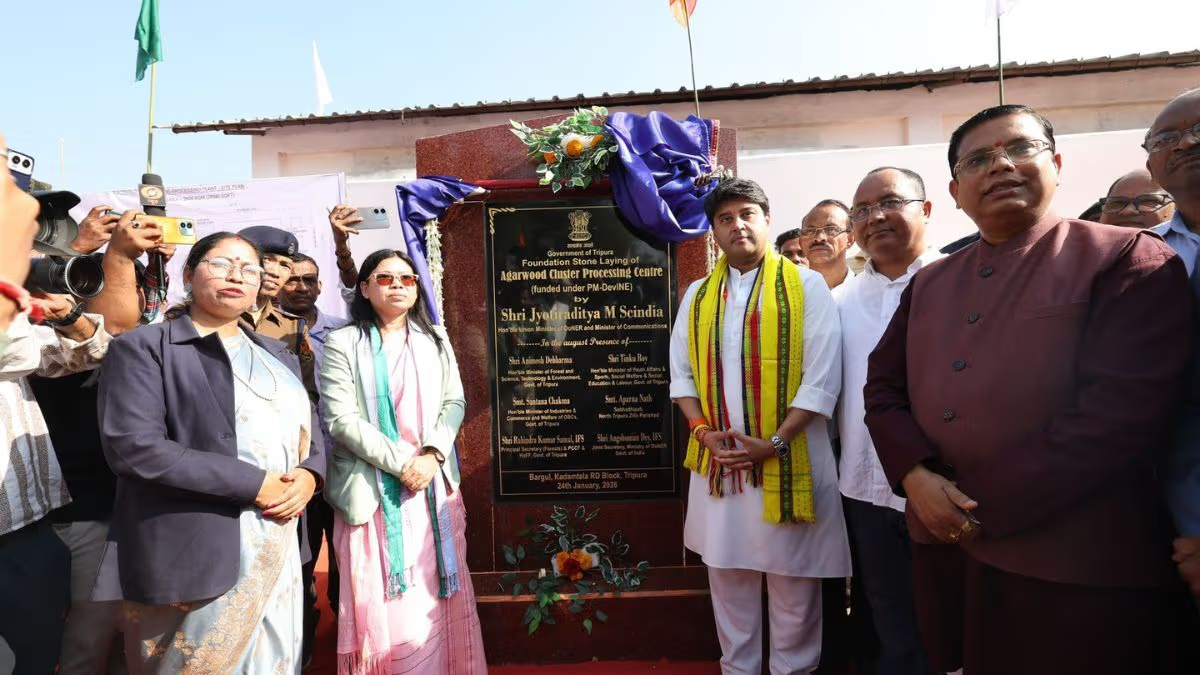
Tripura Agarwood Scheme 2026 has emerged as a major development step for the Northeast after Union Minister for Development of North Eastern Region and Communications, Jyotiraditya Scindia, laid the foundation stone of the ₹80 crore Agarwood Value Chain Development Scheme at North Fulkabari in Tripura. The project is designed to strengthen the region’s traditional agarwood economy, increase farmer incomes, expand exports and turn Tripura into a global centre for agarwood-based products.
Thank you for reading this post, don't forget to subscribe!The launch has created strong optimism among farmers, traders and local communities who have depended on agarwood cultivation for generations. By combining traditional knowledge with modern systems, the scheme aims to build a strong and stable economic structure around this valuable natural resource.
Tripura Agarwood Scheme 2026 and the Vision for a Self-Reliant Northeast
Speaking at the event, Jyotiraditya Scindia described the scheme as part of a larger vision for a developed and self-reliant Northeast. He highlighted that agarwood production in India is mainly concentrated in Tripura and Assam, making the region naturally suited to lead this sector at the national and global level.
The minister explained that for many years, agarwood farmers and small producers remained limited to local markets. Their products often passed through multiple middlemen, reducing their income and control over pricing. The new scheme is designed to change this system by giving farmers direct access to processing units, branding support and global markets.
This approach is expected to transform agarwood from a local trade activity into a structured industry with international reach.
Tripura Agarwood Scheme 2026 Builds a Complete Value Chain
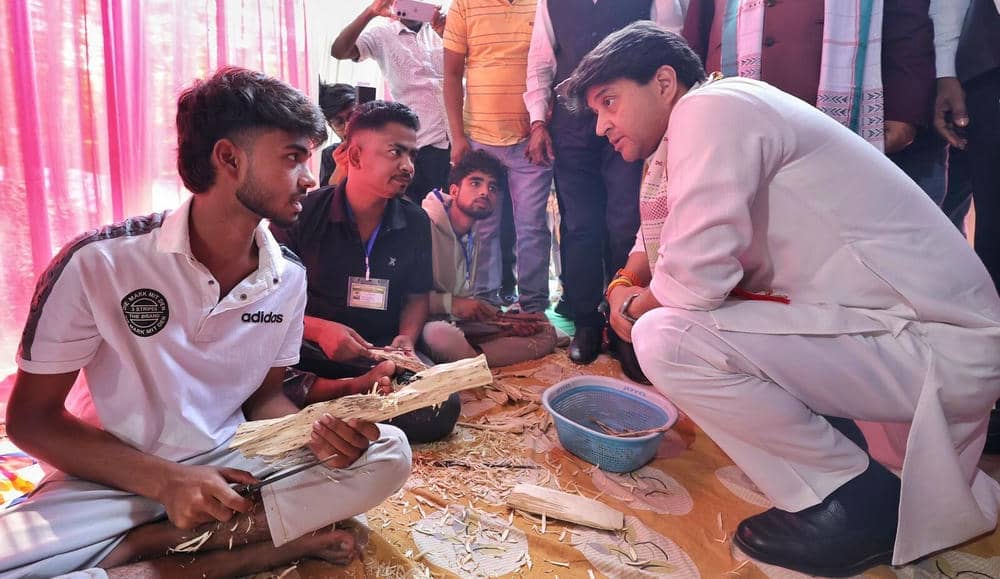
One of the strongest features of the scheme is its focus on building a full value chain, from farm to global market. This means the process will no longer stop at raw agarwood production. Instead, it will include processing, packaging, branding and export of finished products.
Under the project, two Central Processing Centres will be established:
- One in Golaghat, Assam
- One in Tripura
These centres will handle key activities such as oil extraction, perfume production, quality control, branding and market linking. By doing so, the system removes the need for multiple intermediaries and ensures that farmers receive better value for their produce.
This structure allows farmers to move from being raw material suppliers to becoming part of a global supply chain.
Tripura Agarwood Scheme 2026 and Global Market Access
A major goal of the scheme is to position Tripura and the Northeast as a global hub for agarwood products. Agarwood is highly valued in international markets for use in perfumes, incense, luxury oils and traditional medicines.
To support this, export limits have been significantly expanded. Agarwood chip exports have increased from 25,000 kg to 1.5 lakh kg, while agarwood oil exports have grown from 1,500 kg to 7,500 kg. These changes open new opportunities for Indian producers to compete in international markets.
The scheme also focuses on improving branding and quality standards so that Indian agarwood products meet global expectations.
Tripura Agarwood Scheme 2026 and Digital Integration
Another key element of the project is digital integration. Regulatory permissions, export processes and buyer connections are being moved to digital platforms. This allows farmers and producers to interact directly with buyers, both in India and abroad.
Digital systems reduce delays, increase transparency and prevent exploitation by middlemen. Farmers can track prices, demand trends and export requirements more easily. This modern approach helps rural producers become part of the global digital economy.
Tripura Agarwood Scheme 2026 and the GI Tag Initiative
The process to secure a Geographical Indication (GI) tag for agarwood is also underway. A GI tag helps protect region-specific products and gives them a unique identity in global markets.
For Tripura and Assam, this recognition can increase trust, demand and pricing for their agarwood products. It also helps preserve traditional knowledge and farming practices while adding economic value.
Tripura Agarwood Scheme 2026 and Farmer Empowerment
At the heart of the scheme is farmer empowerment. By creating direct links between growers and global markets, the project reduces dependency on local traders and price manipulation.
Farmers gain access to better technology, training and market knowledge. With processing units nearby, transportation costs reduce, and product quality improves. This creates stable income opportunities and encourages more farmers to invest in agarwood cultivation.
The scheme also supports employment generation in rural areas through processing centres, logistics, packaging and marketing services.
Tripura Agarwood Scheme 2026 and ‘Local to Global’ Growth
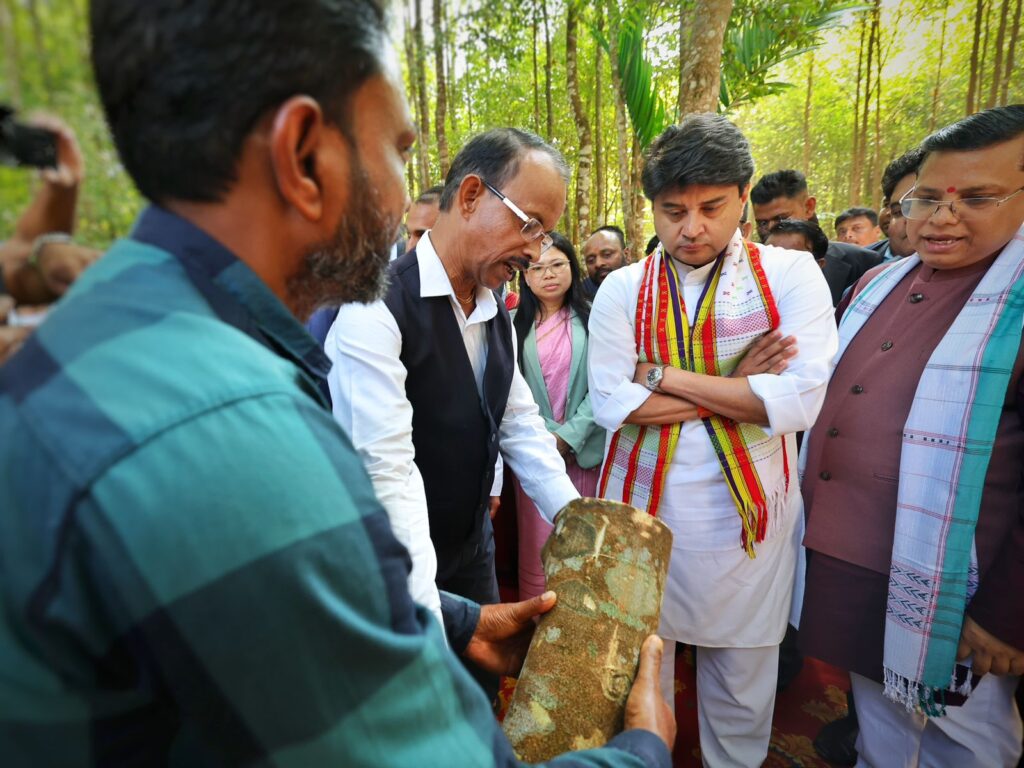
Jyotiraditya Scindia described Fulkabari’s agarwood sector as a strong example of ‘Local to Global’ growth. He also linked the scheme to national development ideas like ‘Vocal for Local’ and ‘One District One Product’, which aim to promote region-specific products for economic growth.
According to estimates, the scheme could increase Tripura’s agarwood production capacity by up to 50 percent. With better infrastructure, direct buyer-seller interactions and international market connections, the state’s agarwood sector could see rapid expansion.
The minister expressed confidence that Tripura’s agarwood industry could reach an annual market value of ₹2,000 crore within three to four years, supported by global partnerships and organised trade systems.
Tripura Agarwood Scheme 2026 and the Northeast’s Economic Transformation
The launch of this scheme marks more than just an agricultural project. It reflects a broader shift in how the Northeast is being integrated into India’s growth story. Instead of remaining raw material suppliers, states like Tripura and Assam are being positioned as producers of high-value finished goods.
This change strengthens regional economies, reduces migration pressure and creates sustainable local industries. By focusing on traditional resources like agarwood and combining them with modern systems, the region gains both cultural and economic strength.
Tripura Agarwood Scheme 2026 stands as a strong example of how traditional livelihoods can be transformed into global business opportunities through policy support, technology and community participation.