ICC Scotland T20 World Cup 2026 Replacement Shakes Tournament Plans

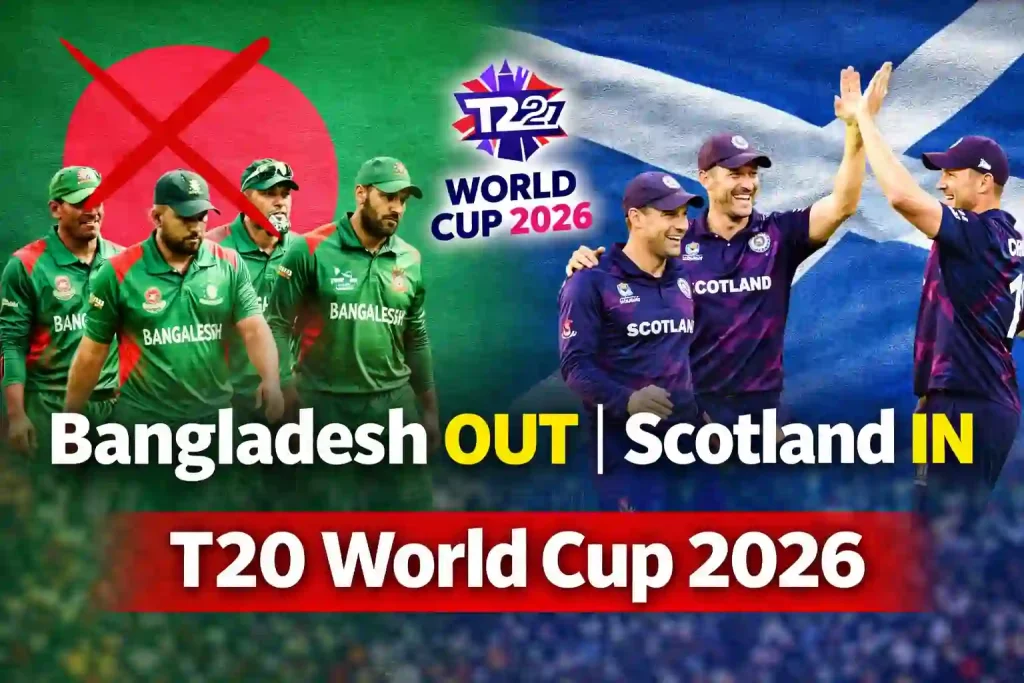
ICC Scotland T20 World Cup 2026 has become a major global sports headline after the International Cricket Council confirmed that Scotland will replace Bangladesh in the ICC Men’s T20 World Cup 2026. The decision came after Bangladesh declined to take part in the tournament under the official match schedule. This unexpected change has created fresh debate and uncertainty around the event, with attention now also turning toward Pakistan’s position on participation.
Thank you for reading this post, don't forget to subscribe!The development has reshaped one of the tournament groups and raised important questions about scheduling, security concerns, and how global cricket events are managed under pressure.
ICC Scotland T20 World Cup 2026 and Bangladesh’s Withdrawal
The ICC stated that the Bangladesh Cricket Board raised concerns about playing its scheduled matches in India. These concerns were shared with the ICC through formal communication channels. Over a period of more than three weeks, the ICC held several discussions with Bangladesh officials, including online meetings and in-person talks.
During this period, the ICC also reviewed independent security assessments and shared detailed operational plans. These plans included coordination with central and state authorities, security arrangements at venues, and special protocols for teams and officials.
After reviewing all reports, the ICC said there was no credible or verified security threat to Bangladesh players, staff, or supporters. Based on this assessment, the ICC decided that the published schedule would not be changed.
Since Bangladesh chose not to confirm participation under the existing schedule, the ICC moved forward with replacement procedures.
ICC Scotland T20 World Cup 2026 and the Deadline Process
After a key meeting held mid-week, the Bangladesh Cricket Board was given a 24-hour deadline to confirm its participation in the tournament as per the official schedule. When no confirmation was received within the given time, the ICC activated its governance process to identify a replacement team.
The selection process followed pre-set qualification and ranking rules. Based on these criteria, Scotland was chosen as the replacement team. Scotland was the highest-ranked team that had narrowly missed qualification earlier, making them the next eligible side under ICC rules.
This decision led to an official update in the tournament structure.
ICC Scotland T20 World Cup 2026 and the New Group Format
With Scotland’s entry, the tournament’s Group C has been reshaped. The updated group will now include:
- England
- Italy
- Nepal
- West Indies
- Scotland
This change brings a fresh dynamic to the group and creates new matchups for fans. Scotland’s inclusion adds excitement, as the team has shown steady growth in international cricket and strong performances in recent global qualifiers.
For Scottish cricket, this moment marks a major opportunity to compete on one of the biggest stages in the sport.
ICC Scotland T20 World Cup 2026 and Tournament Stability
The late change has raised questions about tournament stability and planning. With fixtures already finalised, the ICC said it faced logistical and operational limits in making last-minute schedule changes.
Large international tournaments involve long-term planning, venue bookings, broadcast arrangements, security coordination, and travel logistics. Changing schedules at a late stage can affect multiple countries, sponsors, broadcasters, and host authorities.
Because of these challenges, the ICC chose to maintain the original structure and replace the team instead of changing venues or match locations.
ICC Scotland T20 World Cup 2026 and Governance Challenges
This situation highlights the growing role of governance systems in modern sports. Global tournaments today depend not only on sporting merit but also on security reviews, government coordination, and international logistics.
The ICC’s decision shows how sports bodies balance dialogue with members while also protecting tournament timelines and commercial commitments. While engagement with teams is important, maintaining the integrity of published schedules has become equally critical.
This case reflects how international sport now operates within complex political, security, and administrative systems.
ICC Scotland T20 World Cup 2026 and Pakistan’s Response
Even after Scotland’s inclusion, uncertainty around the tournament has not fully ended. The Pakistan Cricket Board (PCB) reacted strongly to the decision, criticising the removal of Bangladesh and calling the treatment unfair.
PCB chairman Mohsin Naqvi stated that Pakistan’s final decision on participation would be taken by the government, indicating that the matter has political dimensions. This statement has added another layer of uncertainty to the tournament’s future planning.
If Pakistan were to reconsider its participation, the ICC could face renewed pressure over replacement policies, scheduling adjustments, and contingency planning.
ICC Scotland T20 World Cup 2026 and Growing Global Sensitivity
This episode reflects a broader trend in international sport. Major events are no longer influenced only by performance and rankings. They are shaped by diplomatic relations, security concerns, public perception, and government positions.
Cricket, like many global sports, now operates in a space where politics, safety, and governance intersect. Decisions are closely watched by fans, boards, and governments alike.
The replacement of Bangladesh with Scotland is not just a sporting change it is also a reflection of how global events are managed in uncertain conditions.
ICC Scotland T20 World Cup 2026 and Opportunity for Scotland
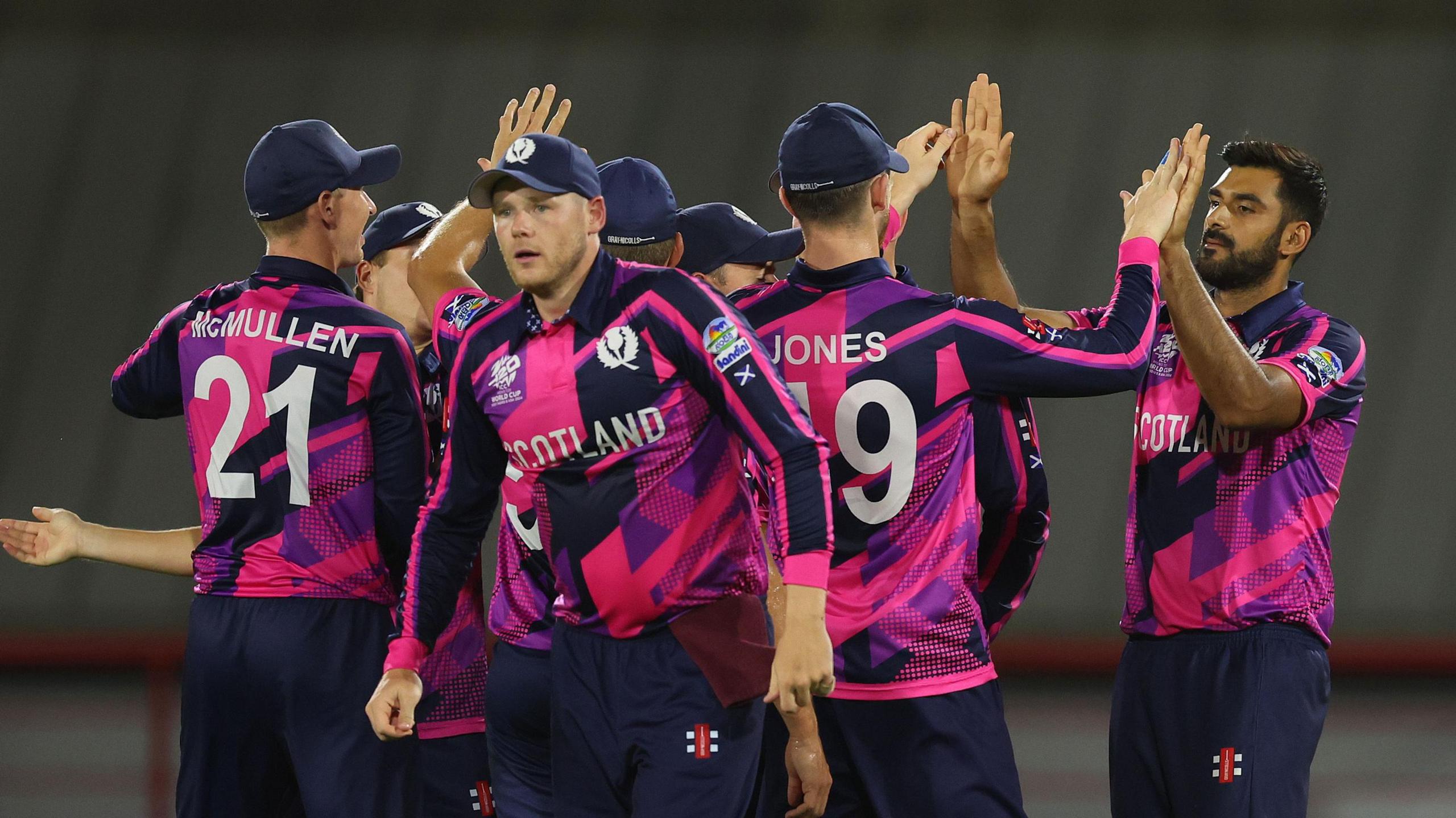
For Scotland, this moment represents a historic chance. Entering the T20 World Cup gives the team global exposure, experience against top nations, and a platform to grow the sport back home.
Scottish cricket has made steady progress in recent years, and this opportunity could strengthen grassroots development, youth participation, and international recognition.
For players, fans, and administrators, the inclusion in the tournament is a major milestone.
ICC Scotland T20 World Cup 2026 in the Global Sports Landscape
The situation surrounding the 2026 T20 World Cup shows how modern tournaments face constant pressure from changing global realities. Security planning, international relations, and governance systems now play a central role in shaping sporting calendars.
The ICC Scotland T20 World Cup 2026 decision reflects a world where sport, politics, and policy are deeply connected. As the tournament approaches, global attention will remain focused not only on the matches, but also on how the event is managed behind the scenes.