
5200 Year-Old Ancient North American Boat Unearthed Beneath Lake Mendota

In an extraordinary archaeological discovery, scientists have uncovered a 5200 year-old ancient North American boat beneath the waters of Lake Mendota in the United States. This remarkable find sheds new light on the advanced woodworking skills, resource management, and daily life of prehistoric communities in the Great Lakes region, dating back thousands of years long before the rise of several major ancient civilizations elsewhere in the world.
Thank you for reading this post, don't forget to subscribe!Multiple Ancient Canoes Found Beneath Lake Mendota
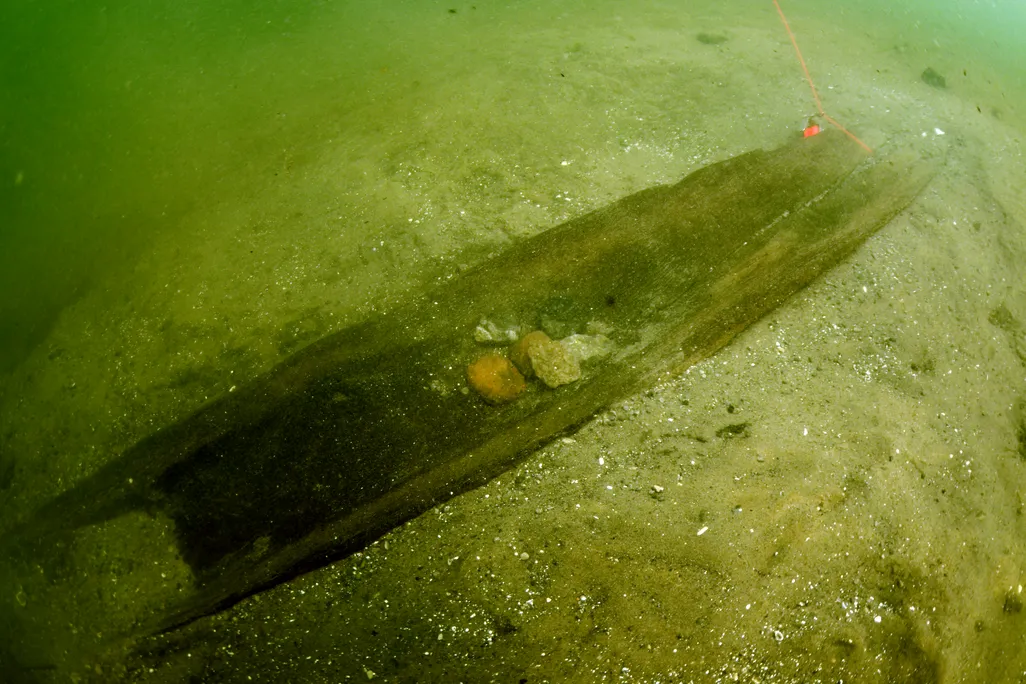
Researchers from the Wisconsin Historical Society have revealed the presence of sixteen wooden boats resting at the bottom of Lake Mendota. The discovery began in 2021 with a canoe estimated to be around 1,200 years old. In 2022, a 3,000-year-old vessel was added to the list, followed by the identification of fourteen more canoes during subsequent surveys. Six of these additional boats were uncovered in the spring of 2025, bringing the total number to sixteen.
Each of these vessels is a hollowed log canoe, carefully crafted to navigate the lake’s waters. The repeated use and construction of these boats suggest long-term habitation and the importance of the lake to prehistoric communities. This discovery challenges earlier assumptions that early North American societies had limited technological skills.
Oldest Boat Dates Back to Around 3000 BC
Among the sixteen boats, carbon dating has revealed that the oldest canoe is approximately 5,200 years old, dating back to around 3000 BC. This places the boat’s construction in a period that predates the Great Pyramid of Giza and overlaps with the early development of writing in ancient Mesopotamia.
This vessel is now considered the oldest dugout canoe ever found in the Great Lakes region and the third-oldest known boat in eastern North America. Its survival over millennia is a testament to the careful selection of materials, craftsmanship, and understanding of natural processes by ancient boatbuilders.
Advanced Resource Use and Fishing Practices
The discovery also offers insights into how early North American communities used their natural environment. Archaeological evidence suggests that these boats were primarily used for navigation, fishing, and accessing resources around Lake Mendota. Several canoes contained fishing net weights, indicating organised and systematic fishing practices.
This evidence of advanced planning and resource use challenges earlier views of prehistoric North American societies as simple or technologically limited. The construction and repeated use of these dugout canoes reflect sophisticated knowledge of woodworking, navigation, and environmental management.
Oak Wood, Tyloses, and Early Bioengineering
Scientists have noted that eight of the discovered boats were made from red or white oak. The choice of red oak is particularly surprising, as this type of wood typically absorbs water easily. Researchers believe that prehistoric boatbuilders either selected damaged trees or intentionally induced stress in the wood to promote the formation of tyloses small natural structures within wood that block water flow.
Tyloses act as a natural defense against decay, improving buoyancy and durability. This deliberate manipulation of tree properties can be considered an early form of bioengineering, showing that prehistoric communities had a deep understanding of the ecology and biology of their surroundings. Such knowledge would have been crucial for ensuring that the boats lasted long enough to support repeated use.
Repeated Use and Long-Term Habitation of the 5200 Year-Old Ancient North American Boat
The presence of sixteen ancient dugout canoes at a single site indicates that Lake Mendota was a hub of human activity for thousands of years. These boats allowed communities to travel, fish, and transport resources efficiently, supporting settlement in the area.
The repeated construction of these vessels over centuries reflects continuity in culture, knowledge transfer, and the importance of lakes and rivers in sustaining early societies. Unlike many other regions where settlements were temporary, the Great Lakes area appears to have supported long-term habitation, highlighting its ecological and strategic significance.
Cultural and Historical Importance of the 5200 Year-Old Ancient North American Boat
The discovery of the 5200-year-old ancient North American boat is more than just a technical achievement. It also offers a glimpse into the daily lives, traditions, and ingenuity of prehistoric peoples. These boats would have been vital for survival, allowing communities to fish, trade, and explore surrounding regions.
Moreover, the find positions North America as a region with a rich and sophisticated prehistoric history. While much attention is often focused on ancient civilizations in Egypt, Mesopotamia, and Asia, the Lake Mendota discovery reminds us that early North Americans also developed advanced technologies and strategies to thrive in their environments.

Preserving the 5200 Year-Old Ancient North American Boat Legacy
The recovered canoes are now under careful study and conservation by the Wisconsin Historical Society. Researchers are documenting construction techniques, wood types, and tool marks to better understand prehistoric craftsmanship. Preserving these ancient boats ensures that future generations can study and appreciate the ingenuity of North America’s earliest inhabitants.
As archaeologists continue exploring Lake Mendota, there is hope that more hidden vessels and artifacts will be discovered. Each new find adds to our understanding of early human life, revealing how communities adapted to their environment, utilized natural resources, and developed technologies that allowed them to survive and flourish.
This 5200-year-old ancient North American boat not only marks a significant milestone in archaeology but also emphasizes the remarkable skill, creativity, and knowledge of early societies in the Great Lakes region. It stands as a testament to human innovation, curiosity, and the enduring legacy of prehistoric craftsmanship.