

Earth Habitability Model for Exoplanets

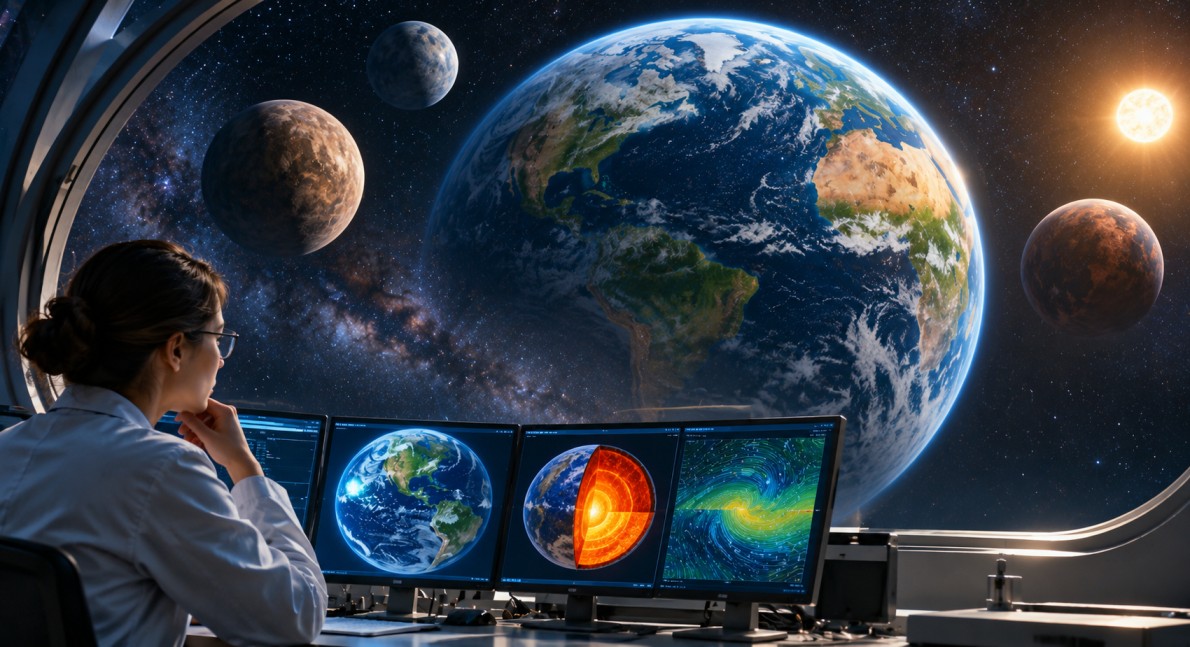
Earth Habitability Model research may help scientists understand whether distant planets could support life. On 2 November 2026, researchers from the University of Washington announced a virtual simulation of Earth designed to help identify possible signs of life on planets beyond our Solar System. The model follows Earth’s geochemical systems from its formation and projects them about 500 million years into the future, while leaving out the influence of life.
The simulation gives scientists a way to study how a planet might develop without living organisms. This is important when examining exoplanets, because researchers need to understand what a planet’s atmosphere and surface could look like through natural processes alone.

A Life-Free Model of Earth
The simulation was led by Samantha Gilbert-Janizek, who is now a postdoctoral fellow at the University of California, Riverside. It tracks major geochemical systems and predicts 19 planetary properties, including heat moving through Earth’s mantle.
The model can also be adapted to study how the atmospheres of rocky planets change over time. By understanding how a planet develops without life, scientists can build a reference point for comparing observations from distant worlds.
The research was published in The Planetary Science Journal on 18 September 2026, according to the supplied report.
Why Scientists Need a Life-Free Baseline
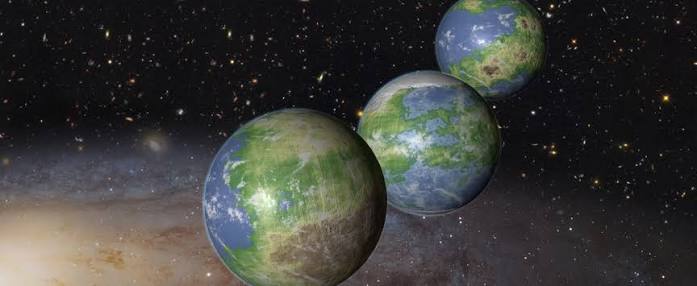
When scientists observe an exoplanet, they may look for gases or other features that could be linked to living organisms. These possible signs are known as biosignatures.
However, some features that appear to suggest life can also form through non-biological processes. For example, oxygen in a planet’s atmosphere may be produced by natural chemical reactions rather than living organisms.
A life-free model helps researchers test whether a possible biosignature could arise without life. If natural processes can explain the observation, scientists need to be careful before treating it as evidence of living organisms.
The Earth simulation is designed to provide this kind of baseline. It may help researchers interpret atmospheric data and decide which observations deserve further study.
Supporting Future Exoplanet Telescopes
The model could also support the planning and use of future space telescopes, including the proposed Habitable Worlds Observatory. Such telescopes are expected to study rocky planets around other stars and examine their atmospheres for possible signs of habitability.
A planet’s atmosphere can provide clues about its surface conditions, climate and chemical activity. But those clues need to be understood in the context of the planet’s history.
By comparing telescope observations with simulations of planets without life, researchers may be able to identify unusual conditions that deserve closer attention. The approach could help make the search for life beyond Earth more careful and evidence-based.
Another Model Studies Smaller Planets
The report also describes a separate project introduced on 4 June 2026 by a team led by Michelle Hill at Stanford University’s Doerr School of Sustainability.
Known as the Smaller Than Earth Habitability Model, it examines how a planet’s size and atmosphere may affect its ability to remain habitable. The research was also published in The Planetary Science Journal.
The model suggests that rocky planets at least 80% of Earth’s size could retain atmospheres for 10 billion years or longer, provided they orbit within the habitable zones of Sun-like stars.
A habitable zone is the region around a star where conditions may allow liquid water to exist on a planet’s surface. Being in this zone does not automatically mean a planet has life or is suitable for living organisms. Other factors, such as its atmosphere, surface conditions and long-term development, also matter.
Planet Size and Atmospheric Stability
A planet’s size can affect how strongly it holds its atmosphere. Smaller planets may lose gases more easily, depending on factors such as their gravity, temperature and the activity of their host star.
An atmosphere can help regulate surface temperature and protect a planet from some forms of radiation. If a planet loses too much of its atmosphere, its conditions may change significantly.
The smaller-planet model offers a way to explore how size and atmospheric properties influence a planet over long periods. Combined with broader simulations of Earth’s geochemical history, this kind of research can help scientists understand the many conditions that shape planetary habitability.
A More Careful Search for Life
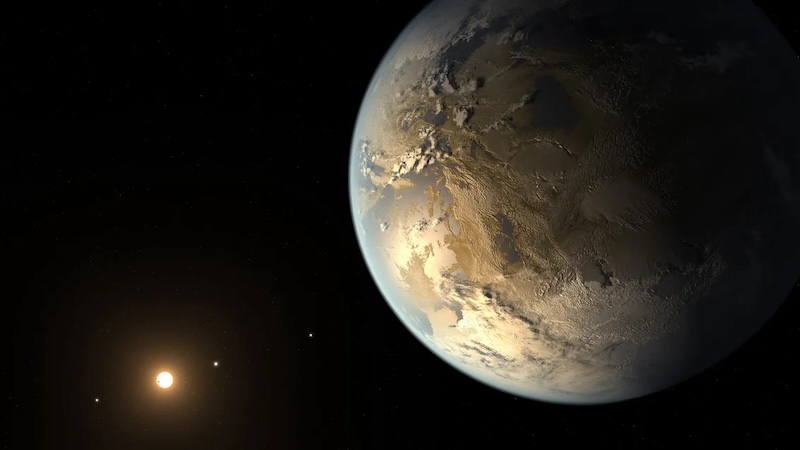
The search for life beyond Earth involves more than finding a planet at the right distance from its star. Scientists must also study how planets form, how their atmospheres change and whether natural processes can explain the signals they observe.
The new Earth simulation provides a reference for examining a planet’s development without life, while the smaller-planet model explores how size and atmosphere may affect long-term habitability. Together, these approaches can help researchers make better use of observations from current and future telescopes as they investigate distant worlds.