


Greenland Security Pact Approved

Greenland Security Pact has received approval from Greenland’s parliament, marking a new step in security cooperation between Greenland, Denmark and the United States. On 3 November 2026, Greenland’s parliament, Inatsisartut, voted in favour of the agreement during a session in Nuuk. The result was 16 votes in favour, no votes against and seven abstentions. The approval comes at a time when Arctic security has become an important issue for the United States and its NATO partners.
The US State Department welcomed the parliamentary decision on 4 November. Spokesperson Tommy Pigott described the approval as a “massive win” for NATO and US national security. The agreement is expected to strengthen defence cooperation in the Arctic, a region that has gained greater strategic importance because of its location and changing security conditions.

What Is the Greenland Security Pact?
The Greenland Security Pact is a trilateral agreement involving Greenland, Denmark and the United States. It aims to expand defence cooperation and support a stronger US military presence in Greenland.
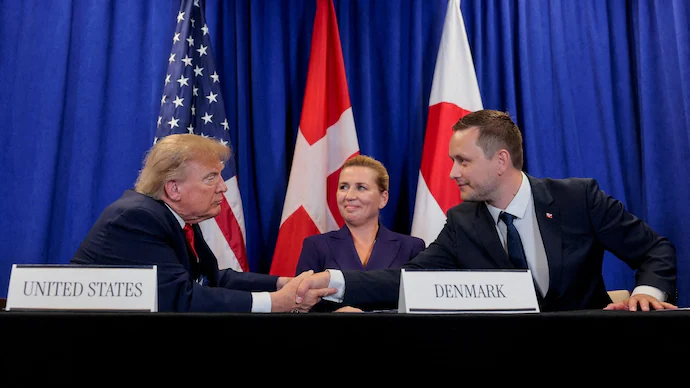
The agreement was signed on 22 September 2026 by US President Donald Trump, Danish Prime Minister Mette Frederiksen and Greenlandic Prime Minister Jens-Frederik Nielsen. The signing took place on the sidelines of the United Nations General Assembly in New York.
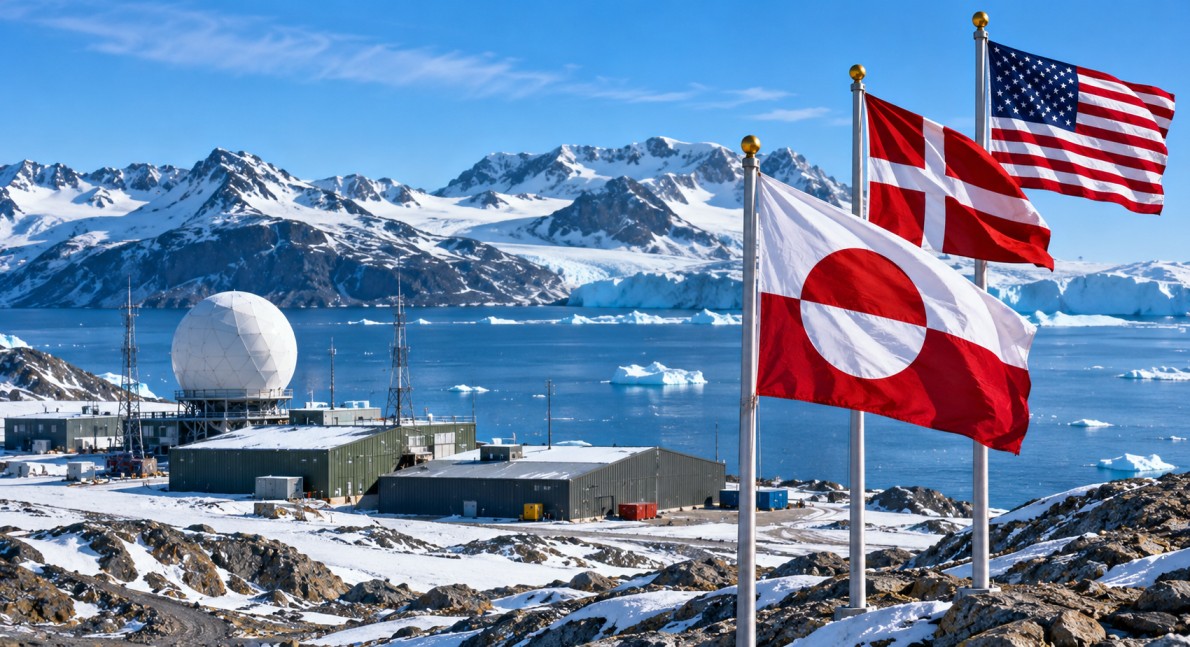
The pact includes plans to modernise Pituffik Space Base and develop additional defence areas at Narsarsuaq and Mestersvig. It also supports plans connected to the proposed Golden Dome Missile Defense System, which the US government has presented as a future missile defence project.
Military Presence and Arctic Security
Greenland is located between North America and Europe, making it an important location for monitoring activity in the Arctic and the North Atlantic. Its position is also relevant to missile warning and wider defence planning.
The pact would allow the United States to strengthen its military presence in Greenland. One of its main parts is the modernisation of Pituffik Space Base, a key US military facility in the region.
Pituffik is home to a ballistic-missile early-warning system. The system is designed to detect and track intercontinental ballistic missiles that may be launched towards North America. The base also supports space surveillance and other defence activities.
The agreement includes plans for additional defence areas at Narsarsuaq and Mestersvig. These locations could support future military operations and improve defence cooperation in Greenland.
Greenland’s Sovereignty and Self-Determination
The agreement also addresses Greenland’s political status. It reaffirms Denmark’s sovereignty over Greenland while recognising the Greenlandic people’s right to self-determination.
Greenland is an autonomous territory within the Kingdom of Denmark. It manages many of its own domestic matters, while Denmark remains responsible for areas such as defence and foreign affairs.
According to the agreement’s terms, the pact would continue to apply even if Greenland became independent in the future. Greenland would also be required to remain a member of NATO under the agreement.
These provisions are important because Greenland’s future political status remains a subject of public discussion. The pact is intended to support security cooperation while recognising Greenland’s right to determine its own future.
Political Background and Tensions
The agreement follows repeated statements by US President Donald Trump about making Greenland part of the United States. These statements created tension between Washington, Copenhagen and Greenland’s political leaders.
Greenland’s government and Denmark have stressed the importance of sovereignty and the right of Greenlanders to decide their own future. The new pact provides a framework for defence cooperation without changing Greenland’s status as part of the Kingdom of Denmark.
The agreement is therefore both a security arrangement and a political response to concerns about Greenland’s future.
Denmark’s Parliamentary Process
Although Greenland’s parliament has approved the agreement, it has not yet entered into force. Danish lawmakers are scheduled to hold the first reading of the pact on 11 November 2026. A final vote is planned for 19 November.
The agreement will take effect only after Denmark completes its parliamentary process. Until then, its implementation remains dependent on approval in Denmark.
Concerns About the Agreement
Some residents of Greenland and opposition lawmakers have raised questions about the pact. Their concerns include whether Greenland will receive enough economic benefits and how much influence the US government could gain through a stronger military presence.
Nalarak party leader Pelle Broberg has also voiced concerns about the agreement. These questions reflect the wider debate in Greenland about balancing defence cooperation, local interests and political independence.
The Greenland Security Pact could shape future relations between Greenland, Denmark and the United States. Its impact will depend on the final approval process and how the planned military arrangements are carried out. The agreement also places Greenland at the centre of continuing discussions about Arctic security, NATO cooperation and the region’s political future.