



India-Kazakhstan Treaty Strengthens Crime Cooperation

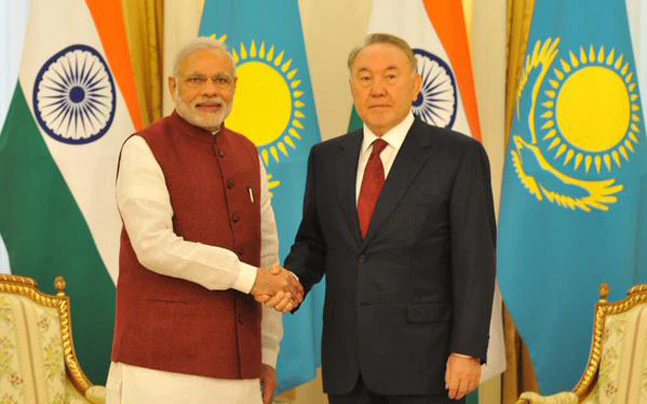
India-Kazakhstan Treaty became an important development in bilateral relations in early November 2026, as India and Kazakhstan signed an extradition agreement to strengthen cooperation against international crime and terrorism. The document was signed by Kazakhstan’s Prosecutor General, Berik Assylov, and India’s Ambassador to Kazakhstan, Y.K. Sailas Thangal. The agreement aims to provide a legal framework for handing over people wanted by either country for criminal prosecution or to serve court sentences.
India and Kazakhstan Strengthen Legal Cooperation
The extradition treaty is intended to improve cooperation between the two countries in dealing with people accused or convicted of criminal offences who may be present in the other country.

In some cases, people wanted by law enforcement agencies leave their home country to avoid investigation, prosecution or punishment. When such individuals are found in another country, legal procedures are required before they can be handed over.
The India-Kazakhstan Treaty provides a framework for handling these requests. It is expected to support both countries in addressing cross-border criminal activities and improving their ability to cooperate on serious cases, including terrorism-related offences.
The agreement also reflects the importance of international cooperation in dealing with crimes that extend beyond national borders.
Scope of the Extradition Treaty
The treaty establishes procedures for extraditing individuals who are wanted for criminal prosecution or who need to serve sentences imposed by courts.
Extradition is the formal legal process through which one country transfers a person to another country where that person is wanted for an alleged crime or an existing criminal sentence. It is carried out according to the laws and agreements of the countries involved.
The treaty complements existing arrangements between India and Kazakhstan. These include agreements on mutual legal assistance in criminal matters and the transfer of sentenced persons.
Mutual legal assistance allows countries to cooperate during criminal investigations. It may involve sharing evidence, obtaining documents, recording statements and providing other forms of legal support.
The transfer of sentenced persons is different from extradition. It allows eligible prisoners to serve their sentences in their home country, subject to the applicable agreement and legal conditions.
Together, these arrangements provide a broader framework for legal cooperation between India and Kazakhstan.
Union Cabinet Approved the Treaty
The Union Cabinet, chaired by Prime Minister Narendra Modi, approved the signing and ratification of extradition treaties, including the agreement with Kazakhstan, on August 26, 2026.
Cabinet approval was an important step in the process of strengthening India’s legal cooperation with other countries. Extradition agreements help establish clear procedures for dealing with requests to transfer wanted individuals.
The November 2026 signing is described as a renewed or re-formalised commitment between India and Kazakhstan. The two countries had previously signed a bilateral extradition treaty on January 24, 2009, which was ratified on February 13, 2009. The available information does not provide further details about the legal changes or specific provisions connected with the latest signing.
India-Kazakhstan Relations and Growing Connections
India and Kazakhstan maintain relations in several areas, including trade, education, energy, investment and regional cooperation. Kazakhstan is an important partner for India in Central Asia.
More than 600 Indian companies operate in Kazakhstan, reflecting business connections between the two countries. Indian businesses are involved in different sectors, creating opportunities for trade and investment.
Education is another important area of cooperation. Nearly 10,000 Indian students were enrolled in educational institutions in Kazakhstan during the 2025–2026 academic year. Many Indian students choose Kazakhstan for higher education, particularly in professional fields.
The growing movement of people, businesses and investments makes legal cooperation increasingly important. Agreements such as the India-Kazakhstan Treaty can help both countries address legal issues involving individuals who move across national borders.
What Is an Extradition Treaty?
An extradition treaty is a formal agreement between two countries that explains how a person wanted for a criminal offence can be transferred from one country to another.
Such treaties generally cover the offences for which extradition may be requested, the documents required and the legal procedures that must be followed. The exact conditions depend on the wording of the treaty and the domestic laws of the countries involved.
One important principle is dual criminality. Under this principle, the conduct for which extradition is requested must generally be considered a crime in both countries.
Another important principle is the specialty rule. It generally means that a person who has been extradited can be prosecuted only for the offence for which extradition was granted, unless the country that surrendered the person gives permission for other proceedings.
In India, extradition matters are governed by the Extradition Act, 1962. Depending on the case, a magistrate’s inquiry may take place before the Central Government decides whether the person should be surrendered.
International police cooperation may also involve Interpol Red Notices. A Red Notice asks law enforcement agencies worldwide to locate and provisionally arrest a person wanted by a member country. However, it is not an international arrest warrant, and each country decides what action to take under its own laws.
Importance of the Agreement
The India-Kazakhstan Treaty adds to the legal framework supporting cooperation between the two countries. It can help authorities deal with criminal cases involving individuals who cross international borders and make it more difficult for wanted persons to avoid legal proceedings simply by moving abroad.
The agreement also complements cooperation in criminal investigations and the transfer of sentenced persons. Along with trade, education and investment links, legal cooperation forms an important part of the wider relationship between India and Kazakhstan.