Indigenous Hovercraft Coast Guard

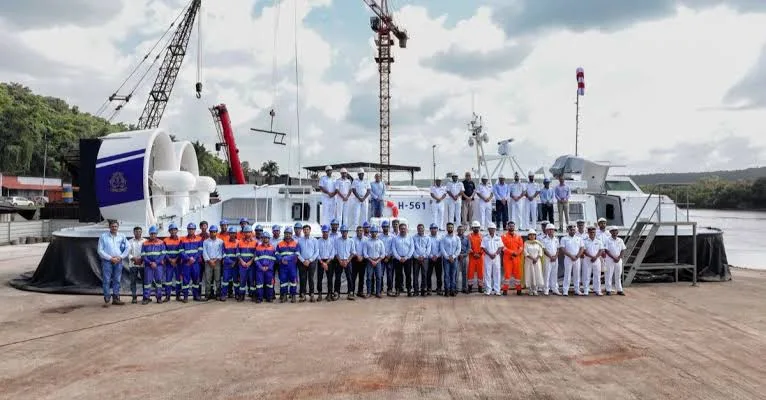
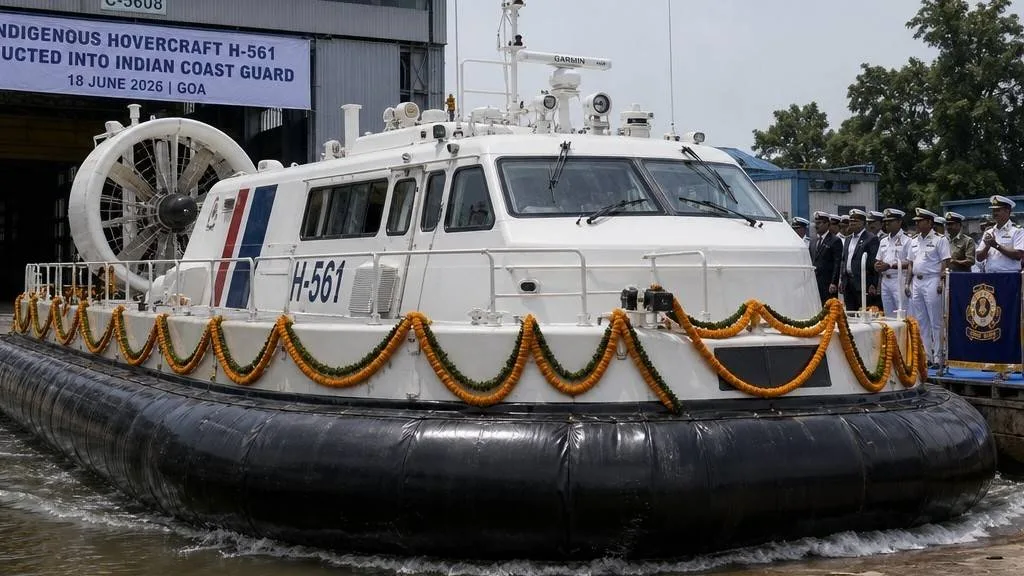
Indigenous Hovercraft marks a major step in India’s defence and maritime strength as the Indian Coast Guard inducted its first locally built Air Cushion Vehicle on 18 June 2026. The hovercraft, named H-561, represents growing progress in domestic shipbuilding and defence technology.
Thank you for reading this post, don't forget to subscribe!Built at a shipyard in Goa, this is the first of six such hovercraft being developed for the force. The move reflects India’s focus on strengthening coastal security using homegrown solutions.
What is an Air Cushion Vehicle
An Air Cushion Vehicle, also known as a hovercraft, travels on a layer of air created by powerful fans. This allows it to move smoothly over water, sand, mud, and even marshy land.
Unlike traditional boats, hovercraft do not rely on deep water. This makes them highly useful in areas where normal vessels cannot operate effectively.
Their ability to move across different surfaces makes them ideal for coastal and rescue missions.
Role in Coast Guard Operations
The Indian Coast Guard uses hovercraft for multiple purposes. These include coastal surveillance, search and rescue operations, and quick response during emergencies.
They are especially useful in shallow coastal zones where water levels change due to tides. In such areas, normal ships may face difficulty, but hovercraft can move easily.
This makes them a valuable addition to maritime operations.
Built Under Indigenous Programme
The new hovercraft is part of an indigenous shipbuilding programme linked to the Aatmanirbhar Bharat initiative. This programme focuses on developing and manufacturing defence equipment within India.
The hovercraft was built by Chowgule & Company Private Limited, showing the capability of Indian companies in advanced engineering.
This project highlights the shift toward reducing dependence on imports in defence manufacturing.
Importance of Coastal Security
India has a long coastline of over 7,500 kilometers. Protecting this vast area is a major responsibility for the Coast Guard.
Hovercraft play a key role in monitoring coastal regions, preventing illegal activities, and ensuring safety at sea.
They can quickly reach areas that are difficult to access, making them essential for modern maritime security.
Modern Features and Capabilities
The Indigenous Hovercraft is designed to handle various operational challenges. It can travel at high speed and carry personnel and equipment.
Its design allows it to operate in extreme conditions, including shallow waters and rough coastal terrains.
Such features make it suitable for both routine patrols and emergency situations.
Support for Search and Rescue Missions
Search and rescue is one of the most important roles of the Coast Guard. Hovercraft can reach accident sites faster than many traditional vessels.
They can operate in flooded areas, coastal zones, and disaster-hit regions where other vehicles cannot go.
This improves response time and increases the chances of saving lives.
Boost to Indian Shipbuilding Industry
The development of Indigenous Hovercraft also supports India’s shipbuilding sector. Projects like this create opportunities for local industries and skilled workers.
Shipyards in places like Goa are becoming important hubs for defence manufacturing.
This growth contributes to economic development and technological advancement.
Growing Focus on Self-Reliance
India is focusing more on self-reliance in defence production. Building equipment within the country reduces dependency on foreign suppliers.
It also allows better control over technology and customization based on specific needs.
The hovercraft project is a clear example of this approach.
Future of Maritime Technology
Maritime technology is evolving with new designs and advanced systems. Hovercraft are part of this change, offering flexibility and efficiency.
With more indigenous projects in progress, India is expected to strengthen its maritime capabilities further.
The introduction of this hovercraft is a step toward modern and efficient coastal defence systems.
Future Expansion and Fleet Development
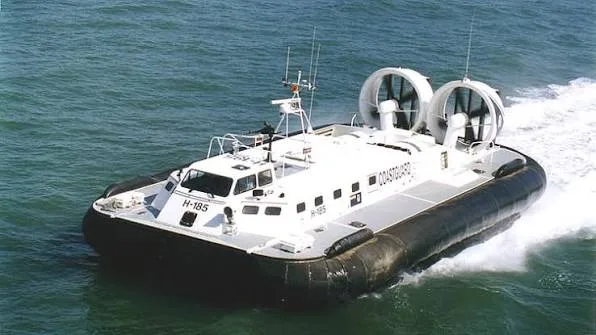
With the induction of the first hovercraft, plans are already in place to expand the fleet. The remaining five Air Cushion Vehicles under construction are expected to join the Indian Coast Guard in the coming years.
This gradual expansion will improve operational reach and strengthen coastal monitoring across different regions. It also shows long-term planning in building a modern and capable maritime force.