


Guatemala Volcán de Fuego Eruption Lights Up the Sky and Raises Fresh Concerns

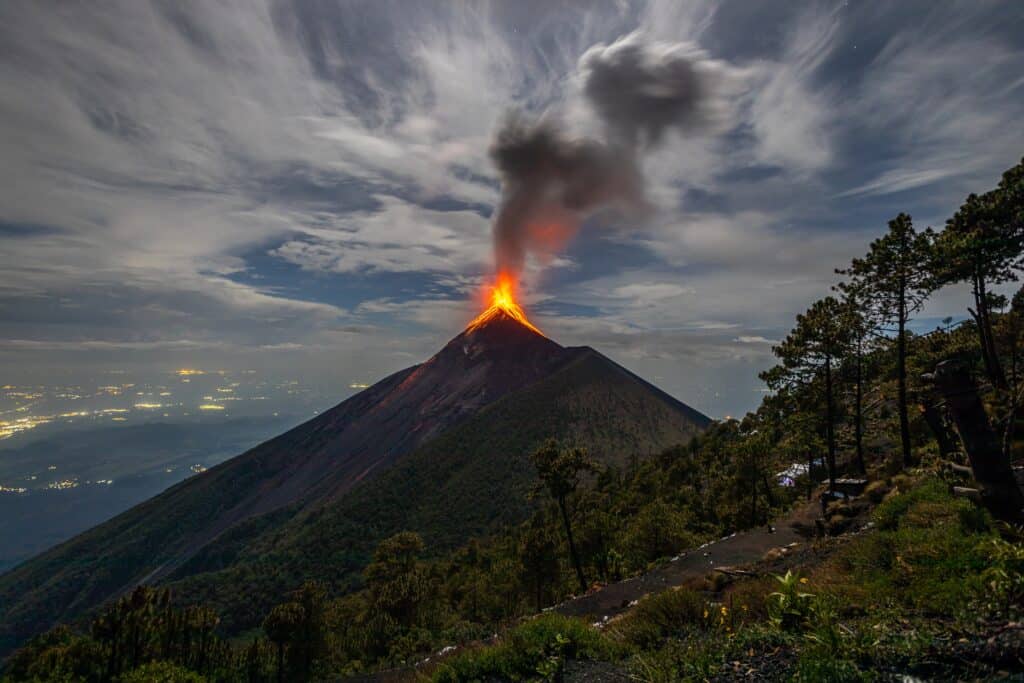
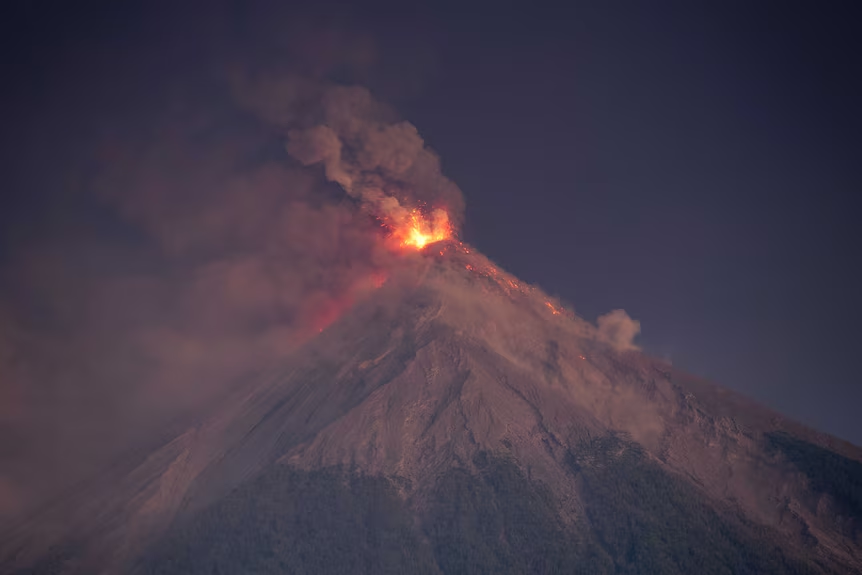
The Guatemala Volcán de Fuego eruption once again highlighted the power of one of Central America’s most active volcanoes. In late January, volcanic activity increased sharply and continued into early February, producing strong explosions, glowing lava, and tall ash plumes. The eruption lit up the night sky and quickly gained worldwide attention after dramatic videos spread across social media platforms.
Thank you for reading this post, don't forget to subscribe!Increase in Explosive Activity
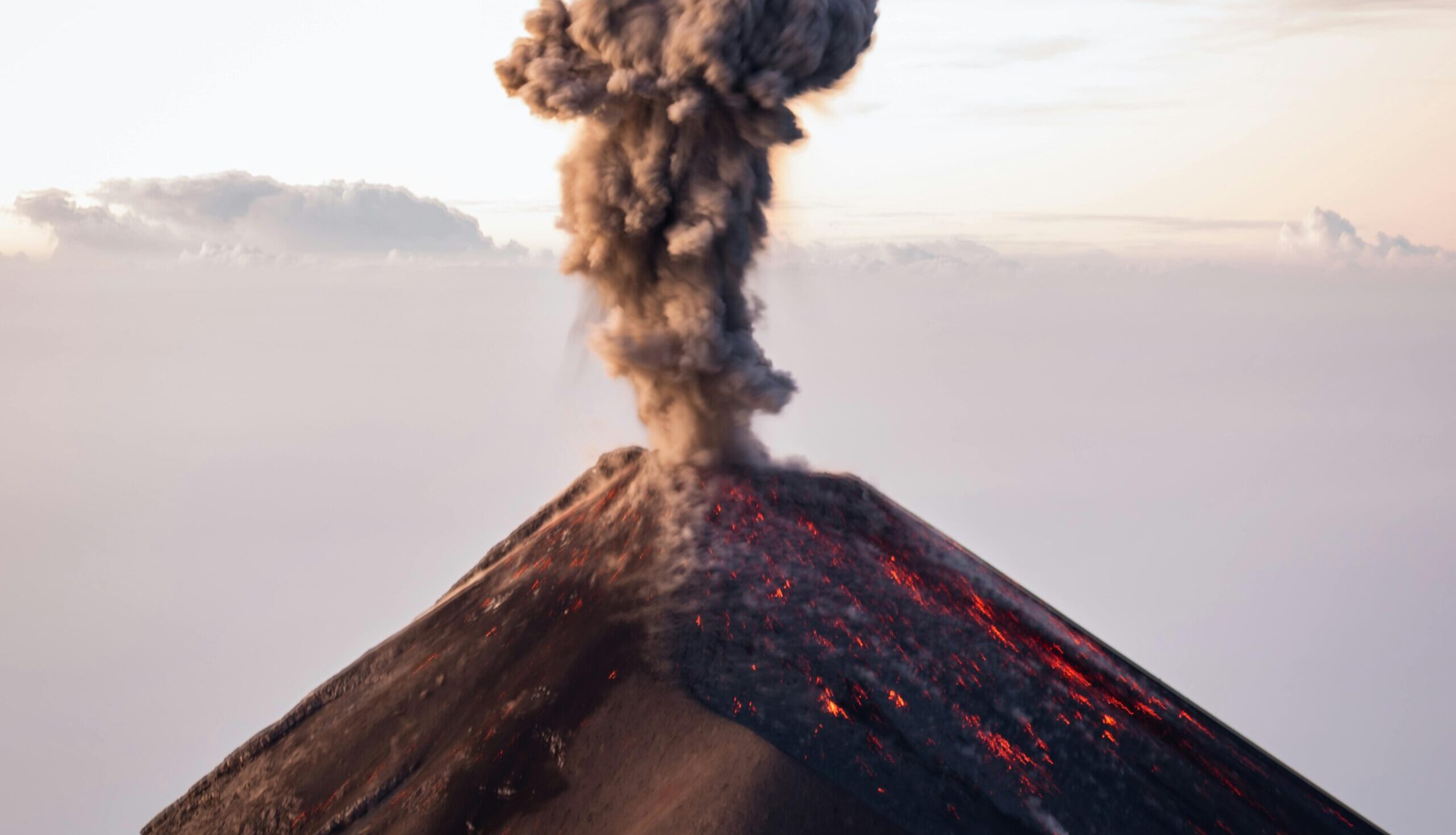
According to Guatemala’s scientific authority, the Instituto Nacional de Sismologia, Vulcanologia, Meteorologia e Hidrologia, Volcán de Fuego entered a phase of sustained eruptive behavior. Explosions became more frequent and intense, sending ash columns between 14,000 and 16,000 feet above sea level. These ash clouds were significant enough to trigger multiple advisories from the Volcanic Ash Advisory Center.
Volcanic ash is especially dangerous for aircraft because fine particles can damage jet engines and reduce visibility. As a result, aviation authorities closely monitored the situation, and airlines were warned to be cautious when flying near Guatemalan airspace. This shows how a single volcanic event can affect not only nearby communities but also international travel.
Ashfall and Community Experiences
The Guatemala Volcán de Fuego eruption had clear effects on surrounding provinces, including Sacatepéquez and Chimaltenango. Residents in communities such as Panimache, Morelia, and Santa Sofía reported hearing loud explosive sounds that echoed through valleys. Many people also noticed vibrations and saw ash drifting through the air.
Light ashfall settled on houses, roads, and farmland, reducing visibility and affecting air quality. While the ash did not reach dangerous levels, it caused discomfort, especially for children, elderly people, and those with breathing problems. Authorities advised residents to wear masks when possible and remain indoors during periods of heavy ash emission.
A Volcano Known for Constant Activity
Standing at about 3,763 metres, Volcán de Fuego is famous for its near-constant Strombolian activity. This type of eruption usually includes small to moderate explosions that throw lava fragments into the air at regular intervals. Because of this, nearby communities are used to seeing smoke and occasional glowing bursts from the summit.
However, scientists noted that this Guatemala Volcán de Fuego eruption was stronger than typical daily activity. The explosions were more powerful, the lava appeared brighter, and the ash plumes rose higher than usual. These signs suggest increased pressure within the volcano, which is why authorities increased monitoring efforts.
Round-the-Clock Monitoring
Guatemalan authorities continue to observe Volcán de Fuego 24 hours a day using seismic sensors, webcams, and satellite data. This constant monitoring helps scientists detect changes in activity quickly and issue early warnings if the situation worsens. Emergency agencies also remain in close contact with local communities to share updates and safety advice.
People living near river channels and volcanic drainages were warned to stay alert. These areas are at risk of lahars, which are fast-moving mudflows created when rain mixes with ash and loose volcanic material. Lahars can occur even after explosive activity slows down, making them a serious long-term hazard.
Lessons from the Past
The Guatemala Volcán de Fuego eruption inevitably brings memories of the deadly 2018 eruption, which killed nearly 200 people and destroyed entire villages. That tragedy exposed gaps in warning systems and emergency response, leading to improvements in disaster planning and communication.
Since then, authorities have focused on better preparedness, clearer evacuation plans, and stronger coordination between scientists and emergency services. During the current eruption, no large-scale evacuations were ordered as of early February 2026, but officials stressed that readiness remains essential given the volcano’s unpredictable nature.
Ongoing Risks and Daily Challenges
More than 1.5 million people live in valleys surrounding Volcán de Fuego, making volcanic hazards a constant concern. Even moderate eruptions can disrupt daily life by damaging crops, contaminating water sources, and affecting transportation. Farmers worry about the impact of ash on soil and harvests, while schools and businesses may face temporary closures.
Despite these challenges, communities continue to adapt to life near the volcano. Authorities urge residents to stay informed through official channels and follow safety instructions carefully.
The Guatemala Volcán de Fuego eruption serves as a strong reminder of nature’s power and the importance of constant monitoring and preparedness in regions shaped by active volcanoes.