Guru Nanak Jayanti: Celebrating the Birth of Sikhism’s Eternal Light

Guru Nanak Jayanti, also known as Gurpurab, is one of the most revered and sacred festivals in Sikhism. It commemorates the birth anniversary of Guru Nanak Dev Ji, the founder of Sikhism and the first of the ten Sikh Gurus. His teachings laid the foundation of Sikh philosophy, which emphasizes equality, compassion, truth, and devotion to one God.
Thank you for reading this post, don't forget to subscribe!The festival is not only a celebration for Sikhs but also an occasion for people of all faiths to reflect upon Guru Nanak’s universal messages of peace, love, and selfless service. His life and teachings continue to inspire millions across the globe, making Guru Nanak Jayanti a spiritually uplifting event that transcends religious boundaries.
Historical Background of Guru Nanak Jayanti
Guru Nanak Dev Ji was born on 15 April 1469 (traditionally celebrated on Kartika Purnima, the full moon day of the Kartik month as per the Hindu lunar calendar). The place of his birth, Talwandi (now Nankana Sahib, Pakistan), has become a sacred pilgrimage site for Sikhs worldwide.
His birth took place during a time of great social, religious, and political turmoil. India in the 15th century was a land divided by caste hierarchies, gender discrimination, and religious conflicts. Amid such divisions, Guru Nanak Dev Ji emerged as a divine voice of unity and equality, rejecting ritualism and emphasizing direct devotion to God through meditation, good deeds, and truthful living.
The Life and Teachings of Guru Nanak Dev Ji
Early Life and Divine Calling
From a young age, Guru Nanak exhibited profound spiritual insight. Stories from his childhood reflect his deep questioning of social norms and religious dogmas. His famous saying, “There is no Hindu, there is no Muslim,” symbolized his vision of a world beyond divisions a world where humanity was bound by one divine creator.
At the age of around 30, after a mystical experience in the river Bein, Guru Nanak declared his divine mission with the words:
“Na koi Hindu, na koi Musalman” meaning “There is no Hindu, no Muslim; all are children of one God.”
This marked the beginning of his spiritual journey as a reformer and preacher of divine truth.
Four Great Udasis (Spiritual Journeys)
Guru Nanak undertook four major journeys, known as Udasis, across India and beyond traveling as far as Tibet, Mecca, Baghdad, Assam, and Sri Lanka. These journeys were aimed at spreading the message of the One Universal Creator (Ik Onkar) and challenging blind rituals, idol worship, and superstitions.
During these journeys, Guru Nanak engaged in deep dialogues with people of various faiths, including Hindus, Muslims, Buddhists, and Jains. He emphasized meditation on God’s name (Naam Japna), honest living (Kirat Karni), and sharing with others (Vand Chakna).
His journeys led to the establishment of a vast spiritual network that formed the roots of Sikhism.
Establishment of Kartarpur Sahib
In his later years, Guru Nanak settled in Kartarpur (in present-day Pakistan) and established a spiritual community based on equality and service. This place became the first Sikh commune, where people of all backgrounds gathered to pray, work, and eat together a revolutionary concept at that time.
He introduced the practice of Langar (community kitchen), where everyone, regardless of caste, religion, or status, could sit together and share a meal. Langar became the living symbol of equality and humility an enduring tradition followed in every Gurdwara today.
Teachings of Guru Nanak Dev Ji
Guru Nanak’s teachings are preserved in the Guru Granth Sahib, the holy scripture of Sikhism. His hymns and spiritual insights form the foundation of Sikh philosophy. Below are some of his key principles:
1. Ik Onkar – One Universal Creator
Guru Nanak proclaimed the existence of One God formless, eternal, and beyond all religious boundaries. His message rejected polytheism and ritualism and focused on direct communion with the Divine through meditation and good deeds.
2. Equality and Social Justice
He stood firmly against caste discrimination and gender inequality. Guru Nanak believed that all human beings are equal, and women deserve the same respect as men. His teachings encouraged dignity, compassion, and fairness for all.
3. Honest Living (Kirat Karni)
Guru Nanak urged his followers to earn their livelihood through honest and truthful means. He emphasized that spirituality is not achieved through renunciation but through honest work and moral living amidst society.
4. Sharing with Others (Vand Chakna)
One of the pillars of Sikhism, Vand Chakna, teaches that whatever we earn should be shared with those in need. It encourages generosity, community service, and empathy.
5. Naam Japna – Meditation and Remembrance of God
Guru Nanak taught that continuous remembrance of God’s name leads to liberation and inner peace. Through meditation and prayer, one can overcome ego and attain spiritual bliss.
6. Selfless Service (Seva)
The practice of Seva serving others without expectation was a core value of Guru Nanak’s philosophy. It represents the highest form of devotion and compassion.
Significance of Guru Nanak Jayanti
Guru Nanak Jayanti, also called Gurpurab, literally means the “Festival of the Guru.” It is celebrated to honor Guru Nanak’s birth and to reflect upon his teachings that remain relevant even in modern times. The festival signifies the triumph of truth over falsehood, equality over discrimination, and compassion over ego.
It’s not just a day of religious observance but a reminder for humanity to live with humility, service, and faith in one Creator.
How Guru Nanak Jayanti is Celebrated
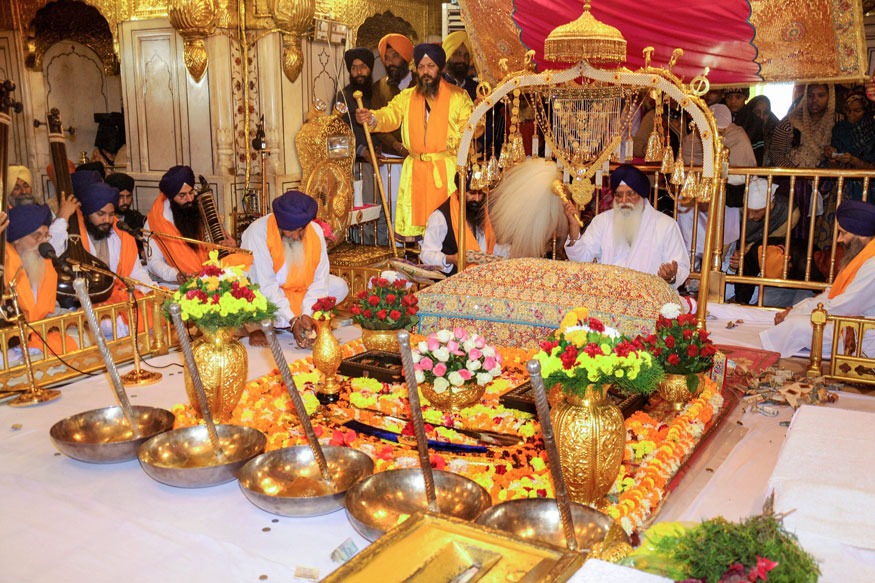
The celebration of Guru Nanak Jayanti is marked by great enthusiasm and devotion among Sikhs around the world. The festivities usually last for three days, with prayers, hymns, and community service forming the heart of the event.
1. Akhand Path – Continuous Reading of Guru Granth Sahib
The celebration begins two days prior to the main day with an Akhand Path, a non-stop 48-hour recitation of the Guru Granth Sahib. The sacred text is read continuously without interruption, signifying eternal devotion and reverence.
2. Nagar Kirtan – Procession of Devotion
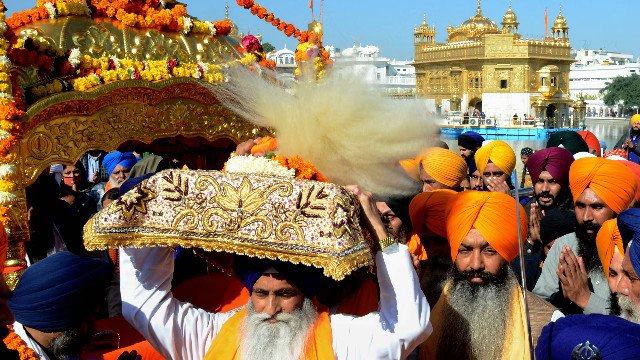
On the day before Guru Nanak Jayanti, a Nagar Kirtan (religious procession) is organized. The procession is led by the Panj Pyare (Five Beloved Ones), who represent the spirit of Sikh unity and sacrifice. Devotees sing devotional hymns (Shabads), display traditional martial arts (Gatka), and spread messages of peace and harmony.
The Nagar Kirtan passes through streets beautifully decorated with flags and lights, while volunteers distribute Karah Prasad (holy offering) and Langar to all.
3. Langar – Community Feast
The Langar, or community kitchen, is an essential part of Guru Nanak Jayanti. Thousands of devotees participate in preparing and serving free meals to everyone, irrespective of caste, creed, or background. This practice upholds Guru Nanak’s message of equality and selfless service.
4. Decorations and Lighting of Gurdwaras
Gurdwaras (Sikh temples) across the world are illuminated with lights, candles, and floral decorations. Special prayer meetings and kirtan sessions are held. Prominent gurdwaras like Golden Temple (Amritsar), Nankana Sahib (Pakistan), and Gurdwara Bangla Sahib (Delhi) witness massive gatherings of devotees.
5. Early Morning Processions and Prayers
On the day of Guru Nanak Jayanti, devotees gather early in the morning to sing Asa di Var (morning hymns). The atmosphere is filled with devotion and music, celebrating the life and legacy of the great Guru.
Guru Nanak’s Relevance in the Modern World
Guru Nanak’s teachings hold timeless relevance. In today’s era of materialism, intolerance, and inequality, his philosophy serves as a guiding light for all humanity.
- On Equality: His teachings remind us that every human, irrespective of gender, caste, or religion, deserves equal dignity.
- On Environment: Guru Nanak saw the natural world as divine creation, saying, “Air is the Guru, Water is the Father, and Earth the Great Mother.” This underscores his ecological wisdom, urging humanity to live sustainably.
- On Interfaith Harmony: Guru Nanak built bridges between communities, advocating unity amidst diversity a lesson the modern world needs more than ever.
- On Ethical Living: His emphasis on truth, compassion, and humility remains a moral compass for a society struggling with greed and ego.
Major Gurudwaras Associated with Guru Nanak Dev Ji
1. Nankana Sahib (Pakistan)
The birthplace of Guru Nanak Dev Ji, now located in Pakistan, is one of the holiest sites for Sikhs. Thousands of devotees visit this shrine during Gurpurab celebrations.
2. Gurdwara Kartarpur Sahib (Pakistan)
This is the place where Guru Nanak spent his final years. The Kartarpur Corridor, opened in 2019, allows pilgrims from India to visit the site without a visa a symbol of peace and faith.
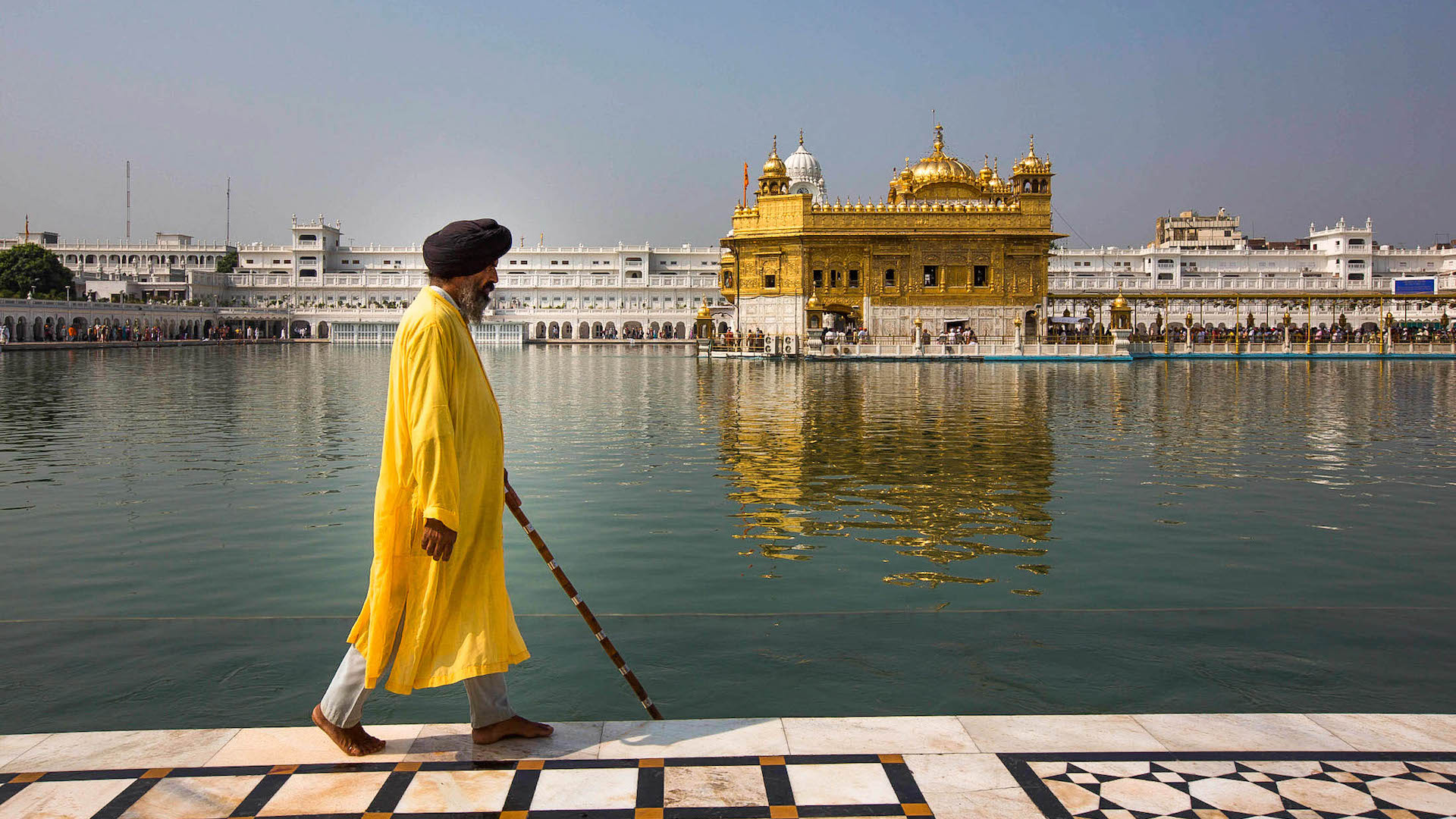
3. Golden Temple (Harmandir Sahib), Amritsar
One of the most iconic spiritual centers in the world, the Golden Temple was built to embody Guru Nanak’s principles of equality and service. Its four entrances symbolize openness to all humanity.
4. Gurdwara Panja Sahib (Pakistan)
Located in Hasan Abdal, it is believed that Guru Nanak left a handprint on a rock here, symbolizing divine power and humility.
Global Celebration of Guru Nanak Jayanti
Guru Nanak Jayanti is celebrated not just in India but across the globe in Canada, the United States, the United Kingdom, Australia, and Malaysia, among others. Sikh communities organize processions, prayers, and cultural programs to spread the Guru’s message of universal brotherhood.
In recent years, global leaders and organizations like the United Nations have acknowledged Guru Nanak’s contributions to world peace, interfaith dialogue, and human rights.
Guru Nanak’s Legacy in Literature and Philosophy
Guru Nanak’s hymns, written in Gurmukhi, form part of the Guru Granth Sahib. His compositions blend spiritual depth with poetic beauty, emphasizing devotion through simplicity and truth.
Philosophically, Guru Nanak’s ideas bridge spirituality and rationality rejecting blind faith while promoting inner realization through mindfulness and compassion.
His legacy inspired the later Gurus to establish Sikh institutions such as the Khalsa, Langar, and Gurdwaras, ensuring the continuation of his principles through organized community life.
Lesser-Known Facts about Guru Nanak Dev Ji
- Guru Nanak was fluent in several languages, including Punjabi, Sanskrit, Persian, and Arabic.
- His lifelong companion and disciple, Bhai Mardana, was a Muslim musician who accompanied him on his journeys.
- Guru Nanak composed over 974 hymns, many of which are part of Sikh daily prayers.
- He introduced the concept of Sangat and Pangat where people pray and eat together, irrespective of status.
- Guru Nanak emphasized women’s empowerment centuries before it became a global movement, saying, “Why call her inferior, from whom kings are born?”
Art, Music, and Culture during Guru Nanak Jayanti
Music plays a central role in Guru Nanak Jayanti celebrations. Devotional hymns (Shabads) are sung in melodious ragas, filling the air with spiritual harmony. Sikh artists often depict scenes from Guru Nanak’s life through paintings, theatre, and kirtan performances.
Traditional Sikh attire, cultural exhibitions, and interfaith dialogues make the celebration both festive and educational reflecting the Guru’s vision of cultural inclusivity and divine unity.
Guru Nanak’s Message to Humanity
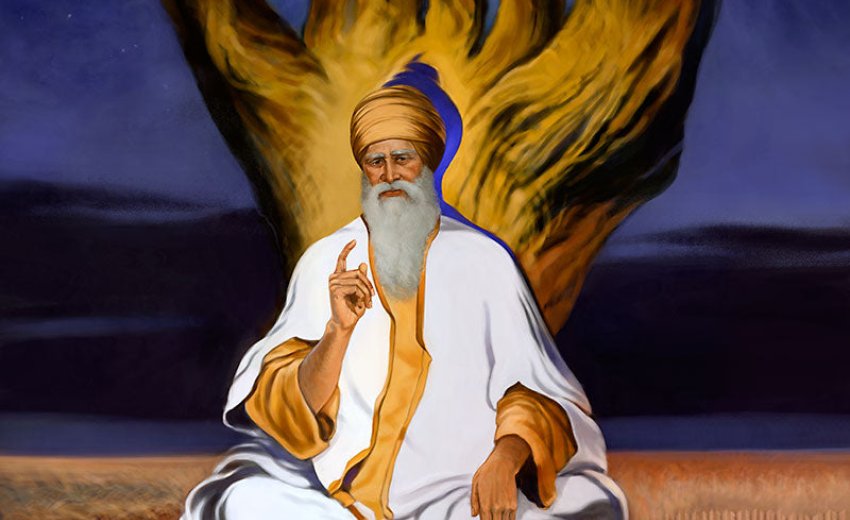
Guru Nanak’s core message can be summarized in three golden principles that guide a meaningful life:
- Naam Japna (Remembering God): Keep God in your heart and mind through prayer and meditation.
- Kirat Karni (Honest Living): Earn by ethical means, through hard work and integrity.
- Vand Chakna (Sharing with Others): Share your earnings, knowledge, and blessings with those in need.
These three teachings, though centuries old, remain relevant in guiding humanity toward compassion, unity, and righteousness.
Frequently Asked Questions (FAQs) about Guru Nanak Jayanti
1. When is Guru Nanak Jayanti celebrated?
Guru Nanak Jayanti is celebrated on the full moon day (Purnima) of the Kartik month in the lunar calendar, usually in October or November.
2. Why is Guru Nanak Jayanti important?
It honors Guru Nanak Dev Ji, the founder of Sikhism, whose teachings advocate equality, peace, and devotion to one God.
3. How do Sikhs celebrate Guru Nanak Jayanti?
Celebrations include Akhand Path, Nagar Kirtan, Langar, and Kirtan (hymn singing) at Gurdwaras worldwide.
4. What is the meaning of Langar in Sikhism?
Langar is a free community meal that represents equality and selfless service, open to everyone regardless of religion or status.
5. What are Guru Nanak’s main teachings?
His main teachings are Naam Japna, Kirat Karni, and Vand Chakna, emphasizing faith, honesty, and sharing.
6. Where was Guru Nanak Dev Ji born?
He was born in Talwandi (now Nankana Sahib, Pakistan) in 1469.
7. How old was Guru Nanak when he started preaching?
Around the age of 30, after his enlightenment experience in the River Bein.
8. How long did Guru Nanak live?
Guru Nanak Dev Ji lived for 70 years, from 1469 to 1539.
9. What is Guru Nanak’s universal message?
His universal message is that there is one God, and all humans are equal beyond caste, creed, and religion.
10. Which are the important places associated with Guru Nanak’s life?
Major sites include Nankana Sahib, Kartarpur Sahib, Panja Sahib, and Golden Temple (Amritsar).
Final Reflection
Guru Nanak Jayanti is more than a festival it’s a spiritual awakening. It calls upon humanity to rise above differences, live with compassion, and walk the path of truth and humility.
In today’s fragmented world, Guru Nanak’s teachings remain a beacon of hope reminding us that divinity lies not in rituals but in righteous action, love, and unity. As devotees celebrate Gurpurab with devotion and joy, the world is once again reminded of the eternal light that Guru Nanak brought to humankind.