Fast Track Immigration Trusted Traveller Programme Revolutionises International Travel for Indian Citizens

The Fast Track Immigration Trusted Traveller Programme (FTI-TTP) marks a new era in international travel for Indian citizens and Overseas Citizens of India (OCI). Launched by the Ministry of Home Affairs, this innovative digital initiative allows passengers to clear immigration in just a few seconds using biometric verification eliminating queues, paperwork, and manual checks. By introducing automated e-gates equipped with advanced facial and fingerprint recognition systems, the programme ensures a seamless, secure, and contactless travel experience that aligns India’s airports with global standards of efficiency and smart border management.
Thank you for reading this post, don't forget to subscribe!Seamless Digital Immigration Experience under the Fast Track Immigration Trusted Traveller Programme
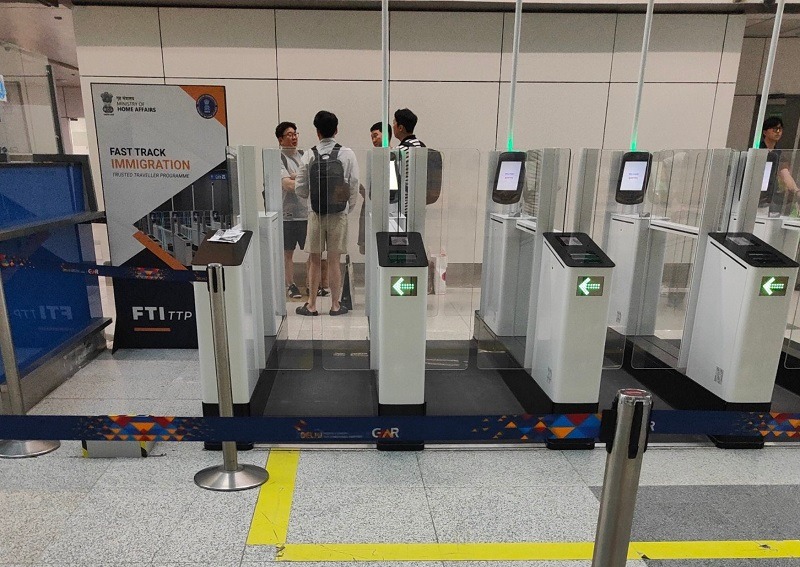
The FTI-TTP system relies on facial recognition and fingerprint biometrics to authenticate travellers’ identities at automated e-gates. Upon successful verification, the gate opens automatically, allowing instant clearance. This process ensures a fast, secure, and contactless experience for both departure and arrival passengers.
Beyond speed, the digital immigration process enhances security by minimising the potential for human error or impersonation. Every biometric verification is cross-checked against centralised government databases, ensuring accurate identification. Moreover, with the increased adoption of AI-driven facial recognition technologies, India’s airport immigration framework is now comparable to those of global hubs like Singapore’s Changi Airport, London Heathrow, and New York JFK.
The initiative also supports India’s “Ease of Travel” agenda, reducing congestion at busy international terminals while streamlining the passenger experience.
Registration and Verification Process
Accessing the FTI-TTP facility requires travellers to complete a simple online registration process. Interested individuals must visit the official portal ftittp.mha.gov.in and fill out the required details.
Once the online application is submitted, the applicant needs to visit a designated immigration office for biometric data capture and document verification. This step ensures the authenticity of personal details and identity.
After successful verification, the approval process generally takes 15 to 30 days. Once activated, registered travellers can simply scan their boarding pass and passport at the e-gate, allowing the system to match their facial and fingerprint biometrics before granting instant clearance.
This streamlined procedure eliminates long waits at immigration counters, providing a futuristic and efficient travel experience.
Airports Covered Under FTI-TTP
The Fast Track Immigration Trusted Traveller Programme is currently operational at eight major international airports across India:
- New Delhi (Terminal 3)
- Bengaluru (Kempegowda International Airport)
- Hyderabad (Rajiv Gandhi International Airport)
- Cochin International Airport
- Chennai International Airport
- Mumbai (Chhatrapati Shivaji Maharaj International Airport)
- Kolkata (Netaji Subhas Chandra Bose International Airport)
- Ahmedabad (Sardar Vallabhbhai Patel International Airport)
The government plans to expand the programme to 21 airports in the coming years as part of the Viksit Bharat @2047 vision, a roadmap for India’s long-term digital and infrastructural transformation.
The integration of FTI-TTP across multiple airports highlights India’s commitment to enhancing border efficiency, strengthening security, and improving passenger satisfaction.
Exam-Oriented Key Facts
- FTI-TTP enables Indian citizens and OCI cardholders to clear immigration using biometric verification.
- Online registration is available at ftittp.mha.gov.in.
- Approval processing time: 15–30 days.
- The programme is currently active at eight major international airports.
- The initiative supports the Viksit Bharat @2047 digital transformation vision.
- The service is free of cost for Indian citizens and OCI holders during its initial rollout phase.
Benefits and Global Alignment
According to a press release from the Press Information Bureau (PIB), the FTI-TTP offers free registration to Indian citizens and OCI cardholders in its initial phase. This digital immigration platform brings a multitude of benefits to passengers, immigration authorities, and airport operators alike:
- Reduced Waiting Time: Automated clearance through e-gates significantly cuts down immigration processing time.
- Enhanced Security: Biometric data ensures accurate verification, reducing chances of identity fraud.
- Improved Passenger Experience: Passengers enjoy a smooth, queue-free journey.
- Operational Efficiency: Automation allows immigration officers to focus on high-risk or exceptional cases.
- Global Competitiveness: Aligns India’s border control systems with international standards adopted by the U.S. Global Entry Programme, UK Registered Traveller Scheme, and Singapore’s Frequent Traveller Programme.
This modernisation not only supports India’s Digital India mission but also strengthens the country’s global image as a technologically advanced travel destination.

Transforming the Future of Indian Air Travel
The Fast Track Immigration Trusted Traveller Programme represents a major leap in India’s journey toward smart, secure, and efficient air travel. With digital biometrics and AI-driven systems, it enhances not only the convenience of passengers but also the credibility and security of India’s immigration network.
As the government expands this programme nationwide, Indian travellers can expect shorter queues, faster clearances, and a truly contactless airport experience. For frequent flyers, business professionals, and OCI cardholders, the FTI-TTP symbolises a new age of global mobility simpler, safer, and smarter.
By aligning with the Viksit Bharat @2047 goals, India is laying the foundation for a future where digital borders enable seamless travel, placing Indian airports on par with the best in the world.