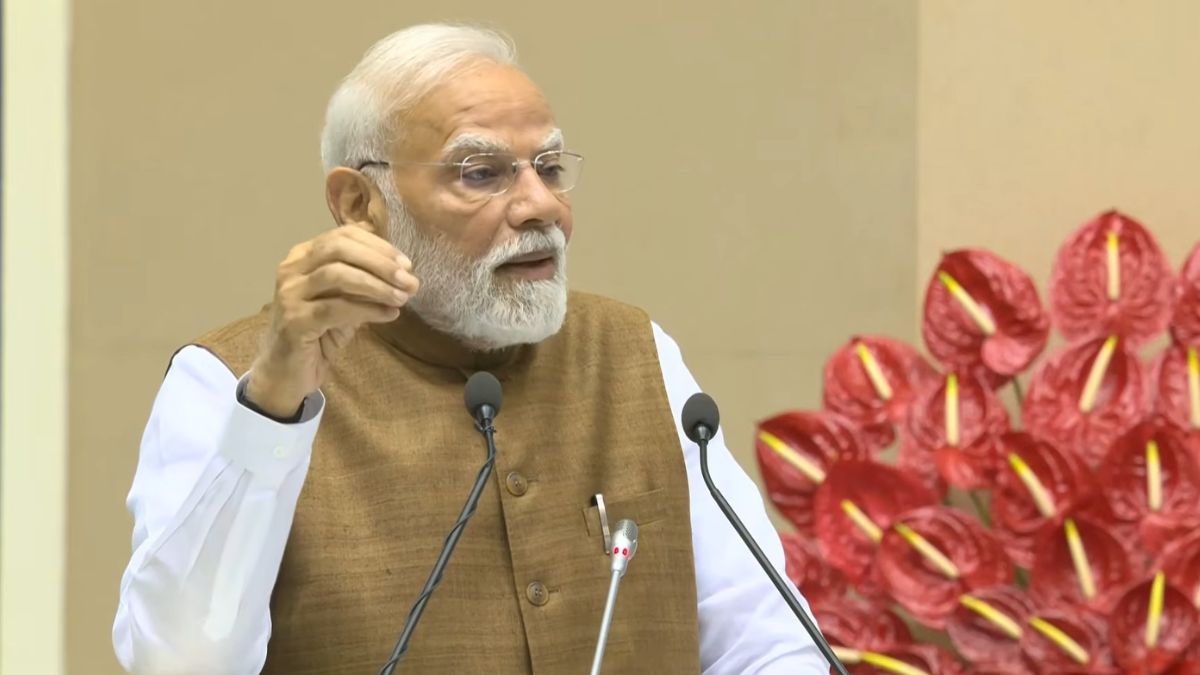
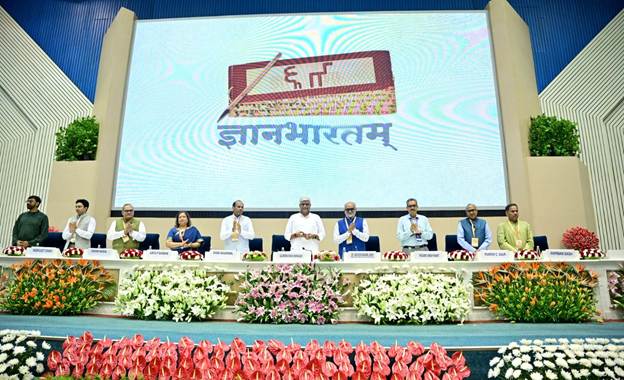
Gyan Bharatam Manuscript Mission: Preserving India’s Ancient Knowledge for the Future

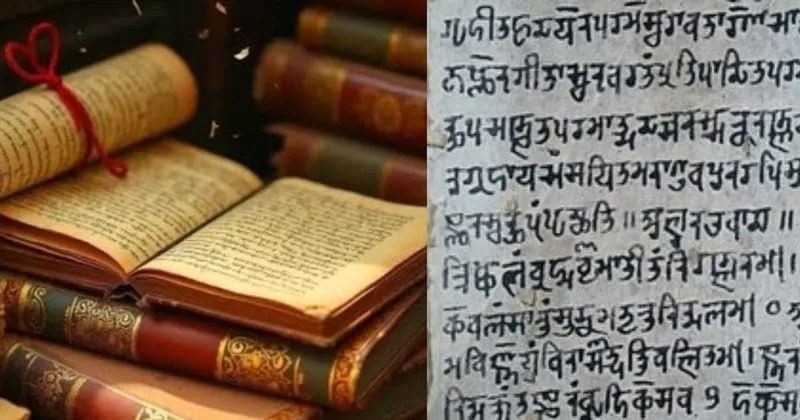
Gyan Bharatam Manuscript Mission is a landmark national initiative that aims to protect, preserve, and revitalise India’s vast collection of ancient manuscripts. India holds one of the world’s largest and most diverse collections of handwritten texts created on palm leaves, birch bark, cloth, and handmade paper. These manuscripts contain centuries of knowledge on philosophy, science, medicine, astronomy, literature, art, law, and social life. Many of these priceless works are fragile and at risk of being lost due to age and environmental damage, making the launch of this mission both timely and essential.
Thank you for reading this post, don't forget to subscribe!A Nationwide Drive to Safeguard Manuscripts
The Gyan Bharatam Manuscript Mission seeks to identify, document, conserve, and digitise manuscripts scattered across libraries, temples, monasteries, educational institutions, and private collections. Many manuscript owners lack the resources or technical knowledge to preserve them properly. Through this mission, professional support is provided to protect these materials using scientific methods.
The initiative also focuses on making manuscripts accessible to scholars, students, and the general public. By transforming physical texts into digital resources, the mission reduces the risk of damage while expanding opportunities for research and learning.
Funding Support and Long-Term Planning
For effective implementation, the Standing Finance Committee has approved an allocation of ₹491.66 crore for the period from 2025 to 2031. This financial backing reflects the government’s long-term commitment to protecting India’s documentary heritage.
Rather than treating manuscript preservation as a short-term project, the mission aims to build a permanent national ecosystem. This includes trained manpower, standardised workflows, modern equipment, and reliable storage systems that can support preservation efforts for decades.
Five Core Areas of Action
The mission operates through five main verticals that together cover every stage of manuscript management.
The first vertical is survey and cataloguing, which involves locating manuscripts and recording essential details such as language, script, subject, age, and condition.
The second vertical is conservation and capacity building. Damaged manuscripts are restored using scientific techniques, while training programmes develop skilled conservators and technicians.
The third vertical focuses on technology and digitisation. High-resolution, non-destructive scanners are used to create digital images. Advanced image processing improves clarity, and secure digital storage ensures long-term safety.
The fourth vertical is linguistics and translation. Many manuscripts are written in classical or regional languages that few people can read today. Translation efforts help bring this knowledge to a wider audience.
The fifth vertical is research, publication, and outreach. Scholars are encouraged to study manuscripts, publish findings, and share insights with the public.
Expanding Institutional Network
To carry out these activities, a nationwide network of Cluster Centres and Independent Centres is being developed. At present, 45 centres have been established, and 20 States and Union Territories have been onboarded as nodal authorities.
This decentralised structure allows local institutions to participate actively while following national standards. It also helps reach remote areas where many important manuscript collections are located.
Significant Progress in Digitisation
The Gyan Bharatam Manuscript Mission has already made notable progress. More than 7.5 lakh manuscripts have been digitised, and around 1.29 lakh manuscripts are available on the dedicated online portal.
The digitisation process follows strict quality standards. High-resolution scanning captures fine details, metadata protocols ensure easy search and identification, and data is stored using LTO-9 tapes along with cloud-based backup systems.
An AI-enabled digital platform and a mobile application are under development to further improve access and research capabilities.
Technology Partnerships and Data Security
Technical partners support the mission in areas such as scanner deployment, metadata creation, and system integration. Digital collections are being linked with the National Digital Repository for national and international access.
Strong cybersecurity measures, multiple backups, and secure storage facilities ensure that digital data remains safe from loss or damage.
Preserving Heritage for Generations
The Gyan Bharatam Manuscript Mission reflects India’s determination to protect its intellectual legacy. By combining traditional knowledge with modern technology, the mission is creating a bridge between the past and the future.
As more manuscripts are discovered, preserved, and studied, India’s vast heritage of ideas will continue to inspire innovation, scholarship, and cultural pride. This initiative ensures that ancient voices are not forgotten, but instead become a living part of the nation’s journey towards a knowledge-driven future.