Hierarchical LLM Model Sets New Benchmarks in Brain-Inspired AI

Hierarchical LLM Model innovation is reshaping the landscape of artificial intelligence. Recent developments by researchers at Sapient in Singapore have led to the creation of the Hierarchical Reasoning Model (HRM), a brain-inspired AI system designed to challenge traditional large language models (LLMs) like those from OpenAI and Anthropic. Despite its smaller size and limited training dataset, HRM has demonstrated exceptional performance on some of the most demanding benchmarks for artificial general intelligence (AGI).
Thank you for reading this post, don't forget to subscribe!Innovative Brain-Inspired Design
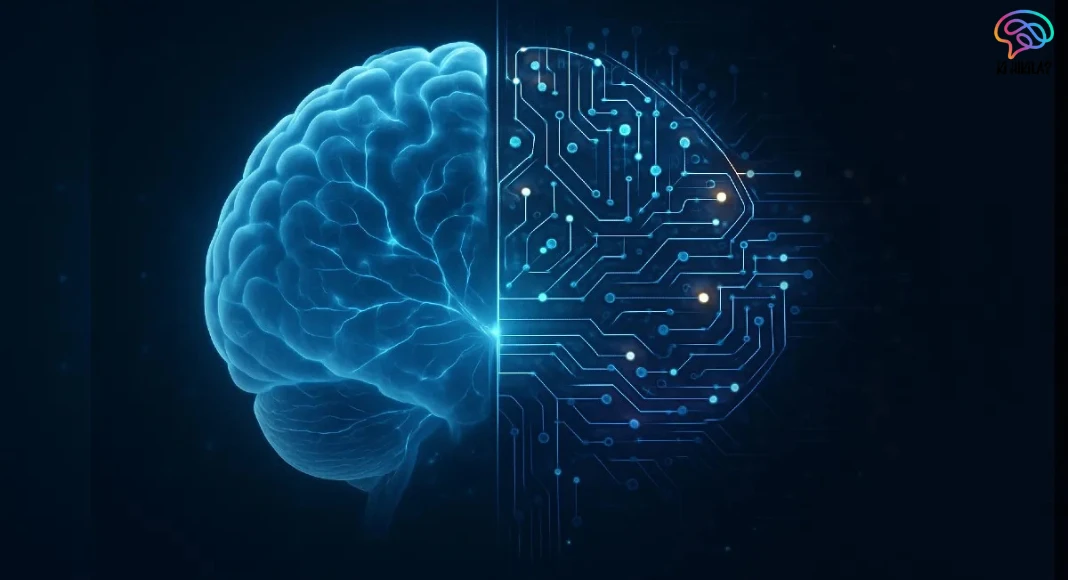
HRM’s architecture is modeled on the human brain’s layered approach to information processing. The system is composed of two interconnected modules: a high-level module responsible for slow, abstract planning, and a low-level module that performs fast, detailed computations. This dual-module setup marks a significant departure from conventional LLMs, which typically rely on chain-of-thought (CoT) reasoning. While CoT breaks problems down sequentially, HRM refines solutions iteratively, progressively improving its outputs through repeated cycles of “thinking.”
This approach allows HRM to mimic human cognitive processes more closely, making it capable of handling complex reasoning tasks with greater efficiency than traditional LLMs.
Limitations of Traditional Chain-of-Thought Reasoning

Chain-of-thought reasoning has been a staple of AI development, but it comes with drawbacks. It requires extensive datasets, introduces latency due to stepwise problem-solving, and can be brittle when decomposing tasks. In contrast, the Hierarchical LLM Model refines answers continuously, avoiding the rigidity and performance bottlenecks associated with sequential reasoning. By using iterative refinement instead of linear chains of thought, HRM can handle a wider variety of problem types with improved accuracy.
Performance on ARC-AGI Benchmarks
The HRM was rigorously evaluated using the ARC-AGI benchmark, designed to test general intelligence in AI systems. On the ARC-AGI-1 test, HRM achieved an impressive score of 40.3%, surpassing OpenAI’s o3-mini-high (34.5%), Anthropic’s Claude 3.7 (21.2%), and DeepSeek R1 (15.8%). Even in the more challenging ARC-AGI-2 test, HRM led the field with 5%, outperforming OpenAI at 3%, DeepSeek at 1.3%, and Claude at 0.9%.
These results highlight the Hierarchical LLM Model’s advanced reasoning capabilities, demonstrating that smaller, brain-inspired models can compete with, and even surpass, larger traditional AI systems.
Success in Complex Reasoning Tasks
The HRM’s capabilities extend beyond benchmark tests. It has successfully solved intricate Sudoku puzzles and identified optimal solutions in complex maze navigation challenges. These feats underscore its superior abstract planning and detailed execution abilities, showcasing a level of cognitive flexibility rarely seen in conventional AI models.
By integrating both high-level strategy and low-level precision, the Hierarchical LLM Model provides a versatile framework for tackling multifaceted problems, from logical puzzles to real-world decision-making scenarios.
Factors Behind HRM’s Breakthrough
Independent verification of HRM’s performance suggests that its hierarchical architecture is only part of the story. The model’s training process includes an under-documented refinement procedure that likely contributes significantly to its success. This emphasizes that innovative architecture alone is insufficient; careful design of training methods plays a crucial role in achieving superior AI performance.
This insight may influence future AI research, encouraging developers to combine architectural innovation with novel training strategies to achieve more robust and adaptable models.
Distinguishing Features Compared to Existing AI Models
Unlike models such as ChatGPT or Claude, the Hierarchical LLM Model does not rely on linear decomposition of tasks. Its two-module structure, combined with iterative refinement, allows for more flexible and efficient problem-solving. This architecture makes HRM particularly adept at tasks requiring a balance of abstract planning and detailed computation.
Furthermore, HRM’s performance challenges the assumption that larger datasets and model sizes are always necessary for advanced AI capabilities. By drawing inspiration from the human brain, the Hierarchical LLM Model demonstrates that cognitive efficiency can be achieved through smart design and strategic training.
Implications for the Future of AI
The development of the Hierarchical LLM Model represents a significant leap forward in AI research. Its success demonstrates that smaller, brain-inspired architectures can rival traditional large language models in general intelligence tasks. This breakthrough opens new avenues for creating AI systems that are not only powerful but also resource-efficient and cognitively sophisticated.
As researchers continue to explore HRM’s potential, this model could influence the next generation of AI applications, ranging from complex problem-solving and planning tasks to real-time decision-making in dynamic environments. The hierarchical approach may set a new standard for AI models designed to replicate human-like reasoning at scale.