



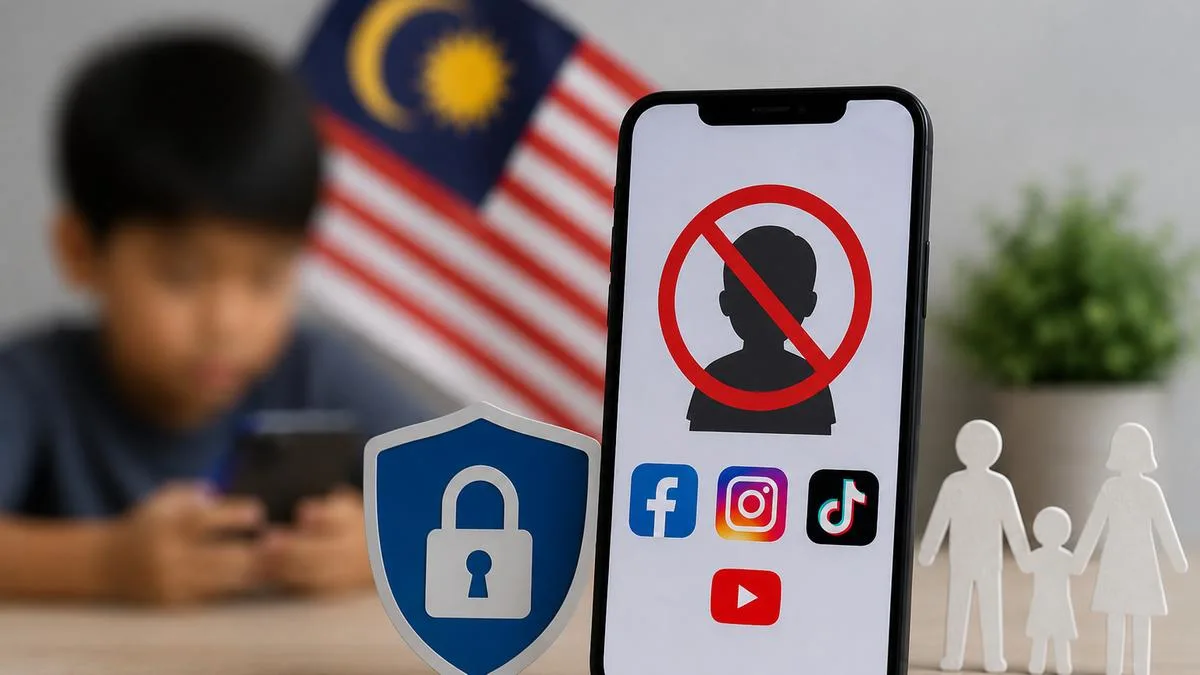
Malaysia Social Media Ban: New Rules for Children Under 16 Begin in 2026

Malaysia Social Media Ban has become one of the most discussed digital safety measures in Asia. Starting from 1 June 2026, Malaysia has officially begun enforcing a new rule that prevents children below the age of 16 from creating social media accounts on major online platforms. The decision is part of the country’s effort to make the internet safer for young users and reduce risks such as cyberbullying, online scams, and harmful content.
The new regulation applies to popular social media platforms that have at least 8 million users in Malaysia. Companies operating these platforms are now required to introduce strong age-verification systems before allowing users to create new accounts.

Why Malaysia Introduced the New Rule
Over the last few years, concerns about children’s online safety have increased across the world. Young users spend more time on social media than ever before, making them vulnerable to online threats.
Malaysian authorities say the new rule is designed to protect children from:
- Cyberbullying
- Online fraud and scams
- Identity theft
- Harmful or inappropriate content
- Online exploitation
- Privacy risks
Government officials believe that children need stronger protection while using digital services. The new law aims to create a safer online environment without completely blocking access to the internet.
Age Verification Becomes Mandatory
One of the most important parts of the new regulation is age verification.

Social media companies must verify the age of users before allowing account registration. To confirm a user’s age, platforms may use official documents such as:
| Verification Method | Purpose |
|---|---|
| National Identity Card | Confirm age and identity |
| Passport | Verify date of birth |
| Government Records | Cross-check user information |
The Malaysian Communications and Multimedia Commission (MCMC) has instructed platforms to ensure that children under 16 cannot create accounts on covered services.
This move places greater responsibility on technology companies to prevent underage registrations.
Which Platforms Are Affected?
The rule applies to major social media services that meet the required user threshold in Malaysia.
Some of the affected platforms include:
These platforms have millions of users in Malaysia and play a major role in the country’s digital ecosystem.
Companies must update their registration systems and introduce proper safeguards to comply with the law.
Heavy Penalties for Non-Compliance
Malaysia has introduced strict penalties for companies that fail to follow the new requirements.
Technology firms that do not implement effective age-verification systems may face fines of up to 10 million Malaysian ringgit, which is approximately 2.5 million US dollars.
The government believes that significant penalties will encourage platforms to take the regulation seriously and invest in better user protection systems.
Connection with the Online Safety Act 2025
The new social media restriction is part of Malaysia’s broader digital safety strategy.
The regulation falls under the Online Safety Act 2025, which officially came into effect on 1 January 2026. The law provides a framework for improving online safety and increasing accountability among digital platforms.
Key goals of the Act include:
- Protecting vulnerable internet users
- Improving platform responsibility
- Reducing online crime
- Strengthening digital security
- Encouraging safer online communities
The latest age restriction is one of the first major measures implemented under the law.
Global Trend Toward Child Online Safety
Malaysia is not the only country taking action to protect children online.
Several nations are considering or introducing stricter rules regarding children’s use of social media. Governments around the world are debating how to balance internet freedom with online safety.
Recent concerns include:
- Rising cyberbullying cases among teenagers
- Mental health effects linked to excessive social media use
- Exposure to harmful online challenges
- Increased online scams targeting young users
As digital platforms continue to grow, more countries may introduce similar regulations in the coming years.
What About Existing Users?
Authorities have announced that social media companies will receive a grace period to fully implement age-verification systems. However, the exact duration of this period has not yet been revealed.
During this time, platforms are expected to update their registration processes and improve security measures.
Interestingly, parents whose children manage to bypass the system will not face penalties under the current rules.
The focus of enforcement remains on technology companies rather than families.
Public Reaction and Future Impact
The introduction of the Malaysia Social Media Ban has generated mixed reactions.
Supporters argue that the rule will help protect children from online dangers and encourage healthier digital habits.
Others believe that implementation could be challenging, especially when it comes to accurately verifying user ages while protecting privacy.
Technology experts also point out that age-verification systems must be secure enough to prevent misuse of personal information.
Despite these concerns, the Malaysian government views the measure as an important step toward creating a safer digital future for young people.
A New Era of Digital Regulation
The Malaysia Social Media Ban marks a significant shift in how governments are regulating online platforms. By requiring age verification and placing responsibility on technology companies, Malaysia is sending a strong message about child protection in the digital age.
As countries worldwide continue to address online safety concerns, Malaysia’s approach may become an example for other nations considering similar policies. The success of the measure will depend on how effectively platforms implement the rules and how well authorities balance safety, privacy, and accessibility in the years ahead.