High-Altitude Pseudo-Satellites for IAF Approved by DAC

High-Altitude Pseudo-Satellites for IAF have received a major boost after the Defence Acquisition Council (DAC) approved their procurement for the Indian Air Force. This decision is part of a large defence capital acquisition package worth ₹3.60 lakh crore. The package also includes Rafale fighter aircraft and advanced missile systems. The estimated cost for these High-Altitude Pseudo-Satellites (HAPS) is around ₹15,000 crore.
Thank you for reading this post, don't forget to subscribe!The proposal will now move to the next stage, where detailed cost discussions will take place. After that, it will be sent to the Cabinet Committee on Security for final approval. Once cleared, the project will move toward full-scale development and deployment.
What Are High-Altitude Pseudo-Satellites?
High-Altitude Pseudo-Satellites, also known as HAPS, are unmanned aerial platforms that fly in the stratosphere. They operate at heights of about 18 to 20 kilometres above the Earth. This is almost double the height at which commercial airplanes usually fly.
Unlike traditional satellites that orbit more than 200 kilometres above Earth, HAPS stay much closer to the planet. They are powered by solar energy. During the day, solar panels collect sunlight and generate electricity. At night, high-capacity batteries keep the platform running. Because of this system, they can stay in the air for months without landing.
These platforms carry advanced cameras, optical sensors, and infrared equipment. They act like “towers in the sky,” providing constant monitoring and communication support over a fixed area.
Why India Needs HAPS
The need for High-Altitude Pseudo-Satellites became stronger after the 2017 Doklam standoff between India and China. During that period, it became clear that continuous monitoring of remote border areas is very important.
Traditional drones cannot stay in the air for very long. Satellites, especially low-earth orbit satellites, move around the Earth and cannot remain fixed over one specific area for extended periods. This creates gaps in surveillance.
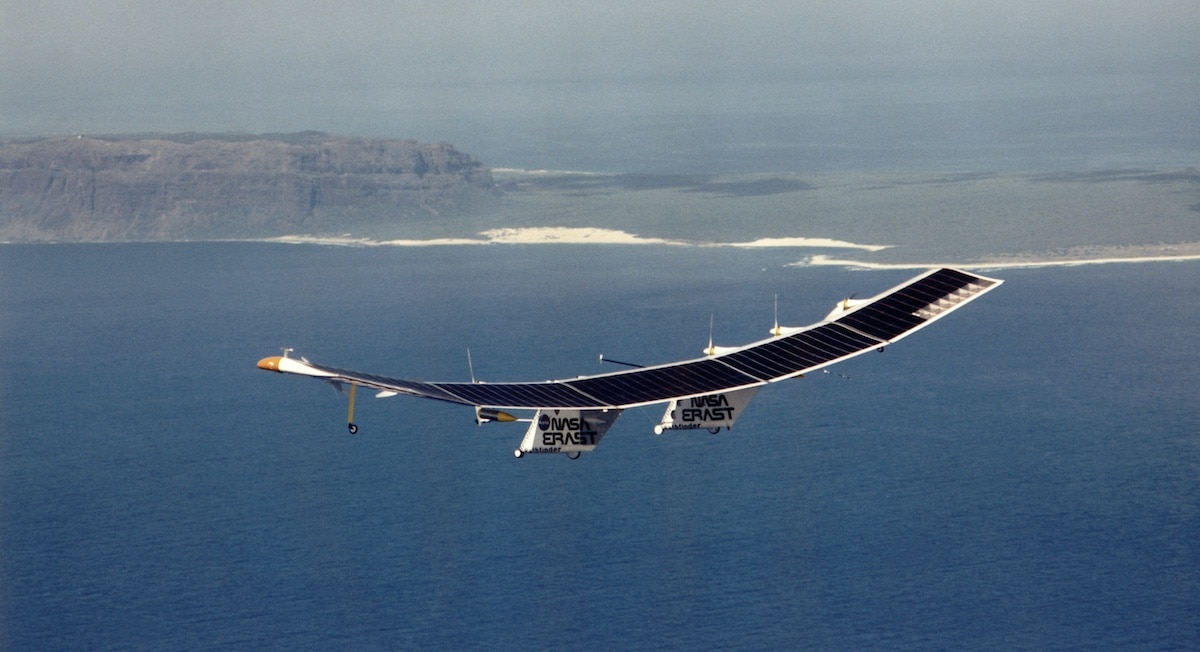
HAPS solve this problem. They can hover over a particular region and provide real-time information. This includes tracking troop movements, observing terrain changes, and monitoring electronic signals. With rising security concerns along the India-China border and in other sensitive regions, constant monitoring has become more important than ever.
In today’s world, where border tensions and regional conflicts continue to shape defence planning, technologies like HAPS play a major role in strengthening national security.
Role in Intelligence and Surveillance
High-Altitude Pseudo-Satellites will improve India’s Intelligence, Surveillance, and Reconnaissance (ISR) abilities. They will also support Electronic Intelligence (ELINT), which involves tracking and analyzing electronic signals.
Because HAPS can remain over a region for a long time, they provide continuous data instead of short-time snapshots. This makes it easier to understand activities on the ground and respond quickly if needed.
They can also support secure communication systems for defence forces. In areas where mobile towers or communication lines are not available, HAPS can act as airborne communication hubs.
Indigenous Development of High-Altitude Pseudo-Satellites for IAF
India is not only planning to buy these systems but also working on developing them at home. The National Aerospace Laboratories (NAL) in Bengaluru is leading indigenous research on HAPS technology.
In February 2024, NAL successfully tested a scaled prototype at the Challakere Aeronautical Test Range in Karnataka. This was an important milestone for India’s aerospace research.
NAL aims to build a full-scale HAPS platform with a wingspan of about 30 metres. The target is to make it capable of flying at an altitude of 23 kilometres by 2027. If successful, this will place India among the few countries with advanced stratospheric platform technology.
The Hindustan Aeronautics Limited (HAL) is also supporting the effort. HAL has announced collaboration with start-ups to strengthen research and production. One of the active private players in this field is NewSpace Research and Technologies, which has already flown solar-powered unmanned aerial vehicles under the iDEX initiative.
This mix of government labs and private start-ups shows that India is focusing strongly on building self-reliance in defence technology.
How High-Altitude Pseudo-Satellites for IAF Differ from Satellites and Drones
HAPS sit between drones and satellites in terms of capability.
Satellites are very powerful and cover large areas, but they are expensive to launch and maintain. Once placed in orbit, their movement cannot be easily changed. They also pass over a region only at specific times.
Drones are flexible and can be controlled easily, but they cannot stay airborne for months. Their endurance is limited by fuel or battery life.
High-Altitude Pseudo-Satellites combine the advantages of both. They cost less than satellites and can stay longer than most drones. They can also be brought down for maintenance and upgraded when needed.
This makes them a smart and flexible option for modern defence needs.
Dual Benefits of High-Altitude Pseudo-Satellites for IAF
High-Altitude Pseudo-Satellites are not useful only for military purposes. They have several civilian applications as well.
In disaster situations like floods, earthquakes, or cyclones, HAPS can provide communication support when ground networks are damaged. They can help in search and rescue operations by offering clear images from high altitude.
With the rapid growth of 5G connectivity in India, these platforms can extend network coverage to remote villages, mountainous areas, and islands where building towers is difficult. This supports the government’s goal of digital connectivity for all.
They can also help in agriculture by monitoring crop health and soil conditions. Environmental agencies can use them to track forest fires, air pollution, and climate changes.
As climate change and natural disasters become more frequent topics globally, technologies like HAPS are gaining attention for both security and humanitarian roles.

Global Context
India is not alone in investing in High-Altitude Pseudo-Satellites. Countries such as the United States, China, the United Kingdom, and South Korea are also working on similar technologies.
Globally, defence forces are looking for systems that can provide constant surveillance without the high cost of satellite launches. HAPS offer a middle path between space-based systems and traditional aircraft.
With increasing geopolitical competition and technological advancement, stratospheric platforms are becoming an important part of modern defence planning.
Strengthening India’s Aerospace Future
The approval of High-Altitude Pseudo-Satellites for IAF shows India’s focus on advanced and smart defence solutions. It highlights the country’s effort to combine innovation, indigenous development, and modern security needs.
As India continues to invest in aerospace research and self-reliance under initiatives promoting domestic manufacturing, HAPS could become a key part of its defence and communication infrastructure in the coming years.
High-Altitude Pseudo-Satellites for IAF mark an important step in building stronger surveillance systems, improving communication networks, and preparing for future security challenges in a rapidly changing world.