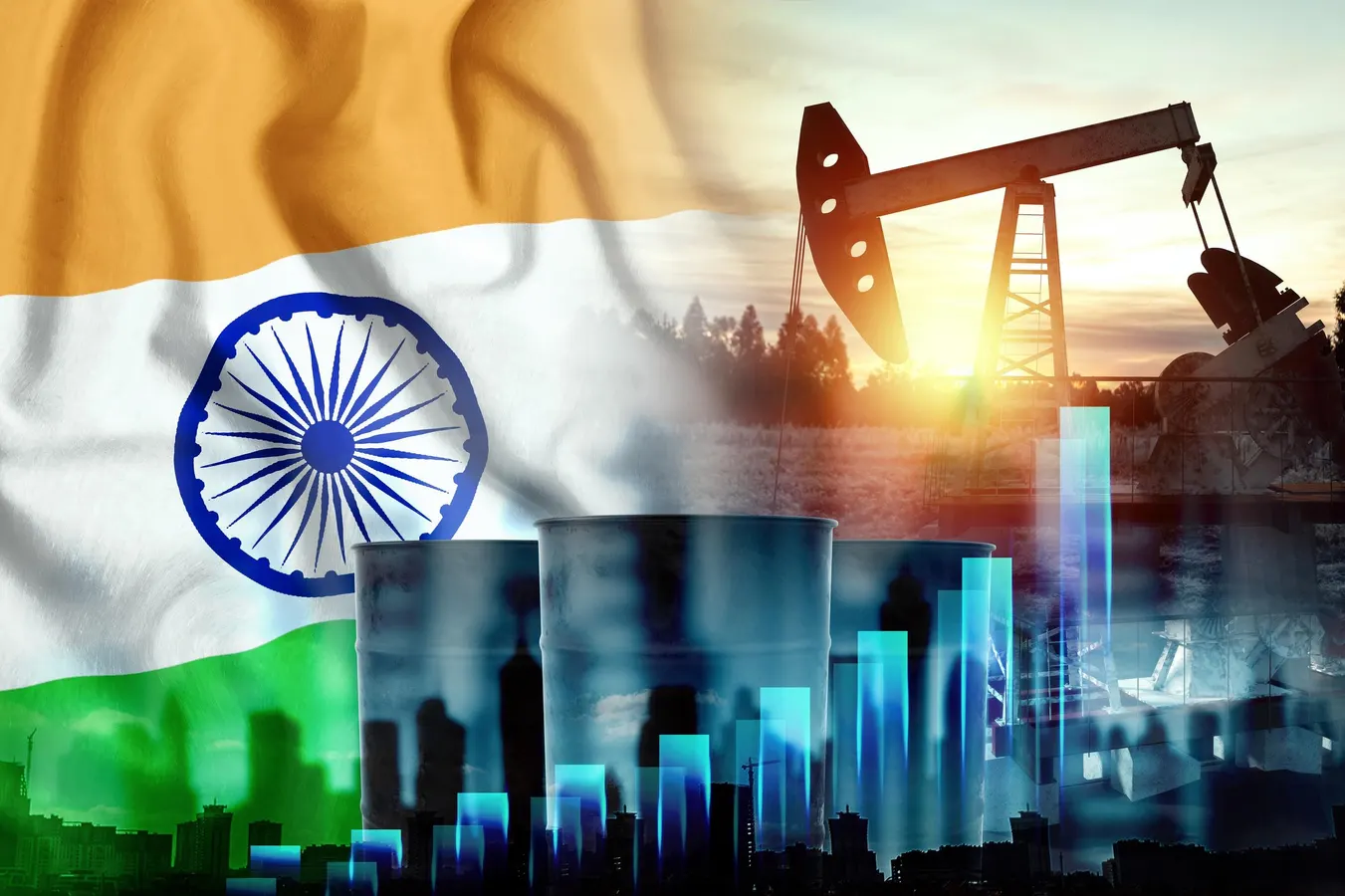
India oil demand to surge sharply by 2035, says IEA

India oil demand growth is becoming one of the most significant global energy trends, with the International Energy Agency (IEA) identifying the country as the primary engine of rising oil use through 2035. As incomes rise, cities expand and industries diversify, India’s energy landscape is undergoing a profound transformation. The latest Global/World Energy Outlook 2025 highlights that India is no longer just a major consumer it is emerging as the epicentre of global energy demand and a key player shaping future market trends.
Thank you for reading this post, don't forget to subscribe!India’s growing appetite for energy spans across oil, gas, coal and clean power. The transition is not linear; instead, India is witnessing simultaneous expansion of fossil fuels and renewable energy sources. This dual-track growth reflects the scale of economic development, the infrastructural needs of a population exceeding 1.4 billion and the national ambition to secure long-term energy stability.
India oil demand as the Centre of Global Consumption Growth
The IEA notes that India is set to become the largest driver of global oil demand growth between 2024 and 2035. Oil consumption is predicted to rise from approximately 5.5 million barrels per day (mbpd) in 2024 to nearly 8 mbpd by 2035. This represents one of the fastest expansions in oil use among major economies.
Several key factors are fuelling this rise:
- Rapid motorisation and increasing private vehicle ownership
- Growing aviation demand due to expanding middle-class travel
- Higher consumption of plastics, petrochemicals and industrial products
- Greater LPG penetration as households shift to cleaner cooking fuels
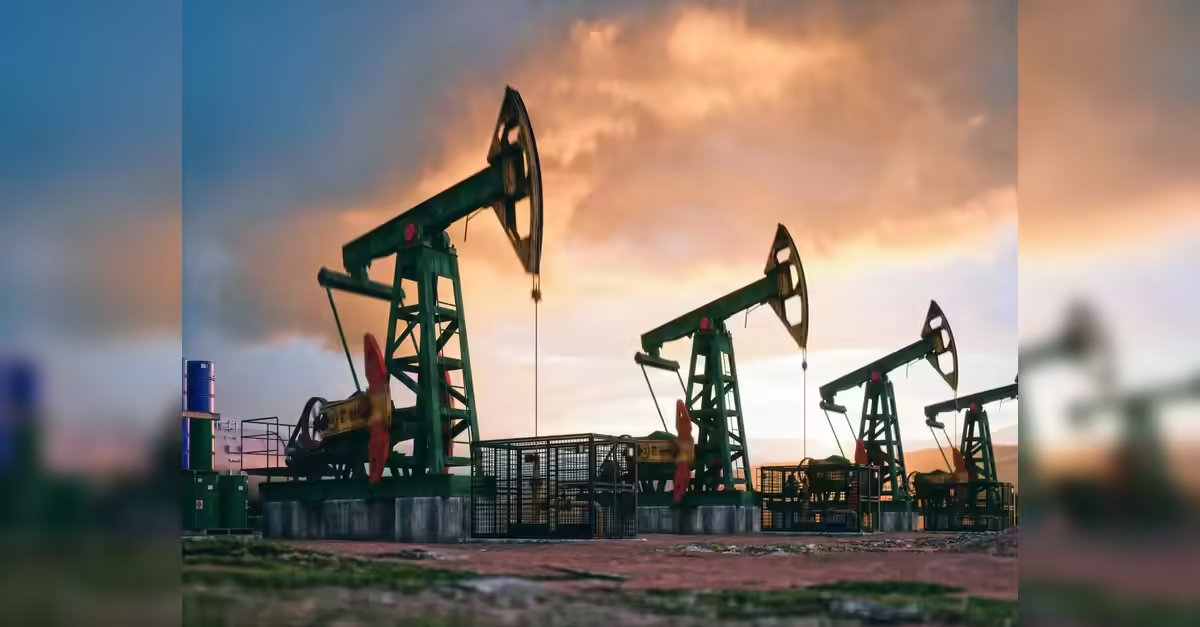
Remarkably, nearly half of the additional global oil demand expected between now and 2035 will come from India alone. This shift places India at the heart of global crude and fuel market decisions.
Rising Import Dependence and Expanding Refining Capacity
One of the biggest challenges highlighted by the IEA is India’s increasing reliance on imported crude oil. Import dependence, which stands at roughly 87% in 2024, is projected to rise to nearly 92% by 2035. This reflects limited growth in domestic production despite continuous policy efforts and exploration activities.
However, India is simultaneously strengthening its refining capabilities. Refining capacity is expected to increase from around 6 mbpd in 2024 to 7.5 mbpd by 2035. This expansion carries several implications:
- India will remain a major exporter of transport fuels, especially diesel and aviation turbine fuel.
- The country will continue to function as a swing supplier, helping to stabilise regional fuel markets.
- Advanced refining projects will support the petrochemical sector, which is poised for strong growth.
This combination of high demand, large imports and robust refining investment underscores India’s central role in the global oil ecosystem.
Gas, Coal and Overall Energy Surge Shaped by India oil demand Trends
Oil is not the only sector experiencing sharp growth. The IEA projects strong expansion across the broader energy mix.
Natural Gas Demand
Natural gas consumption is expected to almost double by 2035, reaching around 140 billion cubic metres. This rise is propelled by:
- Expanding city-gas distribution networks
- Increased industrial use in chemicals, fertilisers and manufacturing
- Strong growth in LNG imports, projected to climb to nearly 50 billion cubic metres
Gas is positioned as a transition fuel, offering relatively lower emissions while supporting industrial expansion.
Coal Demand
Coal demand will continue to grow moderately, a reflection of India’s developmental needs. Expanded mining activity and major projects such as the upgrade of the Gevra mega mine are expected to reduce dependence on imported coal.
Coal will remain significant for:
- Steel and cement industries
- Baseline power generation
- Meeting peak electricity demands during high-load months
While cleaner technologies are emerging, coal continues to serve as a vital backbone of India’s energy system.
Overall Energy Surge
India’s total energy demand is forecast to grow by more than 15 exajoules by 2035, a scale unmatched by most major economies. This reinforces India’s position as the world’s fastest-growing major energy consumer.
Clean Energy Transition and Its Influence on India oil demand Outlook
Even as fossil fuel consumption rises, India is simultaneously building one of the world’s most ambitious clean energy networks.
Rapid Growth in Renewable Capacity
India has already achieved 50% non-fossil power capacity, surpassing its 2030 target ahead of schedule. By 2035:
- Nearly 70% of installed capacity is expected to come from non-fossil sources
- Solar and wind energy will account for almost all new power additions
- Investments in battery storage, green hydrogen, pumped hydro, and grid upgrades will accelerate the clean transition
Emission Trajectory
India’s carbon emissions are expected to peak around 2040, aligning with the country’s commitment to achieve net-zero by 2070. Supporting measures include:
- Expansion of nuclear power
- Increasing ethanol blending in petrol
- Electrification of public transport
- Strengthening inter-state transmission systems
This balanced pathway ensures energy security while promoting long-term sustainability.
India oil demand and the Country’s Evolving Role in Global Energy Markets
India’s emergence as the principal engine of global oil demand growth signals a profound shift in the world’s energy architecture. With rising consumption, expanding industrial capacity, and massive clean energy investments, India is shaping the direction of global markets across all major fuel categories.
The country’s challenge is to harmonise rapid growth with a sustainable future a task that will influence global energy prices, emission pathways, and geopolitical alignments through 2035 and beyond.