


India IOL 2026 Medal Win

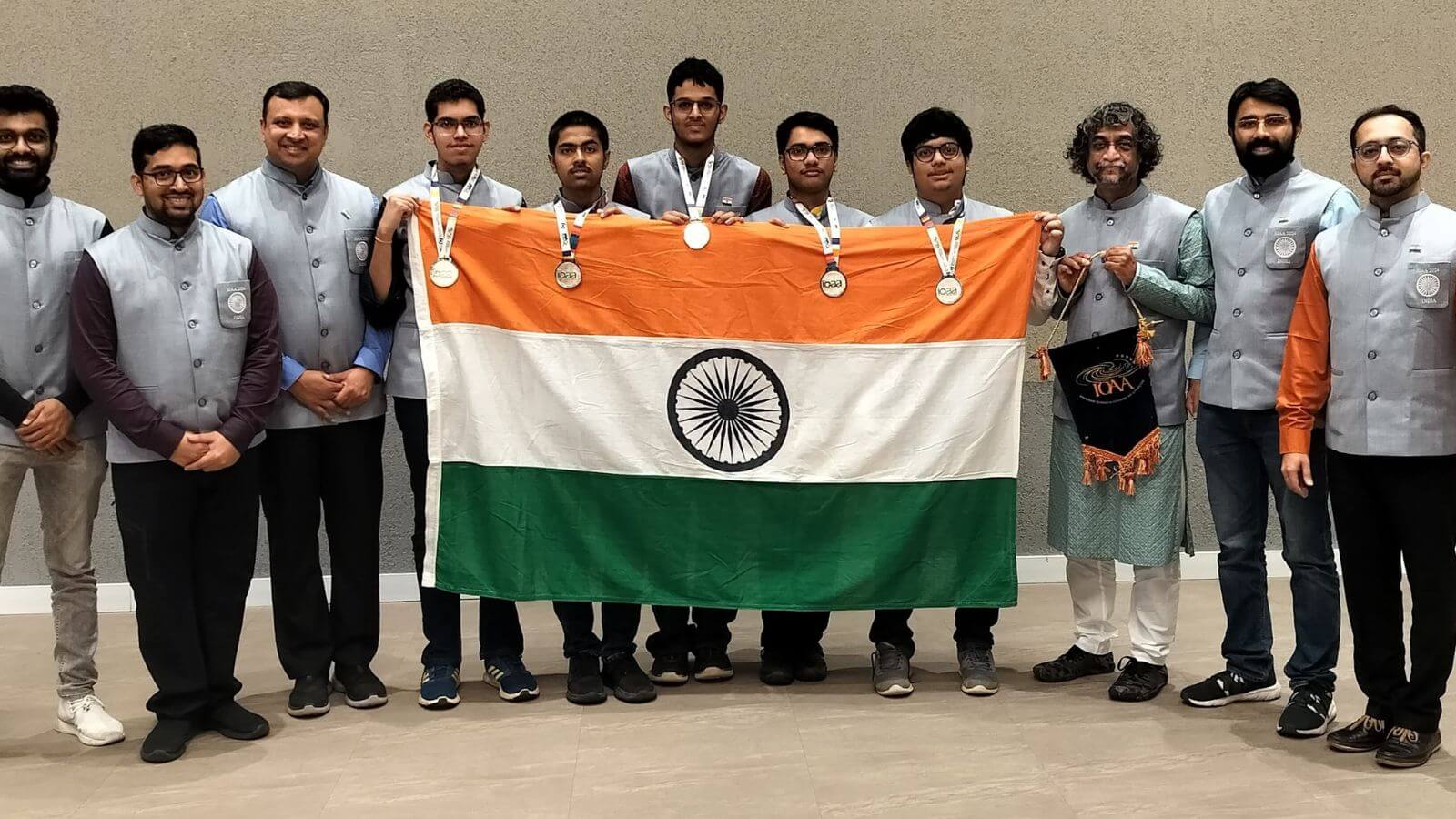
India IOL 2026 performance has brought a proud moment for the country as Indian students achieved strong results at the 23rd International Linguistics Olympiad held in Bucharest, Romania. India won one gold medal, three bronze medals and received one Honourable Mention at the international competition. The achievement highlights the growing interest in language science, logical thinking and analytical learning among Indian students.
Thank you for reading this post, don't forget to subscribe!The Indian contingent included eight students who represented the country in the individual competition. Participants were asked to solve difficult language-related problems using logic, patterns and careful analysis. Unlike normal language competitions, the event does not simply test how many languages a student can speak. Instead, it challenges participants to understand unfamiliar language systems and discover how they work.
India’s Strong Performance at IOL 2026
The biggest achievement for India came from Shrilakshmi Venkatraman, who won the individual gold medal with a score of 70.0. Her performance placed her among the top young linguists participating in the competition.
Three other Indian participants, Aarav Anil Rao, Nishanth Shankar Lakshmanan and Advay Misra, won bronze medals. Soham Amit Pednekar also received an Honourable Mention for his performance.
Together, these results gave India a strong presence among the participating countries. The achievement also adds to India’s growing record at the International Linguistics Olympiad.
What Is the International Linguistics Olympiad?
The International Linguistics Olympiad is an annual international competition for secondary school students. It brings together young students who have an interest in languages, mathematics, logic and problem-solving.
The competition is different from traditional language contests. Students do not need to know the languages used in the questions beforehand. Instead, they receive examples and clues and must identify patterns within the information provided.
For example, a problem may provide several sentences from an unfamiliar language along with their meanings. Students then have to identify grammar rules, word patterns or sentence structures. This makes the competition a combination of linguistics and logical reasoning.
Bucharest Hosts the 23rd Edition
The 23rd International Linguistics Olympiad was held in Bucharest, the capital city of Romania. The event brought together 255 individual competitors from more than 40 countries.
The large international participation made the competition highly competitive. Students had to demonstrate accuracy, creativity and the ability to understand complex information within a limited period.
Holding the event in Bucharest also gave participants an opportunity to interact with students from different countries and learn about different linguistic traditions.
Language Meets Logic
One of the most interesting features of the International Linguistics Olympiad is the way it connects language with logical thinking. Participants work with areas such as phonetics, morphology, syntax and semantics.
Phonetics deals with the sounds used in languages. Morphology studies how words are formed. Syntax focuses on sentence structure, while semantics deals with meaning.
Students may receive information from languages they have never studied. They must then use the available clues to identify rules and relationships. This approach makes linguistics an interesting field for students who enjoy puzzles and analytical challenges.
Shrilakshmi Venkatraman Wins Gold
The gold medal won by Shrilakshmi Venkatraman was the highlight of India’s performance. With a score of 70.0, she finished at the highest level of the individual competition.
Her achievement shows the value of combining language knowledge with logical problem-solving. The competition requires participants to remain patient while working through unfamiliar examples and complex patterns.
The gold medal also adds to India’s growing reputation in international linguistics competitions.
Three Bronze Medals for India
India’s performance was further strengthened by three bronze medals. Aarav Anil Rao, Nishanth Shankar Lakshmanan and Advay Misra each secured a place among the medal winners.
Winning a medal at an international competition with participants from more than 40 countries is a significant achievement. Their results demonstrate the depth of talent within India’s young linguistics community.
The additional Honourable Mention received by Soham Amit Pednekar also reflects the strong performance of the Indian team.
India’s Growing IOL Record
India has participated in the International Linguistics Olympiad since 2009. After the 2026 competition, India’s cumulative individual medal tally reached 37 medals.
This includes 6 gold medals, 9 silver medals and 22 bronze medals. The latest results therefore become part of a longer record of Indian participation and achievement in international linguistics.
The continued performance suggests that interest in linguistics among Indian students is becoming stronger.
How the Indian Team Was Selected
The selection of India’s team began with the Panini Linguistics Olympiad, also known as the PLO. It serves as the national qualifying competition for the International Linguistics Olympiad.
The first round of the 2026 selection process was held on 15 February 2026. A total of 525 students registered for the competition, while 338 students appeared for the first round.
The selection process helps identify students who have strong analytical abilities and an interest in language-based problems.
Residential Training Programme
After the initial selection process, the strongest participants received specialised training. The Language Technologies Research Centre of the International Institute of Information Technology Hyderabad has managed the Indian mentorship programme since 2015.
In 2026, IIIT Hyderabad organised a 10-day residential training camp from 31 May to 10 June. The camp included 34 top qualifiers.
During such training, students can become familiar with the style of problems used in international competitions. They also receive guidance on how to study language data, identify patterns and develop efficient solutions.
After the training camp, the final eight-member Indian team was selected to participate in the International Linguistics Olympiad.
Role of IIIT Hyderabad
The International Institute of Information Technology Hyderabad has played an important role in supporting India’s participation in the competition. Its Language Technologies Research Centre has been associated with the Indian mentorship programme since 2015.
The centre works in areas related to language technology and computational linguistics. Its involvement provides students with access to academic guidance and training related to modern language research.
This connection between education, technology and linguistics is becoming increasingly important as artificial intelligence and language technologies continue to develop.
Linguistics in the Age of Artificial Intelligence
The success of Indian students at the IOL comes at a time when language technology is becoming increasingly important. Artificial intelligence systems depend heavily on their ability to process and understand human language.
Technologies such as machine translation, speech recognition, digital assistants and large language models all rely on research into language. Understanding grammar, meaning, sentence structure and language patterns is therefore important for modern technology.
Competitions like the IOL can encourage young students to explore these areas from an early stage.
Why Linguistics Is Becoming More Important
Languages are not only tools for communication. They also contain complex systems of sounds, words, meanings and structures. Studying these systems can improve our understanding of how people communicate and how computers can process human language.
India has hundreds of languages and many regional language varieties. This makes the country an especially interesting place for linguistic research.
The growth of digital content in Indian languages has also increased the need for language technologies that can work effectively across different linguistic communities.
Global Participation and Competition
The 2026 International Linguistics Olympiad awarded 84 medals in total. These included 14 gold medals, 30 silver medals and 40 bronze medals.
The jury also awarded 44 Honourable Mentions to participants from the international field.
These numbers show the scale of the competition and the high level of participation. Students from different countries brought different approaches to solving linguistic problems, creating a diverse international environment.
Encouraging Young Minds
The success of the Indian team can encourage more students to explore subjects beyond traditional academic areas. Linguistics combines elements of language, mathematics, logic and computer science.
Students who enjoy puzzles and discovering patterns may find linguistics particularly interesting. International competitions also give young people an opportunity to meet peers from different countries and experience academic collaboration at a global level.
India’s Growing Interest in Language Technology
India is investing more attention in language technology because of the country’s linguistic diversity. Digital services need to work across multiple Indian languages, including languages with different scripts and grammatical structures.
Developments in artificial intelligence have further increased the demand for language data and linguistic research. Young researchers with an understanding of both language and technology could play an important role in this area.
The India IOL 2026 achievement therefore comes at an interesting time for the country’s education and technology sectors.
A Wider Impact Beyond Competition
The importance of the IOL is not limited to medals. The competition encourages students to think creatively and approach unfamiliar problems without depending only on memorised information.
This type of learning can be useful in many areas. Skills developed through linguistic problem-solving can support work in research, technology, mathematics, artificial intelligence and language-related fields.
The Indian students’ performance in Bucharest also shows how specialised academic competitions can create opportunities for young talent to gain international exposure.
India’s Future in Linguistics
With six gold medals and a total of 37 individual medals since its first participation in 2009, India has built a strong record at the International Linguistics Olympiad.
The latest gold medal and three bronze medals add another successful chapter to that record. Continued training, mentorship and interest among students could help India maintain its position in future editions of the competition.
The achievements of Shrilakshmi Venkatraman, Aarav Anil Rao, Nishanth Shankar Lakshmanan, Advay Misra and Soham Amit Pednekar have brought renewed attention to the field of linguistics and the possibilities it offers to young learners.