


India Sugar Export Ban Impacts Trade

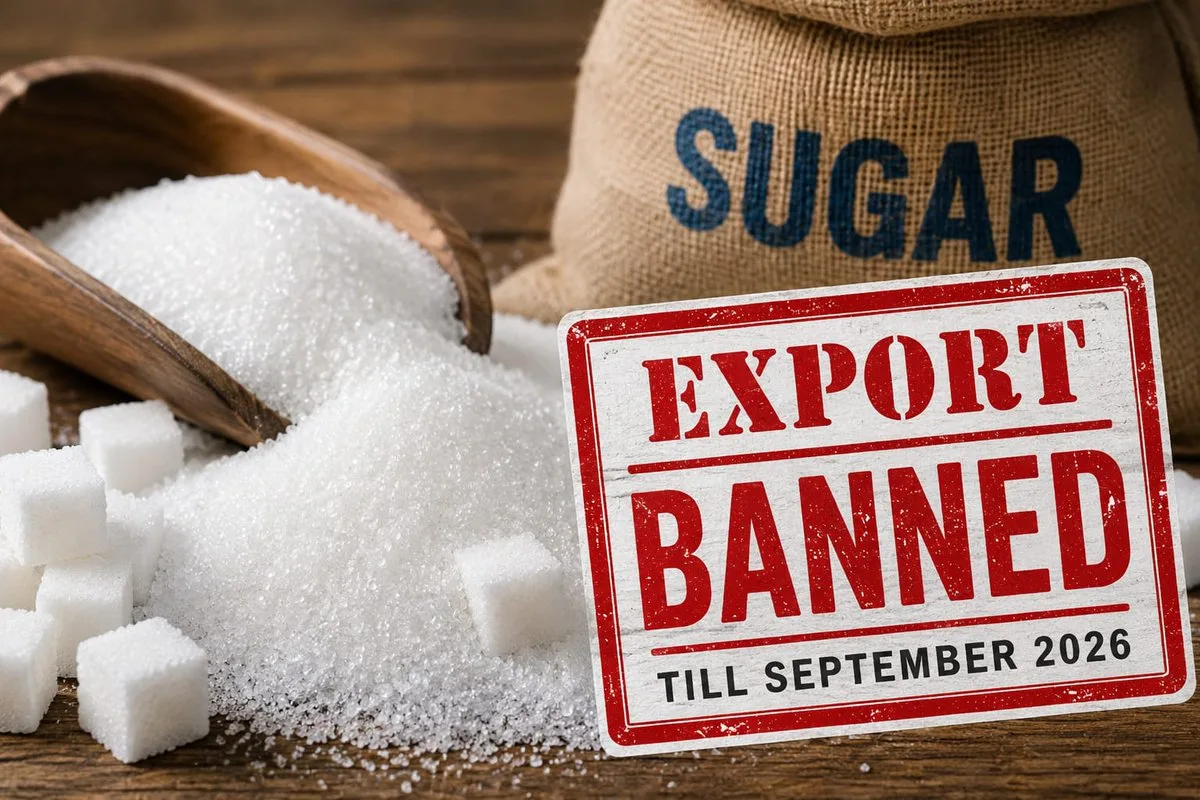
India Sugar Export Ban has come into effect from 14 May 2026 as the government prohibited the export of raw, white, and refined sugar until 30 September 2026 or further orders. The decision was announced by the Directorate General of Foreign Trade (DGFT) by changing the export policy status from “restricted” to “prohibited” for selected sugar categories.
Thank you for reading this post, don't forget to subscribe!India is the world’s second-largest sugar producer after Brazil, and sugar remains one of the country’s major agricultural trade products.
India Sugar Export Ban and New Policy
The new export rule applies to raw sugar, white sugar, and refined sugar under specific ITC (HS) codes. The policy was updated under the Foreign Trade (Development and Regulation) Act, 1992.
Earlier, sugar exports were allowed under restrictions and quotas. Now, the government has stopped most exports to maintain domestic availability and control rising prices in the local market.
The export restriction will remain active until 30 September 2026 or until new government instructions are issued.
Exemptions Under Sugar Export Restrictions
Although the ban is strict, some exports are still allowed under special arrangements.
Exports to the European Union and the United States can continue under CXL and Tariff Rate Quota agreements. Shipments made through the Advance Authorisation Scheme are also exempt from the restriction.
Government-to-government exports and sugar consignments already in the export pipeline before the notification are not affected immediately.
Rising Domestic Prices Behind the Decision
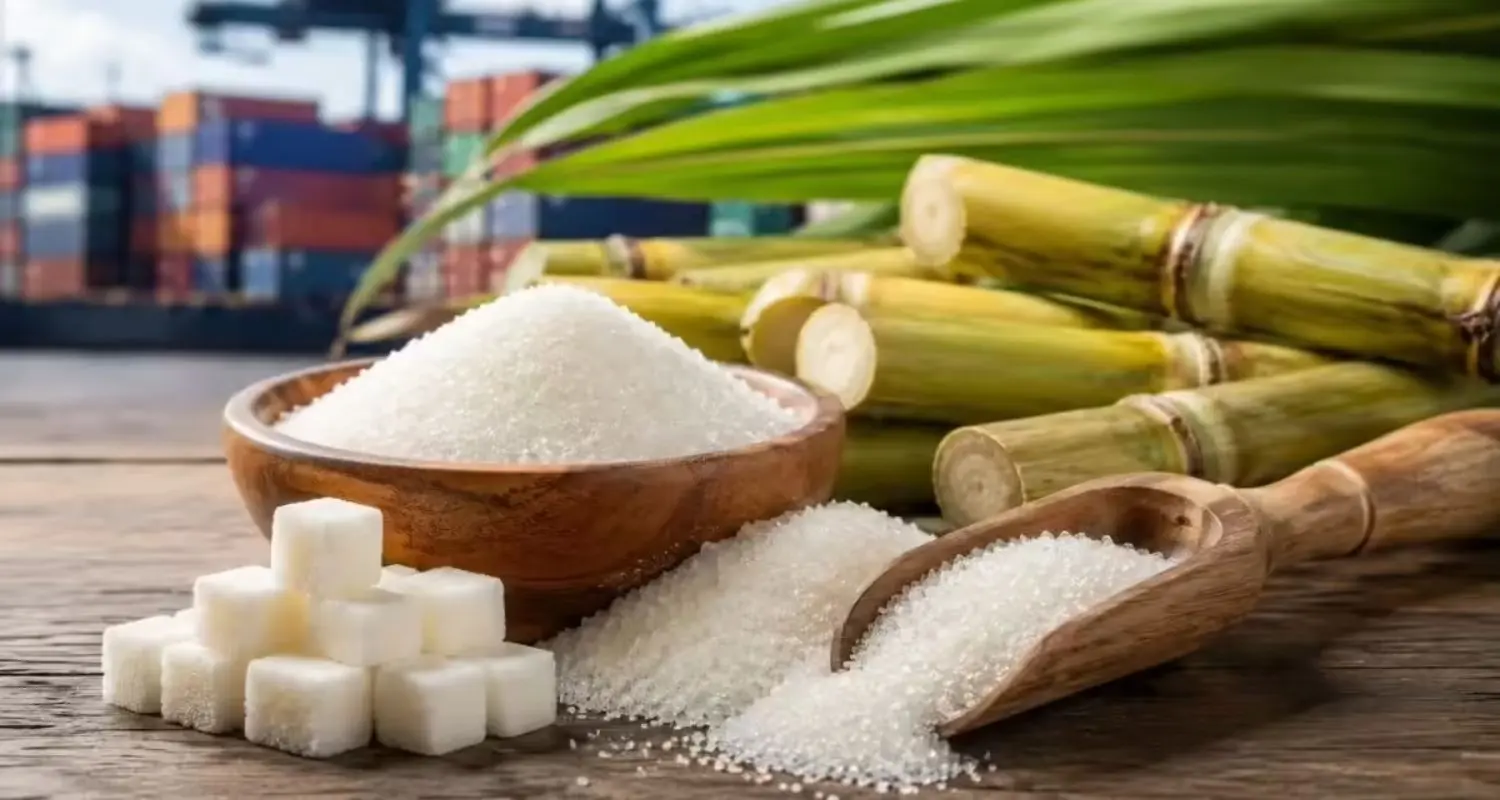
One major reason for the India Sugar Export Ban is the increase in domestic sugar prices. Reports show that sugar prices rose nearly 4% between October 2025 and April 2026. Prices are expected to increase further during the 2026 sugar season.
Lower sugar production and weak sugarcane yields have created supply concerns in the country. Experts also fear that possible El Niño weather conditions may affect the Indian monsoon, which can further reduce sugarcane output.
The government aims to protect domestic supply and keep prices stable for consumers.
Key Trade and Weather Terms
Tariff Rate Quota is a trade system where a limited quantity of goods can be exported or imported at lower duty rates.
El Niño is a climate phenomenon caused by warming in the Pacific Ocean. It can weaken monsoon rainfall in India and impact agricultural production, including sugarcane farming.