Indian Army MAPSS Drone: A Solar-Powered Leap in Border Surveillance

The Indian Army has made a remarkable advancement in unmanned defence technology with the induction of the Indian Army MAPSS Drone, a solar-powered surveillance system designed for long-duration missions. The Army recently signed a ₹168 crore contract for this cutting-edge platform, marking the first time a solar-powered unmanned aerial system is being brought into active service. This addition promises to enhance persistent monitoring of India’s sensitive borders and strengthen national security.
Thank you for reading this post, don't forget to subscribe!MAPSS and Its Strategic Role
The Medium Altitude Persistent Surveillance System, or MAPSS, has been developed by Bengaluru-based NewSpace Research & Technologies under the Defence Ministry’s innovation framework. Unlike conventional drones that rely on batteries or fuel, MAPSS harnesses solar energy, allowing it to remain airborne for extended periods without interruption. This makes it particularly suitable for continuous surveillance over long stretches of border regions where uninterrupted monitoring is critical.
MAPSS is expected to play a strategic role in intelligence gathering, reconnaissance, and observation along India’s northern and western frontiers. The platform’s solar-powered design ensures endurance and reliability even in remote and challenging terrains. Defence officials have emphasized that its continuous aerial presence will help track movement, detect potential threats, and maintain situational awareness over vast areas.

Operational Advantages and Mission Profile
The Indian Army MAPSS Drone is designed for missions across varied terrains, from the high-altitude northern sectors to the arid deserts of western India. Its electric propulsion system not only makes the drone quieter but also reduces its thermal signature, lowering the risk of detection by adversaries.
Key operational capabilities of MAPSS include:
- Persistent surveillance and monitoring of borders.
- Supporting communication links in remote or inaccessible locations.
- Assisting in target identification during operations.
- Reducing operational risks with low detectability and silent flight.
By combining solar energy with advanced electric propulsion, MAPSS enables long-endurance missions that were previously difficult to achieve with conventional drones. The system’s ability to stay in the air for extended durations significantly improves real-time intelligence collection and border management.
Testing, Trials, and Indigenous Development
The MAPSS project builds on NewSpace’s previous work in high-altitude solar drones, some of which have demonstrated endurance beyond 24 hours at altitudes exceeding 26,000 feet. These prototypes were tested extensively at India’s Aeronautical Test Range, proving their reliability in operational conditions.
For the Army-specific MAPSS variant, the system has been optimized for medium-altitude operations and has successfully completed trials in real-world operational environments. These tests validated its endurance, flight stability, and mission capabilities, confirming its readiness for active deployment along the country’s borders.
The drone’s development also showcases the potential of indigenous innovation under the Defence Ministry’s iDEX (Innovations for Defence Excellence) framework. By supporting homegrown startups, India is moving closer to self-reliance in defence technologies while addressing practical operational requirements.
Boost to Drone Induction and Defence Startups with Indian Army MAPSS Drone
The MAPSS contract is part of a broader initiative by the Indian Army to expand its unmanned aerial systems inventory. Drone-related acquisitions by the Army have crossed ₹5,000 crore in recent years, and more approvals are expected as the focus on advanced surveillance technologies increases.
Beyond operational benefits, the induction of MAPSS highlights the growing contribution of Indian startups to defence innovation. Supported by programmes like iDEX, these startups are designing and delivering solutions tailored to the Army’s specific needs. The success of MAPSS demonstrates how collaborative efforts between the defence sector and innovative enterprises can strengthen national security while promoting self-reliance.
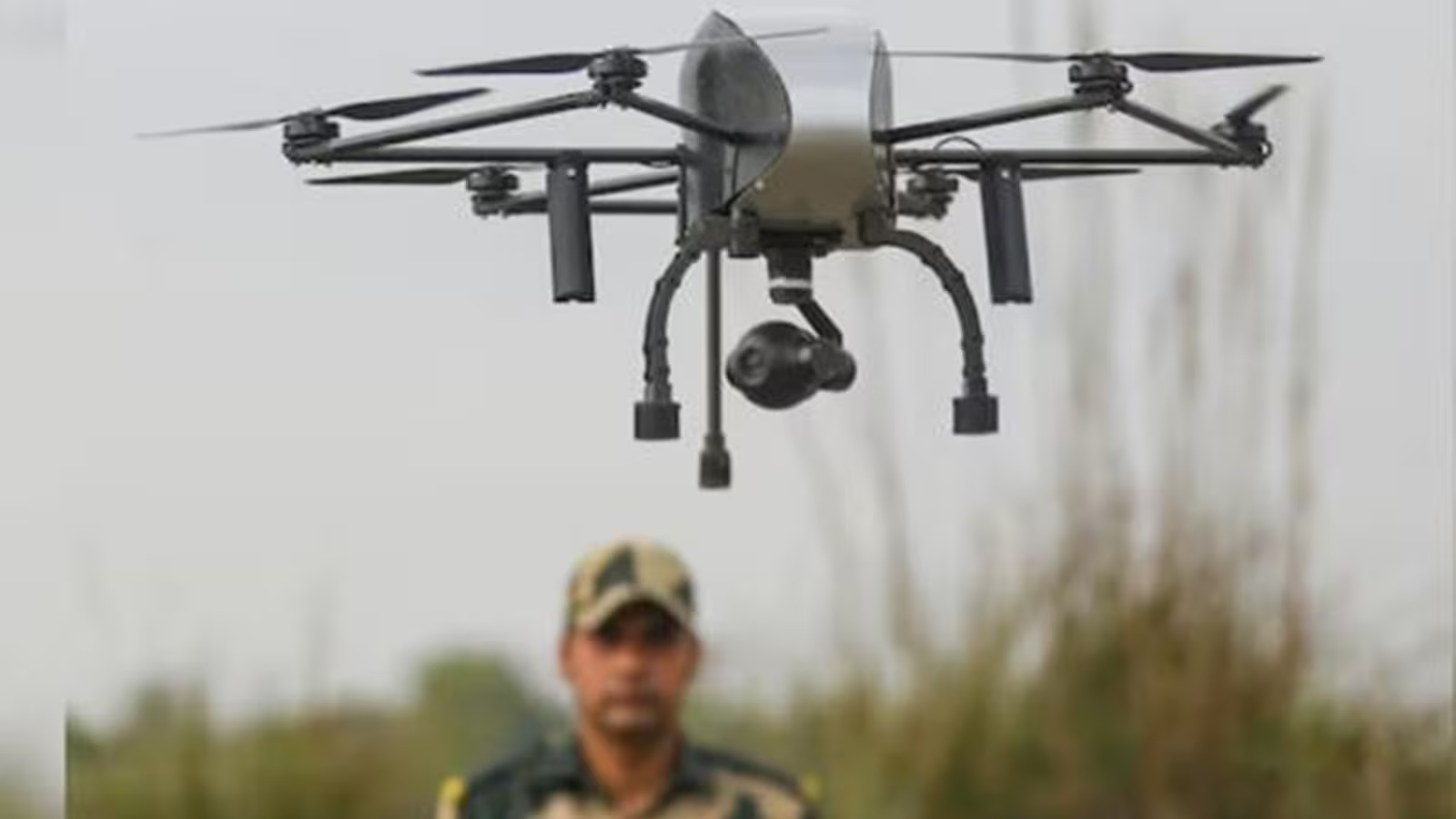
Key Features of the Indian Army MAPSS Drone
- Solar-powered propulsion for extended endurance.
- Optimized for medium-altitude surveillance missions.
- Quiet electric engines with low thermal signature.
- Capable of real-time intelligence, surveillance, and reconnaissance.
- Developed by an indigenous startup under the iDEX framework.
The induction of MAPSS marks a significant step forward for India’s unmanned aerial capabilities. By integrating solar technology into a surveillance drone platform, the Indian Army gains a persistent, efficient, and low-detectability tool for monitoring its borders. This addition not only strengthens operational readiness but also signals the increasing importance of homegrown innovation in the country’s defence sector.