Industrial Relations Code Bill Tabled: Government Moves to Clarify Labour Law Repeals

The focus keyword Industrial Relations Code Bill Tabled has gained attention after the Union government introduced an amendment bill in Parliament to remove doubts related to the repeal of older labour laws. The step is aimed at ensuring legal clarity and preventing confusion in the implementation of India’s restructured labour law framework.
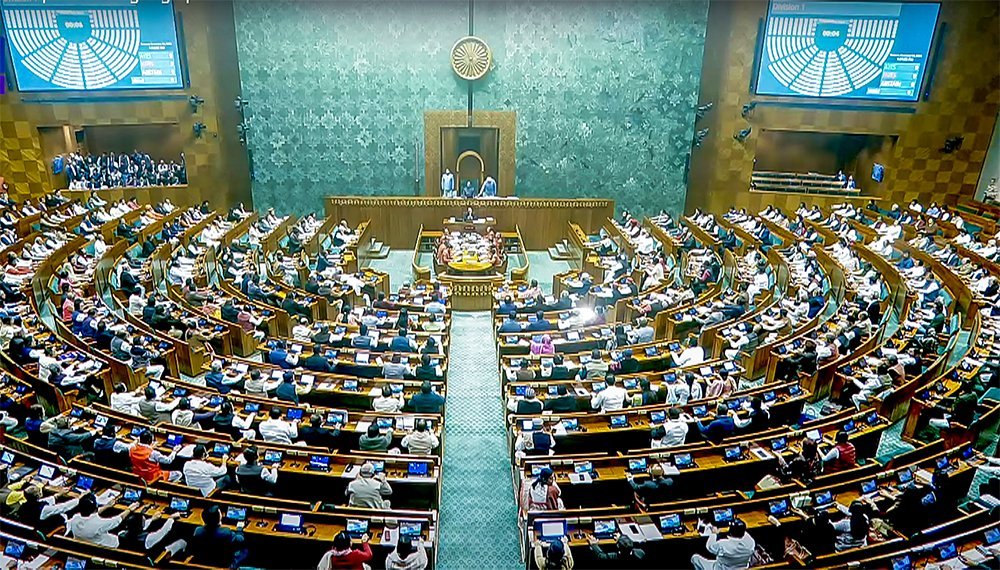
Thank you for reading this post, don't forget to subscribe!On Wednesday, the government tabled the Industrial Relations Code (Amendment) Bill, 2026 in the Lok Sabha. The Bill was introduced as part of a supplementary agenda shortly after the Question Hour, signalling the government’s intent to address technical but important legal concerns linked to labour reforms.
Industrial Relations Code Bill Tabled in Parliament
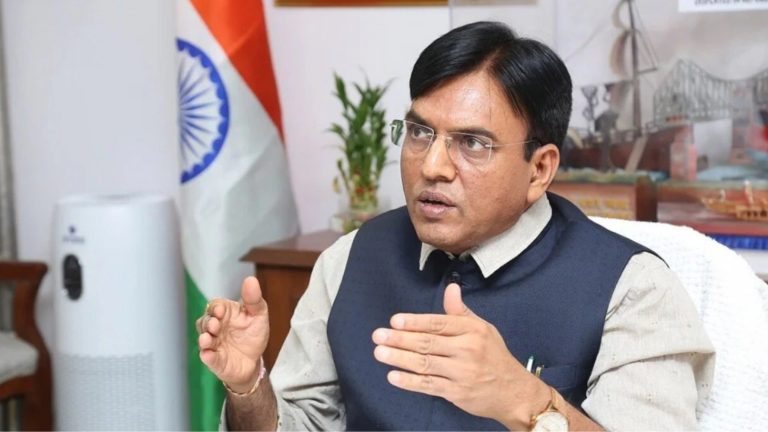
The amendment was introduced by Union Labour Minister Mansukh Mandaviya, who explained that the proposed changes are meant to clarify the legal position surrounding the repeal of earlier labour laws that were merged into the Industrial Relations Code, 2020.
According to the government, while the repeal of earlier laws has already taken place, some concerns have been raised about how this repeal could be interpreted in the future. The amendment seeks to clearly establish that the repeal was a direct result of legislation passed by Parliament and not an executive decision taken later.
Why the Amendment Was Considered Necessary
The statement of objects and reasons attached to the Bill highlights the core issue. Section 104 of the Industrial Relations Code, 2020 already provides for the repeal of earlier laws and includes savings provisions to ensure continuity. However, there is a possibility that this repeal could be misunderstood as an action carried out through executive notification rather than through the law itself.
Such an interpretation could open the door to legal challenges, creating uncertainty for employers, workers, and trade unions. The amendment aims to remove this ambiguity by clearly reinforcing that the repeal flows directly from the Code enacted by Parliament.
Background of Labour Law Consolidation
India undertook a major labour reform exercise with the introduction of four labour codes, one of which is the Industrial Relations Code, 2020. This Code brought together and replaced three key labour laws that had governed industrial relations for decades.
These included the Trade Unions Act, 1926, which regulated the registration and functioning of trade unions; the Industrial Employment (Standing Orders) Act, 1946, which laid down rules for employment conditions; and the Industrial Disputes Act, 1947, which provided mechanisms for dispute resolution between employers and workers.
By merging these laws into a single Code, the government aimed to simplify compliance, reduce overlap, and modernise labour regulation to suit current economic conditions.
Role of Section 104 in the Code
Section 104 of the Industrial Relations Code plays a crucial role in the transition from the old laws to the new framework. It contains provisions that clearly state that the earlier Acts stand repealed once the Code comes into force. At the same time, it protects actions taken under the repealed laws to ensure there is no legal vacuum.
The government has maintained that this repeal happened automatically by operation of law. However, questions were raised about whether the repeal depended on executive notifications, which could potentially weaken its legal standing.
Addressing the Risk of Legal Challenges
In February 2026, a notification was issued to reaffirm that the repeal of the old labour laws was statutory in nature. Despite this, officials felt that further clarification through legislation would provide stronger legal backing.
The amendment bill now seeks to explicitly state that the repeal is a direct consequence of the Code itself. This move is intended to prevent what the government has described as “future unwarranted complications” that could arise from different interpretations in courts.
Impact on Workers and Employers
While the amendment is procedural, its impact is significant. Clear legal foundations are essential for the smooth functioning of industrial relations. Any uncertainty about the validity of repeals could affect dispute resolution, trade union recognition, and enforcement of employment conditions.
By removing doubts, the amendment reassures all stakeholders that the current labour law framework rests on a solid statutory base. Employers can operate with greater confidence, while workers and unions can rely on the continuity of protections and mechanisms provided under the Code.
Labour Law and Constitutional Context
Labour is a subject listed in the Concurrent List of the Seventh Schedule of the Constitution. This means both the Centre and states have the power to make laws on labour matters. Clear central legislation is therefore important to avoid conflicts and ensure uniform interpretation across states.
The amendment strengthens the Centre’s position by clearly defining the source of repeal, helping states align their rules and notifications with the intent of Parliament.
What the Amendment Signals Going Forward
The tabling of the Industrial Relations Code (Amendment) Bill, 2026 shows the government’s focus on fine-tuning reforms after implementation. Rather than introducing new policy changes, the Bill focuses on removing grey areas that could cause problems later.
As debates continue in Parliament, the amendment is expected to be seen as a technical but necessary step to protect the integrity of India’s labour reforms. By reinforcing the statutory nature of the repeal, the government aims to ensure that the Industrial Relations Code functions smoothly and remains legally robust in the years ahead.