



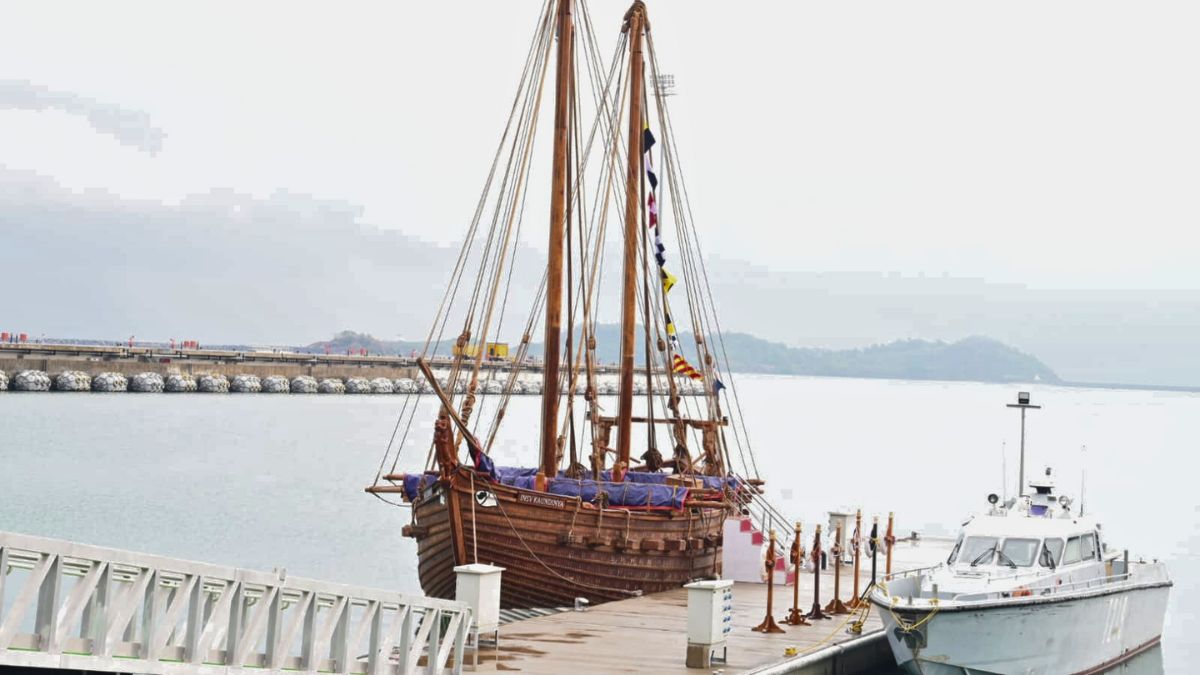
INSV Kaundinya Sets Sail to Recreate India’s Ancient Sea Route to Muscat

INSV Kaundinya is bringing India’s deep maritime past back to life as it prepares for a historic voyage across the Arabian Sea to Muscat. This unique wooden ship, built as a replica of a 5th-century Indian merchant vessel, is not just another naval journey. It is an attempt to relive how Indian sailors once crossed open seas centuries ago, long before modern engines, steel hulls, and digital navigation systems existed. The voyage is planned for later this month and has already attracted attention from historians, sailors, and culture lovers alike.
Thank you for reading this post, don't forget to subscribe!Currently, INSV Kaundinya has sailed from the naval base at Karwar and is on an eight-day journey to Porbandar in Gujarat. From there, the ship will begin its international expedition to Oman, following an ancient trade route that once connected India with West Asia.
A Ship Built the Way Ancestors Did
INSV Kaundinya stands out because of how it has been built. The 20-metre-long vessel was constructed on Divar Island in Goa using traditional shipbuilding methods once common along India’s western coastline. Instead of nails or metal joints, the wooden planks of the ship are stitched together using strong coconut husk rope. This technique was widely used by Indian shipbuilders more than a thousand years ago.
To make the ship seaworthy, natural materials were used to seal it. Fish oil and tree sap, locally known as kundroos, were applied to protect the wood and prevent water leakage. No modern structural changes were added, which means the ship closely resembles how ancient Indian merchant vessels actually looked and functioned. This careful attention to detail makes INSV Kaundinya a floating piece of history.
Following an Ancient Trade Path
The upcoming voyage from Porbandar to Muscat will trace sea routes that Indian traders once used regularly. These routes were vital for the exchange of spices, textiles, ivory, and other valuable goods. Indian merchants sailed across the Arabian Sea, linking ports along the western coast of India with those in the Gulf region.
By sailing this route again, INSV Kaundinya aims to show that long-distance sea travel was well within the capabilities of ancient Indian sailors. It also helps modern audiences understand how strong India’s maritime connections were with regions beyond its shores.
Crew Trained for a Different Kind of Sailing
Sailing a stitched wooden ship across open seas is very different from operating a modern naval vessel. Keeping this in mind, a 16-member crew has been specially trained by the Indian Navy. The crew includes sailors who have spent months preparing for the challenges of traditional navigation.
Their training involved sea trials after the monsoon, learning how to manage sails, ropes, and rigging, and even carpentry sessions with traditional artisans. These skills are essential because repairs at sea must be done using the same old techniques that ancient sailors relied on. The focus has been on teamwork, patience, and understanding the behavior of the wind and waves.
Inspired by the Ajanta Caves

The idea behind INSV Kaundinya came from a painting found in the Ajanta caves, dating back to the 5th century. The artwork shows a stitched ocean-going vessel, offering a rare visual clue about ancient Indian ships. This painting became the foundation for designing and building the replica.
The project was supported by the Indian Navy and the Union Ministry of Culture. The actual construction was carried out by Hodi Innovations, a traditional shipyard based in Goa. Historians, craftsmen, naval officers, and policymakers worked together, making the project a true cultural collaboration.
More Than Just a Voyage
The journey to Muscat is expected to take around 15 days, depending on weather and sea conditions. But the importance of this voyage goes far beyond the number of days at sea. INSV Kaundinya represents India’s long relationship with the ocean and its role as a major maritime power in ancient times.
The voyage also carries a message of cultural connection. Oman and India share centuries-old links through trade, migration, and shared maritime history. By recreating this journey, India is celebrating those ties in a meaningful and visible way.
A Living Symbol of Maritime Heritage
INSV Kaundinya is not just a ship; it is a symbol of curiosity, courage, and craftsmanship. It reminds people that India’s maritime story did not begin in modern times but stretches back thousands of years. As the ship prepares to cross the Arabian Sea, it carries with it the skills, knowledge, and spirit of ancient sailors who once trusted the wind, stars, and their own experience to reach distant shores.
This historic voyage is a quiet yet powerful way of reconnecting with the past while sailing confidently into the present.