


Japan Earthquake: Tsunami Warning Issued

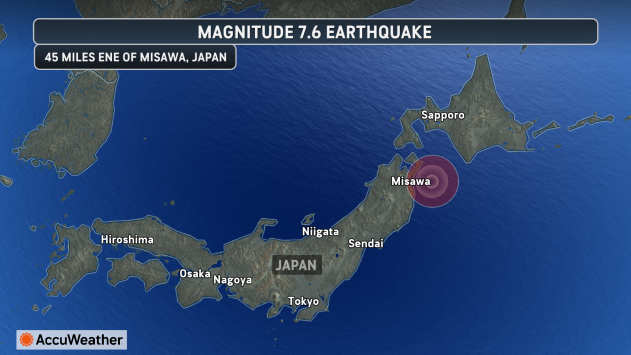
Japan earthquake reports have once again raised global concern as a strong 7.6-magnitude quake hit the region northeast of Misawa, forcing authorities to issue an urgent tsunami warning. The sudden tremor reminded people of Japan’s long history with powerful quakes and how quickly the country must respond to protect lives, especially in coastal districts.
Thank you for reading this post, don't forget to subscribe!According to early information, the earthquake struck suddenly in the evening, shaking many towns across northern Japan. It occurred at 7:45 pm local time and was powerful enough to activate all emergency warning systems. Japan’s quick disaster-response teams immediately began monitoring the situation while broadcasters informed residents of possible danger along the Pacific coastline.
Japan Earthquake: Location and Impact of the Tremor
The tremor took place about 73 kilometres east-northeast of Misawa, a city known for its coastal population and airbase. Experts reported that the quake originated at a depth of a little more than 53 kilometres beneath the seabed. This depth category is usually considered shallow, and shallow earthquakes often cause stronger shaking on the surface compared to deeper ones.
People across the region felt intense vibrations as buildings swayed and many rushed outside into open spaces. Power lines shook, objects fell from shelves, and transportation services paused briefly while checks were carried out.
Japan’s disaster management teams quickly started tracking aftershocks, as these smaller quakes often follow the main event. Authorities also began inspecting key infrastructure such as bridges, highways, and public buildings for any signs of damage.
Japan Earthquake: Tsunami Warning for Pacific Coast Areas
Japan’s Meteorological Agency immediately issued a tsunami warning for areas between Aomori and Iwate along the Pacific shoreline. The agency stated that the first tsunami waves could reach up to three metres in some places. Even small tsunamis can be dangerous, so people living in low-lying coastal zones were told to move to higher ground right away.
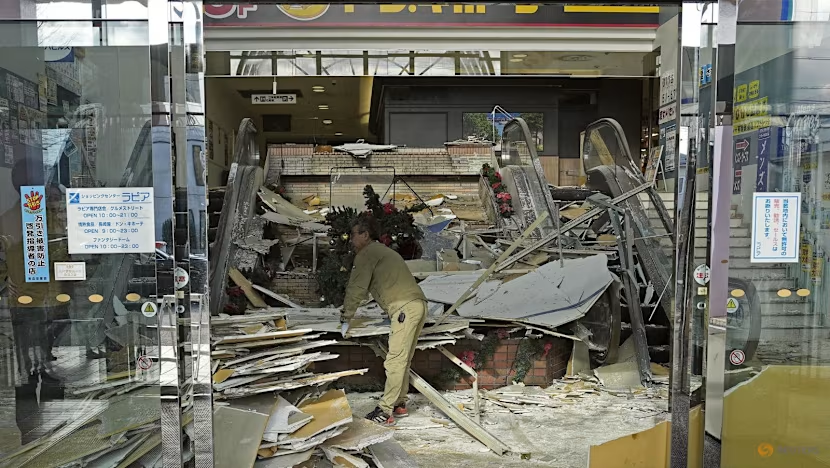
Emergency sirens were heard in many port towns. Local officials used loudspeakers and community messaging systems to guide people to safe locations. Fishing ports closed quickly, and boats were either pulled ashore or moved farther into the sea to avoid damage from incoming waves.
Japanese public broadcasters repeated alerts throughout the evening, urging everyone to stay away from beaches, river mouths, and coastal roads. Residents were advised to wait for official confirmation before returning home.
A Region Familiar With Strong Quakes
Japan is one of the world’s most earthquake-prone countries. Because it lies in a highly active tectonic zone, the nation experiences thousands of small quakes each year, along with occasional major ones.
In January 2024, a powerful 7.5-magnitude earthquake struck the Noto Peninsula region, causing widespread destruction and hundreds of deaths. Many buildings collapsed, roads cracked open, and power supply systems failed in several towns.
Earlier in April 2016, two strong earthquakes hit the Kumamoto region within a short period. These twin quakes destroyed homes and claimed more than 250 lives, leaving deep impacts on the affected communities.
However, the most devastating event in recent memory remains the 2011 Tohoku earthquake. With a magnitude of 9.1, it was one of the strongest quakes ever recorded in the world. It triggered a massive tsunami with waves reaching up to 40 metres in some places. Entire towns were washed away, and the disaster led to the Fukushima nuclear crisis, causing long-term environmental and social effects.
These past events have made Japan more focused on readiness, strengthening buildings, improving warning systems, and constantly educating the public on safety measures.
Japan Earthquake: Tectonic Setting and Natural Risks
Japan sits at the meeting point of four major tectonic plates:
- the Pacific Plate
- the Philippine Sea Plate
- the Eurasian Plate
- the North American Plate
These plates are always moving. When one plate pushes under another, huge amounts of pressure build up. When the pressure suddenly releases, an earthquake occurs. Because this process never stops, Japan remains at risk throughout the year.
The country is also part of the Pacific Ring of Fire, an area known for frequent earthquakes and volcanic eruptions. Many nations along this ring, including Indonesia, the Philippines, and parts of the Americas, face similar challenges.
This natural setting means Japan must always stay prepared, improving early-warning systems, upgrading coastal defences, and helping communities practise regular safety drills.
Response and Public Preparedness
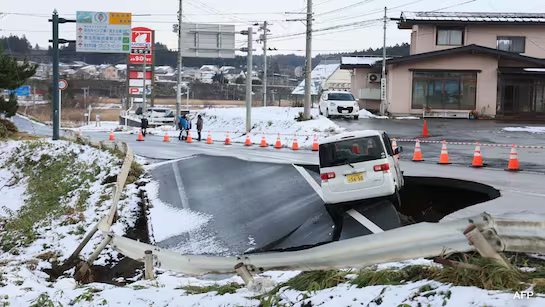
Japanese authorities acted quickly after the quake. Emergency crews began checking hospitals, public shelters, and important transport routes. Local governments opened evacuation centres for people moving away from coastal zones. Volunteers helped elderly residents reach safer places while police and firefighters carried out patrols.
Public calmness played an important role as well. Japan’s citizens are trained from childhood on how to react during earthquakes and tsunamis. Schools, offices, and public institutions hold regular safety drills. Because of this preparedness, evacuation was orderly and efficient.
As the night progressed, more information was expected from the Meteorological Agency on the strength of the tsunami waves and the risk of further tremors.
Japan Earthquake: Key Takeaway From the Event
The Japan earthquake once again showed how quickly natural forces can change life within moments. It also proved the value of early warnings and fast action taken by authorities and the public. Although the full extent of the impact may take time to understand, Japan’s quick response, strong systems, and community discipline played a major role in reducing danger. This event reminds the country to stay prepared at all times, as powerful seismic activity is a constant part of the region.