Assam Education Reform: History and Geography Now Compulsory

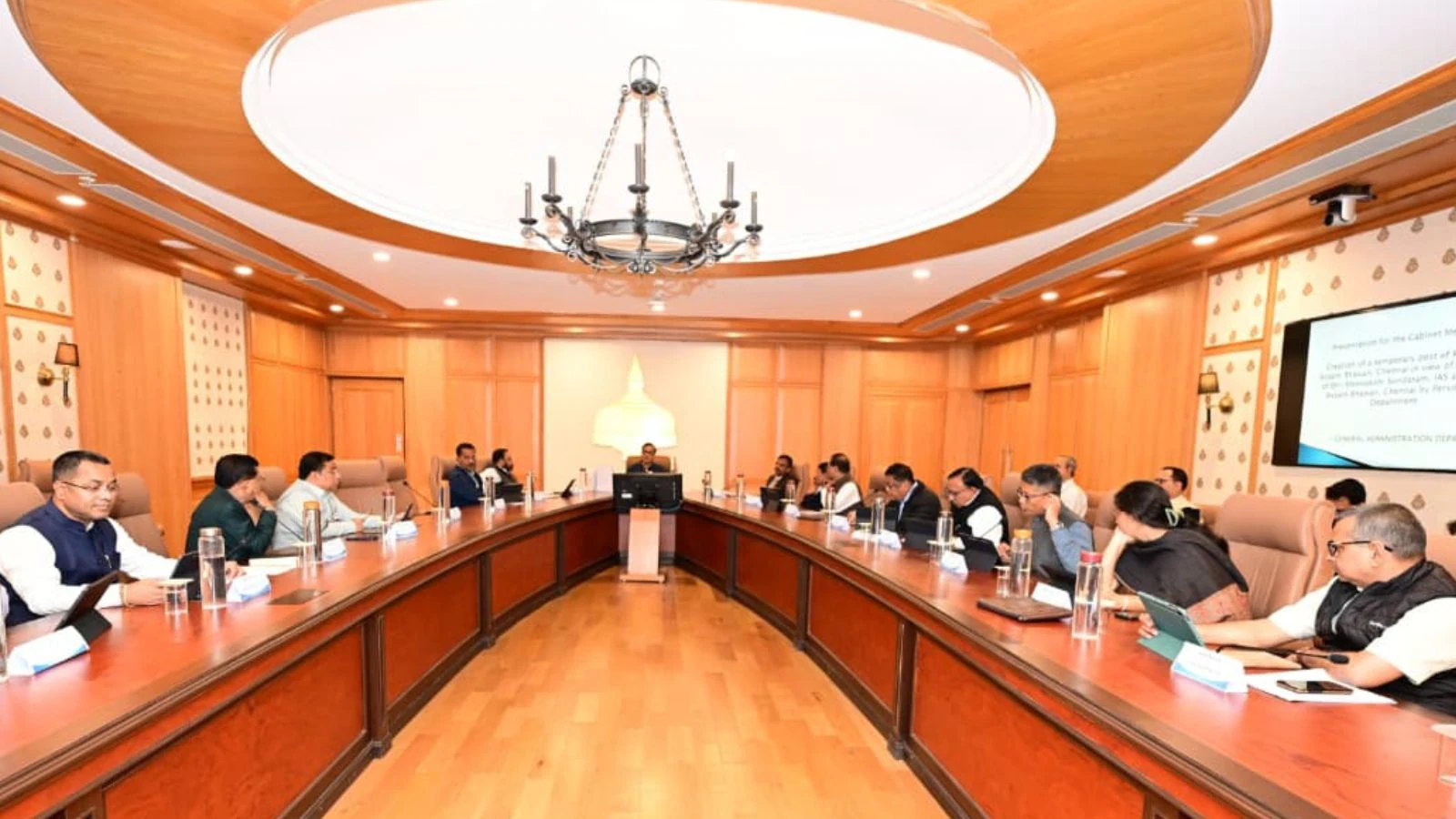
Assam Education Reform has taken a major step forward as the state government has officially approved history and geography as compulsory subjects for students of classes 6, 7 and 8. The decision, adopted during a cabinet meeting chaired by Chief Minister Himanta Biswa Sarma, marks a significant shift in the school curriculum. The aim is to deepen students’ knowledge about the state’s historical roots, cultural identity and geographical landscape from an early age.
Thank you for reading this post, don't forget to subscribe!This new reform is part of a broader educational strategy that intends to strengthen foundational learning, promote cultural awareness and prepare students for a more informed academic journey in the senior classes. For many educators and parents, the decision also fills a long-standing gap, as understanding one’s land, history and culture is seen as essential for social and civic development.
Curriculum Reform Based on Expert Committee Recommendations
This policy change is based on the recommendations of the Justice Biplab Kumar Sharma committee, which was formed to study how local knowledge and regional context could be integrated into the school curriculum. The committee highlighted that early exposure to Assam’s rich heritage and geography helps students build a stronger sense of belonging and identity.
Under the revised structure, students will now study social science, history and geography as mandatory subjects. Each of these subjects will carry 50 marks, ensuring balanced weightage and a uniform learning structure. The earlier provision, where students could skip studying history or geography as separate components, has now been completely removed.
The education department has already initiated preparations to align the school timetable with the new changes. Teachers will be provided with updated guidelines, learning outcomes and revised lesson plans to help smooth implementation across all government and provincialized schools.
Strengthening State-Based Learning
Officials from the education department have stated that the decision is aimed at helping children understand their roots at a much earlier stage. They emphasized that when students learn about their land, ancient kingdoms, major cultural transitions, tribal heritage, climate and the physical features of their state, they develop a more grounded civic sense.
The new subjects will not only cover Assam’s history and geography but will also include important national themes in a simplified manner, ensuring that middle-school students receive a balanced mix of local and national learning. Schools have been instructed to integrate additional activities such as field visits, map-reading sessions and storytelling exercises to enhance the learning experience.
Educators believe that the introduction of compulsory history and geography will also help reduce learning gaps often noticed in higher classes, especially in subjects related to humanities and general studies.
Major Cabinet Decisions Alongside Curriculum Change
Apart from the education reform, the Assam cabinet approved several major developmental projects, especially in the field of technical education. One of the most significant approvals is the establishment of a Rs 243 crore training and innovation centre in collaboration with Dassault Systems India at Assam Engineering College.
Out of the total project cost, Dassault Systems will invest Rs 200 crore, while the state government will contribute Rs 43 crore. The programme aims to offer advanced training in aerospace, defence, automotive technologies and electric vehicle development. The project is scheduled to begin operations by mid-January.
Officials said that this initiative is expected to benefit thousands of engineering students and young professionals by giving them direct access to global-standard training modules and industry-ready skill development opportunities.
Assam’s Second Sainik School Soon in Karbi Anglong
Another key decision taken by the cabinet is the establishment of Assam’s second Sainik School, to be set up at Longvaku in Karbi Anglong district. The project has been sanctioned at a cost of Rs 335 crore, making it one of the biggest school infrastructure investments in the tribal district.
The Union defence ministry will bear 80 per cent of the project cost, while the Assam government will fund the remaining amount. Construction is expected to begin shortly after the completion of administrative approvals. Officials believe the new Sainik School will open up new opportunities for students in the hill districts, especially those aspiring to join the armed forces.

This decision aligns with the state’s long-term vision to expand defence-oriented education and provide structured training to young aspirants.
Infrastructure Boost and Future Vision
The combined impact of making history and geography compulsory, introducing skill-development projects and expanding specialized schools reflects Assam’s broader push to transform its education sector. From school-level reforms to college-level skill programmes, the government is focusing on creating a more inclusive and future-ready learning environment.
Authorities have stated that more curriculum updates and infrastructure projects are likely to be introduced in the coming months as part of the state’s education modernization plan.
Summary of Key Points
- History and geography are now compulsory for classes 6, 7 and 8.
- Each subject will carry 50 marks.
- Curriculum changes are based on the Justice Biplab Kumar Sharma committee recommendations.
- Assam approved a Rs 243 crore project with Dassault Systems India at Assam Engineering College.
- Assam’s second sainik school will be built in Karbi Anglong with Rs 335 crore.