
China-Bangladesh 2+2 Dialogue

China-Bangladesh 2+2 Dialogue preparations have begun as Bangladesh and China work towards establishing their first formal diplomacy and defence dialogue mechanism. The proposed arrangement is expected to bring foreign affairs and defence officials from both countries together to discuss strategic, security and bilateral issues.
The new format is part of growing engagement between Dhaka and Beijing. Along with diplomatic and defence cooperation, the two countries are also working on infrastructure, water management, trade and industrial projects.

What is the China-Bangladesh 2+2 Dialogue?
The China-Bangladesh 2+2 Dialogue will provide a structured platform for discussions between officials dealing with foreign affairs and defence. In a traditional 2+2 format, foreign and defence ministers from two countries meet together to discuss common strategic and security concerns.
In the proposed China-Bangladesh arrangement, the first mechanism is expected to be a State Minister-level Diplomacy and Defence Dialogue. The countries are also planning an early Foreign Minister-level Strategic Dialogue.
Such dialogue mechanisms allow countries to discuss several connected issues through a single strategic platform. These may include regional security, defence cooperation, diplomatic relations, infrastructure and emerging geopolitical developments.
Discussions Held in Dhaka
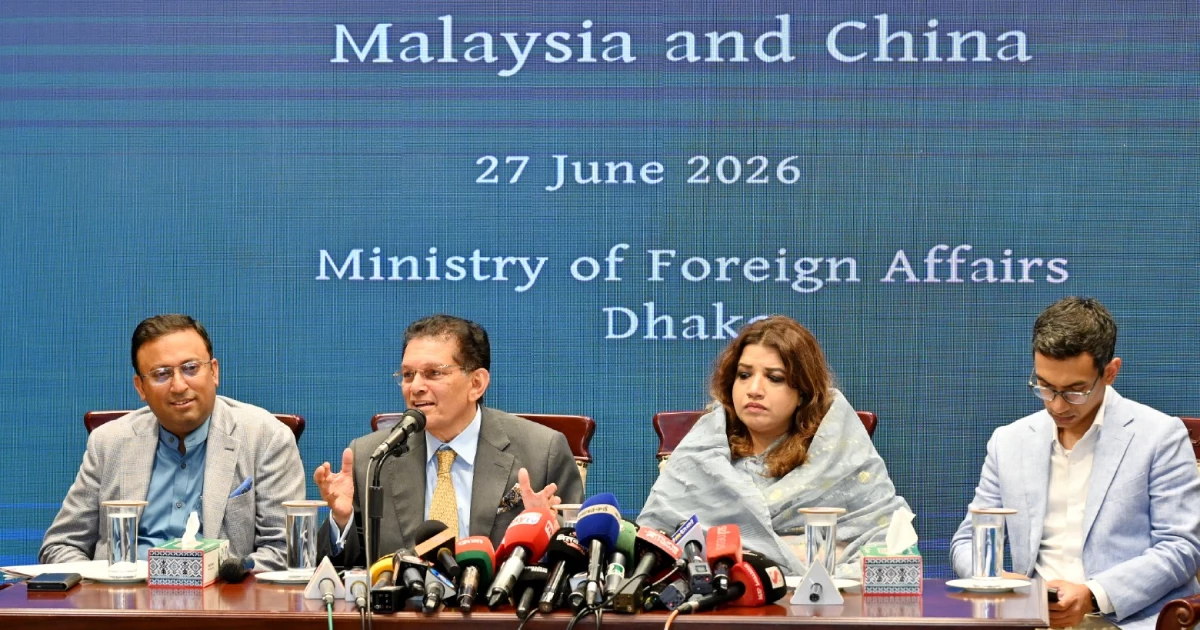
Preparations for the proposed dialogue were discussed in Dhaka between Chinese Ambassador Yao Wen and Bangladesh’s State Minister for Foreign Affairs Humaiun Kobir.
The meeting also reviewed the progress of Bangladesh Prime Minister Tarique Rahman’s visit to China from 22 June to 26 June 2026.
The discussions show that the proposed 2+2 mechanism is being developed alongside wider bilateral cooperation. Both countries have several ongoing projects covering ports, rivers, industrial development and infrastructure.
Mongla Port Project Gets Attention
One of the major projects discussed by the two sides was the Mongla Port Facilities Modernization and Expansion Project.
Mongla Port is one of Bangladesh’s important seaports. Modernising the port is expected to improve its capacity and strengthen transportation and trade infrastructure.
Port development has wider economic importance because efficient ports can support imports, exports, industrial activity and regional connectivity. China has been involved in several infrastructure projects in Bangladesh, making port development an important part of bilateral economic cooperation.
The Mongla project was therefore included in the discussions between the two countries as they reviewed progress on their bilateral commitments.
Teesta River Project Also Discussed
The Teesta River Comprehensive Management and Restoration Project was another major issue discussed during the meeting.
The Teesta is an important river system in Bangladesh and has significance for agriculture, water management and local communities. A comprehensive river management project can involve areas such as flood control, water conservation, riverbank protection and land management.
The project is part of the wider cooperation between Bangladesh and China in the field of water resources and infrastructure.
China Economic and Industrial Zone
Economic cooperation is another important part of the Bangladesh-China relationship. The China Economic and Industrial Zone (CEIZ) in Chattogram is among the major industrial projects connecting the two countries.
The industrial zone has attracted investment commitments of around US$500 million from more than 30 Chinese companies.
Chattogram is a major port and industrial centre of Bangladesh. Development of an industrial zone in the region can support manufacturing, investment, employment and trade.
Chinese investment in Bangladesh’s industrial sector also provides opportunities for companies to establish production facilities and connect with regional supply chains.
Bangladesh Reaffirms One-China Principle
During its engagement with China, Bangladesh has continued to reaffirm its support for the One-China Principle.
The One-China Principle refers to China’s position that the People’s Republic of China is the sole legal government representing China. It is an important part of China’s diplomatic relations with countries around the world.
Bangladesh considers China a strategic partner, and the two countries have expanded cooperation in several areas in recent years.
The proposed 2+2 dialogue could provide another institutional platform for managing this growing relationship.
Why the Dialogue Matters
The proposed dialogue comes at a time when strategic competition and security concerns are becoming more important across Asia.
A 2+2 mechanism allows countries to bring foreign policy and defence discussions together. This can help governments exchange views on regional security, defence cooperation, geopolitical developments and other issues affecting their interests.
For Bangladesh and China, the dialogue could become an additional channel for regular strategic communication.
It may also help both sides coordinate their positions on issues connected with regional connectivity, maritime interests, infrastructure and security.
China’s Growing Engagement with Bangladesh
China has become an important economic and infrastructure partner for Bangladesh. Cooperation covers roads, bridges, ports, industrial zones, energy and other development projects.
Bangladesh, meanwhile, is an important country in South Asia because of its geographical position between South and Southeast Asia. Its access to the Bay of Bengal also gives it significance for regional connectivity and maritime trade.
The proposed strategic dialogue therefore has importance beyond defence relations. Economic and infrastructure cooperation are also likely to remain major parts of the overall relationship.
Regional Context
The development is also relevant to the wider geopolitical environment of South Asia and the Indo-Pacific.
Bangladesh maintains relations with several major powers and regional organisations. Its growing engagement with China takes place alongside its economic and diplomatic relationships with India, Japan, the United States and other partners.
A formal China-Bangladesh strategic dialogue could give Beijing and Dhaka a regular mechanism for discussing regional developments and bilateral priorities.
The 2+2 format is already used by India with several major partners, including the United States, Japan, Australia and Russia. These dialogues generally focus on strategic, defence and foreign policy cooperation.
No Final Date Yet
Although preparations have started, a final date for the first China-Bangladesh strategic dialogue has not yet been announced.
The proposed mechanism is expected to develop in stages, beginning with the State Minister-level Diplomacy and Defence Dialogue and followed by a Foreign Minister-level Strategic Dialogue.
Further discussions between the two governments will determine the schedule, format and detailed agenda of the meetings.