Japan Ghost Plants: Hidden Life in the Forests Without Photosynthesis

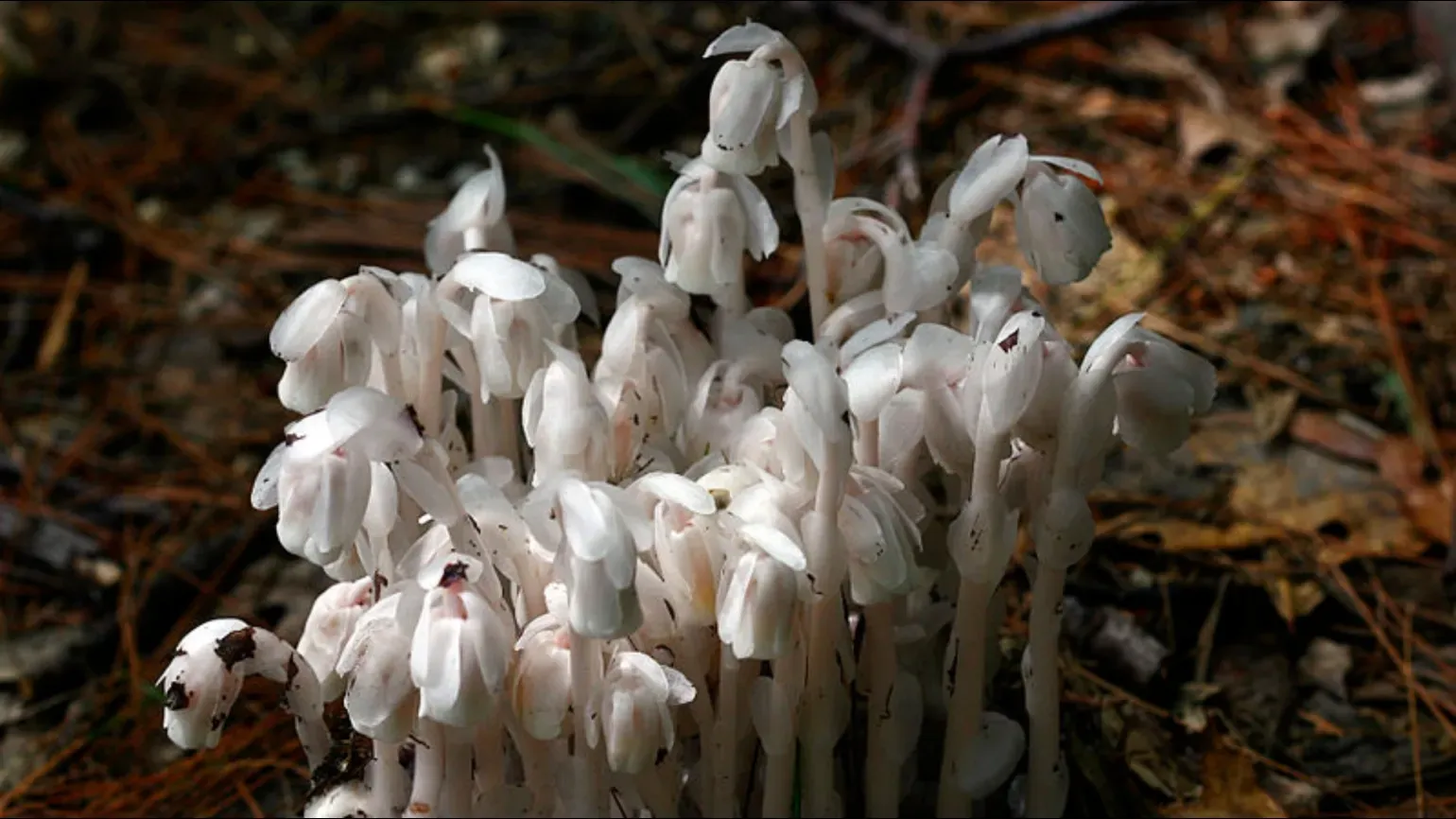
Japan Ghost Plants have long fascinated botanists for their ability to live entirely without photosynthesis. Deep within Japan’s shaded forests, these pale, almost translucent plants survive by drawing nutrients from underground fungal networks instead of producing their own food. Recent research from Kobe University and its collaborators has shed new light on how these mysterious species feed, reproduce, and persist in complete darkness revealing a complex, interconnected world beneath the forest floor.
Thank you for reading this post, don't forget to subscribe!Japan Ghost Plants and the Mystery of Mycoheterotrophy
The defining characteristic of Japan Ghost Plants is their mycoheterotrophic lifestyle, meaning they obtain all of their carbon and minerals by parasitizing fungi that are themselves connected to trees. These plants have lost chlorophyll, the green pigment essential for photosynthesis, and thus depend entirely on the energy flow between trees and fungi.
While some related species, known as mixotrophs, can still perform a small amount of photosynthesis, the true ghost plants like those found in Japan’s temperate woodlands are fully mycoheterotrophic. They thrive in the dark, humid, and undisturbed forest floors where fungal networks are dense and active.
This adaptation has evolved independently multiple times across plant lineages, reflecting a powerful evolutionary strategy in nutrient-poor, low-light environments. Rather than competing for sunlight, ghost plants have found success in an underground economy powered by fungi.
Fungal Partnerships: The Hidden Web Beneath Japan’s Forests

Ghost plants are living evidence of how intricately connected forest ecosystems are. In the case of Japan Ghost Plants, their survival depends on mycorrhizal fungi, which form symbiotic relationships with trees. These fungi extract sugars from trees’ roots and, in turn, provide them with essential minerals from the soil.
Ghost plants tap into this fungal network, siphoning nutrients indirectly from the trees via the fungi. The result is a remarkable three-way relationship tree, fungus, and plant sustaining life in an environment where sunlight never reaches.
This nutrient exchange system also highlights the importance of maintaining dead wood and intact forest litter, as fungal networks flourish in such conditions. Without them, ghost plants and many other dependent species cannot survive.
Japan Ghost Plants and Their Unusual Pollinators
Unlike ordinary flowering plants that rely on bees, butterflies, or wind, Japan Ghost Plants follow a very different reproductive strategy. Motion-activated camera studies have revealed that camel crickets play an unexpected role in their seed dispersal. These nocturnal insects consume the ghost plants’ small fruits and later release the seeds as they move through the forest floor.
Pollination, too, involves a surprising cast of characters. Tiny arthropods such as ants, woodlice, small flies, and spiders carry pollen between blossoms, ensuring reproduction even in the dim light of dense forests.
When pollinators are scarce, many ghost plants resort to delayed self-pollination, ensuring their survival. Some species, particularly those found on isolated islands, even self-pollinate within unopened flowers a remarkable adaptation to life in near isolation.
Japan Ghost Plants: New Species and Scientific Discoveries
Despite Japan being one of the world’s most well-documented countries in terms of biodiversity, discoveries of new Japan Ghost Plants continue to astonish scientists.
One recent discovery, Monotropastrum kirishimense, was identified as a distinct species after decades of confusion with similar plants. This differentiation was based on subtle variations in floral structure and genetic markers.
Another finding expanded the known range of the Spiranthes hachijoensis, an orchid species belonging to the “ladies’ tresses” group, known for their spiral arrangement of flowers.
Perhaps most extraordinary is the discovery of Relictithismia kimotsukiensis, a species so unique that it required the creation of an entirely new genus a rare occurrence in modern botany. This discovery underscores how much biodiversity still remains hidden even in regions long explored by scientists.
Why Dead Wood and Fungi Matter for Japan Ghost Plants
The survival of Japan Ghost Plants depends closely on the availability of decomposing wood and stable, moist soils, which host the fungal partners they rely upon. These fungi flourish in organic-rich environments created by fallen leaves and rotting logs.
When human activities such as logging, deforestation, or excessive canopy thinning disrupt these delicate systems, the fungi die off, breaking the life-sustaining chain between trees and ghost plants. As a result, entire populations of these rare plants can vanish silently from a forest ecosystem.
Conservationists are now paying closer attention to how ghost plants can serve as indicators of forest health. Their presence signals intact underground fungal networks and undisturbed soil conditions. Protecting these subtle ecological relationships ensures not just the survival of ghost plants but also the broader integrity of Japan’s forest ecosystems.
Japan Ghost Plants: Understanding Nutrient Flows and Conservation Efforts
Current research at Kobe University and partner institutions is focused on tracking how carbon and nutrients move through the forest’s subterranean food web from trees to fungi to ghost plants. By tracing these pathways, scientists hope to gain a clearer understanding of how forest ecosystems function holistically.

These studies are also influencing modern conservation policies. Instead of focusing solely on protecting visible species, researchers advocate safeguarding entire ecological networks including fungi, soil microbes, and the detritus layer that sustains them.
Efforts are underway to identify and catalog new ghost plant populations across Japan’s forests, particularly in Kyushu, Shikoku, and Honshu, where unique microclimates foster distinct fungal and plant communities. Each discovery adds another piece to the puzzle of how life adapts to thrive in the absence of sunlight.
Japan Ghost Plants: A Window Into Evolutionary Ingenuity
The study of Japan Ghost Plants offers a rare glimpse into the extremes of plant evolution. In an environment where photosynthesis is impossible, these plants have found a way to exist by forming unseen partnerships beneath the soil. Their pale, ghostly forms serve as reminders of nature’s adaptability and interdependence.
Every new discovery be it a fresh species, a pollinator, or a fungal associate expands our understanding of how ecosystems function beyond what the eye can see. Protecting these hidden organisms means preserving the invisible threads that bind forests together.
In Japan’s quiet, moss-covered woodlands, the ghost plants stand as silent witnesses to millions of years of coevolution an enduring testament to life’s ability to adapt, connect, and survive in the shadows.