Jarosite Discovery in Kutch Strengthens Links Between Earth and Mars

Jarosite Discovery in Kutch has captured the attention of geologists, space scientists, and planetary researchers across the world. Recent findings from the village of Matanomadh in Gujarat’s Kutch district have revealed deposits of jarosite, a rare iron-rich sulphate mineral dating back nearly 55 million years. This discovery is being hailed as a crucial breakthrough because it provides a direct link between Earth’s ancient geological processes and Martian conditions, offering valuable insights for future planetary missions, including ISRO’s upcoming Mangalyaan-2.
Thank you for reading this post, don't forget to subscribe!Geological Significance of Jarosite
Jarosite is a yellowish mineral formed through the interaction of iron, sulphur, potassium, and water. It is extremely rare on Earth and is usually associated with volcanic activity. In Matanomadh, scientists determined that jarosite deposits were created during the Paleocene period, around 55 million years ago, when volcanic ash mixed with marine water.
The conditions under which this mineral formed in Kutch are remarkably similar to those on Mars, where jarosite was first detected by NASA’s Opportunity rover in 2004. This parallel suggests that ancient Kutch once had environmental and chemical conditions comparable to those found on the red planet, giving scientists a natural analogue site on Earth to study Martian geology.
Matanomadh as a Martian Analogue
The terrain of Matanomadh is harsh, sparsely populated, and geologically unique, making it ideal for simulating Martian conditions. The clay in the region, when mixed with jarosite, demonstrates an unusual expansion when wet, closely resembling the behaviour of Martian soil. This feature alone makes it a valuable site for planetary exploration studies.
For researchers, Matanomadh acts as a natural laboratory where rover mobility, drilling techniques, and geochemical instruments can be tested before they are sent to Mars. By working in such an environment, scientists gain a better understanding of how equipment will perform in extreme extraterrestrial conditions. Additionally, the mineralogy and biochemistry of the site provide a chance to study processes that may have once shaped the Martian surface.
ISRO and the Implications of Jarosite Discovery in Kutch
The Jarosite Discovery in Kutch aligns closely with India’s growing ambitions in planetary science. ISRO has been actively developing analogue sites to prepare for upcoming missions. Alongside Matanomadh, the Himalayan Outpost for Planetary Exploration (HOPE) in Ladakh offers another important testing ground. Located at an altitude of 4,500 metres, HOPE replicates Mars’ low oxygen environment, thin atmosphere, and sub-zero temperatures. Recently, two crew members spent ten days in a Mars habitat replica at this site, experiencing simulated Martian living conditions.
Together, Matanomadh and HOPE provide complementary testing opportunities. While Ladakh helps simulate atmospheric and temperature conditions, Kutch allows for surface and geological studies. These efforts directly support the preparation of Mangalyaan-2, India’s second interplanetary mission to Mars. Instruments designed to study the Martian surface and atmosphere can be tested in these analogue environments before their deployment in space.
Implications for Astrobiology and Mineral Exploration
Jarosite’s presence in Matanomadh is not just a geological curiosity. On Mars, jarosite has been linked to past water activity, a vital factor in the search for life. The mineral has the ability to trap organic molecules and preserve elements necessary for life, making it a powerful tool for astrobiology.
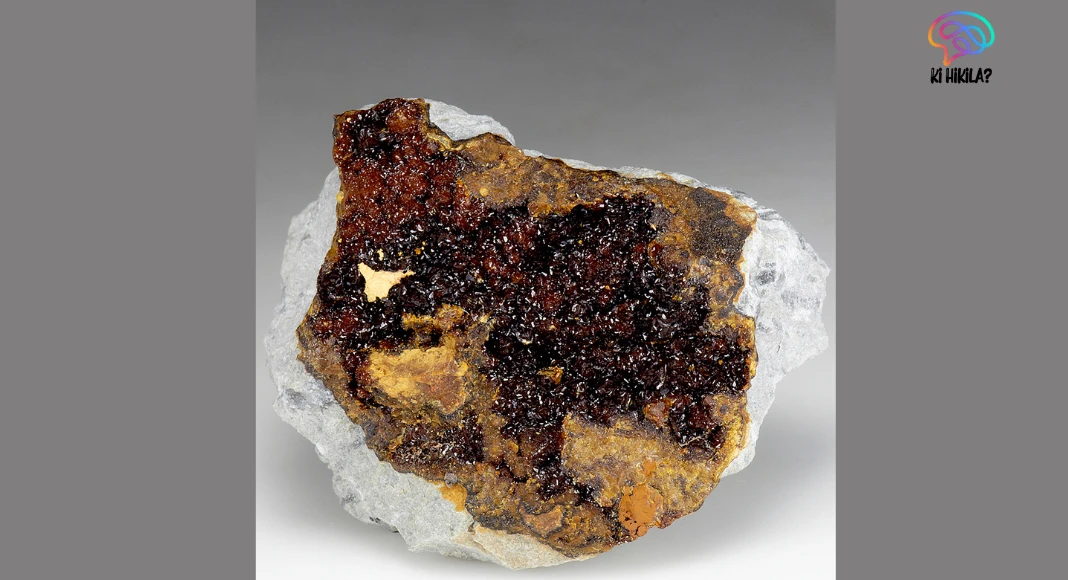
By studying jarosite deposits in Kutch, scientists hope to uncover evidence about the conditions that once prevailed in the region and use that knowledge to better understand Mars’ palaeo-environment. These studies may provide clues about whether the red planet once supported microbial life. Moreover, the research contributes to mineral exploration on Earth, as jarosite deposits could point to other valuable mineral resources.
Conservation and Geo-heritage Importance
While the discovery opens exciting possibilities, the Matanomadh site faces several threats. Waterlogging and coal mining activities in the surrounding areas endanger the preservation of this rare geological treasure. Scientists have called for urgent measures to protect the region as a planetary geo-heritage site.
Safeguarding Matanomadh is critical for the continuity of ongoing and future research. Protecting such sites ensures that unique geological formations remain intact for scientific studies, educational purposes, and planetary mission preparations. It also highlights the need to strike a balance between resource extraction and conservation of Earth’s natural heritage.
Jarosite Discovery in Kutch and Future Planetary Research
The Jarosite Discovery in Kutch demonstrates how Earth’s geological history can offer profound insights into planetary processes beyond our world. For India, it signifies both an opportunity and a responsibility: to preserve this natural analogue for future exploration and to use it as a stepping stone for advancing space science.
As ISRO continues its planetary research and prepares for Mangalyaan-2, Matanomadh’s jarosite deposits will serve as a reminder of the interconnectedness of Earth and Mars. They highlight the fact that understanding our planet’s past can play a pivotal role in unlocking the mysteries of other worlds.