

Jeypore Gecko Faces Mining Threat

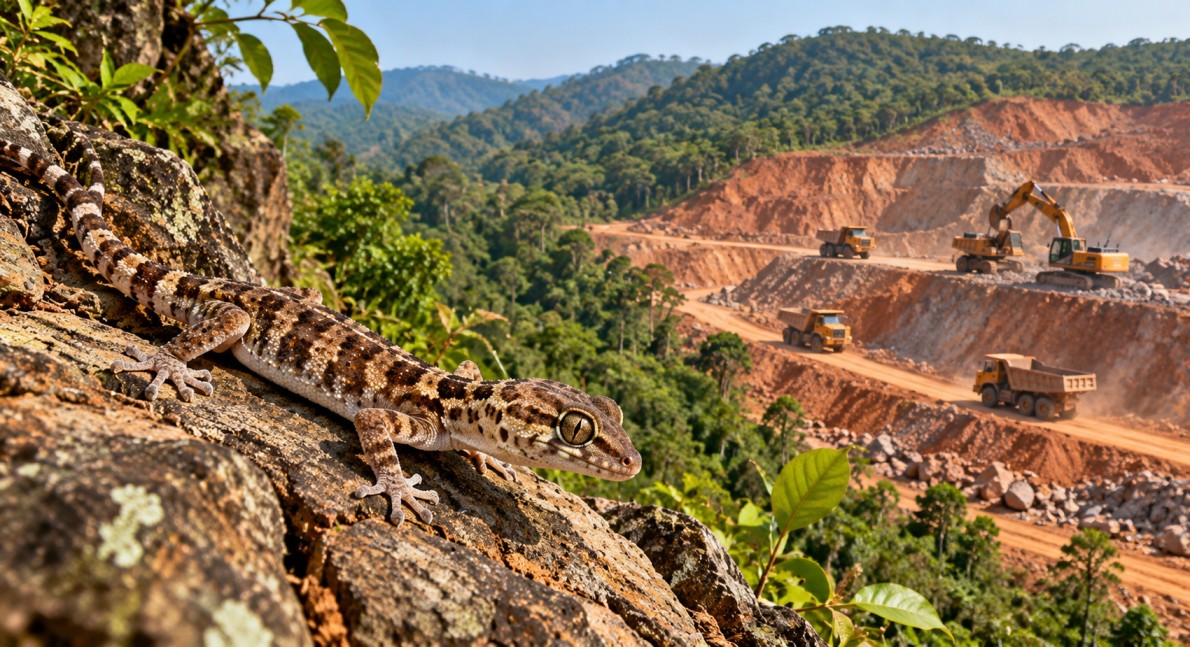
Jeypore Gecko faces a serious threat from a proposed bauxite mining project in Odisha’s Koraput district. Kalinga Alumina Ltd, a company linked to the Adani Group, plans to develop an opencast bauxite mine across 147 hectares of forest in the Nageswari reserve forest. The proposed mining site in the Balda hills is part of the known habitat of the endangered Jeypore ground gecko. According to the report dated October 2026, only four individuals of this rare reptile were documented at the site during the previous year.
The proposed project has raised concerns about the future of a species with a very limited known distribution. Forest clearance, changes to rocky landscapes and mining activities could affect the habitat on which the gecko depends. Local Adivasi communities have also opposed the project, citing concerns about their ancestral land.

What Is the Jeypore Ground Gecko?
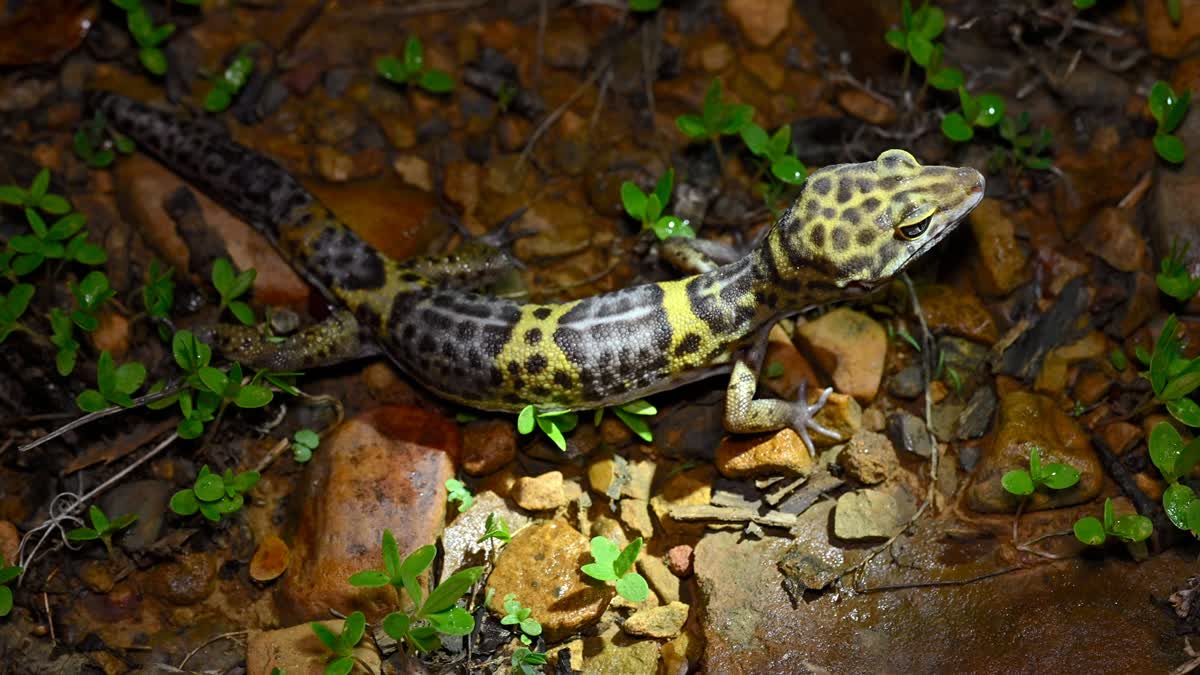
The Jeypore ground gecko, scientifically known as Cyrtodactylus jeyporensis, is a rare reptile native to Odisha, India. It is associated with rocky habitats in the Eastern Ghats, a mountain range known for its rich biodiversity.
The species was presumed extinct for around 130 years before Indian scientists Ishan Agarwal and Aniruddha Datta-Roy rediscovered it in 2010. Its rediscovery brought renewed attention to the need to study and protect lesser-known reptiles.
Geckos belong to a group of reptiles that includes many species with different colours, sizes and habitat needs. Several gecko species are active at night, while specialised toe pads help many of them move across walls and other surfaces.
The Jeypore ground gecko depends on its particular natural surroundings. Damage to rocky areas and nearby vegetation can reduce the places available for shelter and survival. Because the species has a restricted known range, habitat loss in even a small area may have serious effects.
Why the Balda Hills Matter
The Balda hills in Koraput district form an important part of the gecko’s remaining known habitat. The proposed mine could transform parts of this landscape through vegetation clearance, excavation and other mining-related activities.
Bauxite is the main ore used to produce alumina, which is then processed to make aluminium. Although aluminium is widely used in transport, construction, packaging and electrical equipment, extracting its raw materials can place pressure on forests and wildlife habitats.
Mining may change the shape of rocky surfaces, remove vegetation and disturb areas used by wildlife. Dust, noise, transport activity and changes to local drainage can also affect the surrounding environment.
The Jeypore ground gecko has already faced habitat pressures from land-use changes, including coffee plantations, hydropower projects and mining. Its former habitat at Potangi in Odisha was reportedly lost to bauxite mining by NALCO, and the species is believed to have disappeared from that location.
The proposed project in the Balda hills has therefore drawn attention to the importance of protecting the remaining areas where the species is known to occur.
Conservation Status and Legal Protection
The International Union for Conservation of Nature (IUCN) lists the Jeypore ground gecko as Endangered. This category indicates that a species faces a high risk of extinction in the wild.
The species is also included in Appendix II of the Convention on International Trade in Endangered Species of Wild Fauna and Flora (CITES), with the listing effective from 18 July 2026, according to the supplied report. CITES is an international agreement that regulates trade in listed wild animals and plants to help ensure that international trade does not threaten their survival.
In India, the Jeypore ground gecko receives protection under Schedule I of the Wild Life (Protection) Act, 1972. This law provides a framework for protecting wildlife and regulating activities that may affect protected species.
These protections are important, but the survival of the gecko also depends on preserving its habitat. Legal safeguards, scientific surveys and careful assessment of proposed development projects all have a role in conservation.
Adivasi Communities Raise Concerns
The proposed mining project has also become an issue for local communities. Bonda and Porja Adivasi communities have reportedly protested against the mine for two years and identify the area as ancestral land.
For communities with long-standing connections to forests, land is important for livelihoods, cultural practices and access to natural resources. Changes to forest areas can therefore affect both wildlife and the people who depend on them.
The situation highlights the need to consider biodiversity, local livelihoods and land rights when assessing large development projects. Transparent environmental assessments and meaningful consultation with affected communities can help ensure that these concerns are properly examined.
Can Development and Wildlife Protection Coexist?
The debate surrounding the Jeypore ground gecko reflects a wider challenge in India: balancing mineral production with forest conservation. Bauxite is an important raw material for aluminium, but mining in sensitive habitats can create environmental costs that may be difficult to reverse.
Before a project proceeds, detailed surveys can help establish the presence of rare species, identify critical habitat areas and assess the likely effects of mining. Conservation planning may also examine whether proposed changes could affect nearby populations and connected ecosystems.
For a species with a very limited known range, protecting its remaining habitat is particularly important. If a local population disappears because its habitat is destroyed, restoring the original rocky ecosystem may not be easy.
The proposed mine in the Balda hills has brought renewed attention to the Jeypore ground gecko and the challenges of protecting rare wildlife in mineral-rich regions. The decisions made about this landscape could have lasting implications for biodiversity and local communities.