


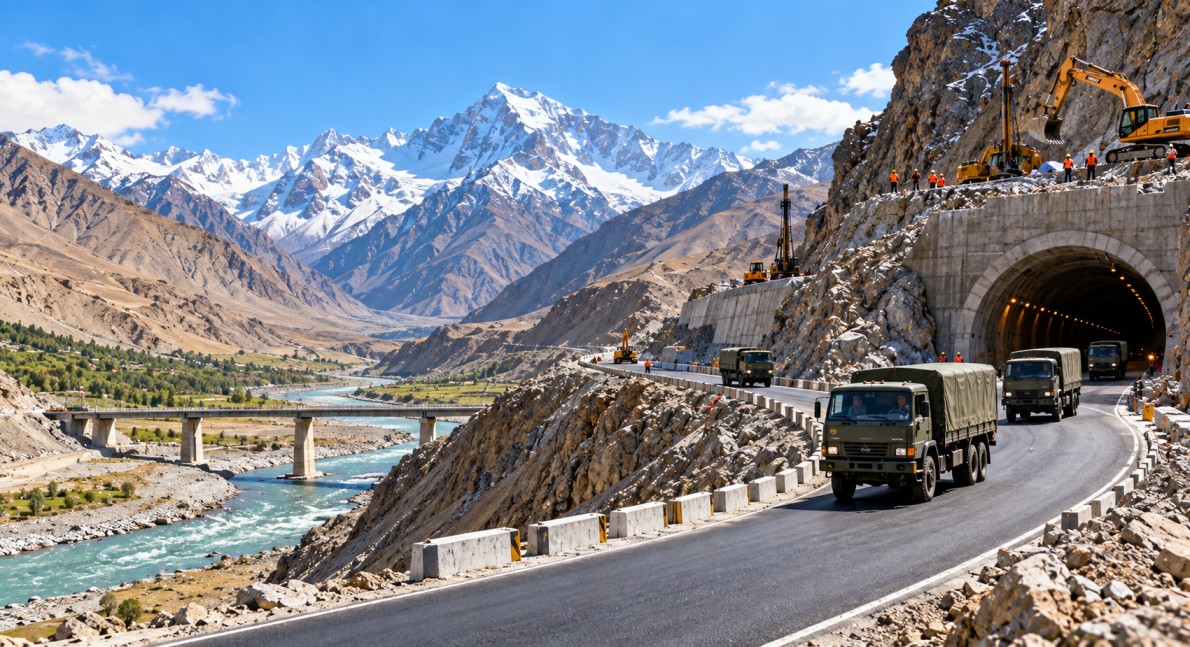
BRO: Major Border Roads in India

BRO Roads play an important role in connecting India’s remote border regions with major towns and cities. The Border Roads Organisation (BRO) builds and maintains roads, bridges, tunnels and other infrastructure in difficult areas, including the Himalayas. These routes support the movement of military personnel and supplies while helping people in remote villages access healthcare, education, markets and other essential services.
Established on 7 May 1960, the BRO operates under the Ministry of Defence. Its work covers areas with high mountains, steep slopes, heavy snowfall and challenging weather conditions. The organisation also undertakes infrastructure projects in friendly neighbouring countries. As India continues to improve connectivity in strategically important regions, border roads remain an important part of national infrastructure development.

What Is the Border Roads Organisation?
The Border Roads Organisation is responsible for developing and maintaining road infrastructure in border areas and other strategically important locations. Its work includes constructing new roads, repairing existing routes, building bridges and developing tunnels through difficult terrain.
The organisation includes personnel from the Indian Army’s Corps of Engineers, the General Reserve Engineer Force (GREF) and civilian staff. It works with central and state government agencies to carry out infrastructure projects.
Border roads serve both military and civilian needs. They help transport equipment and supplies to remote locations and allow local communities to travel more easily. Reliable roads are also important during natural disasters, when emergency teams need to reach affected areas and deliver essential supplies.
Major Border Roads in India
Several important road corridors connect the Himalayan region and other border areas with the rest of India. These routes support transport, tourism, trade and access to remote settlements.
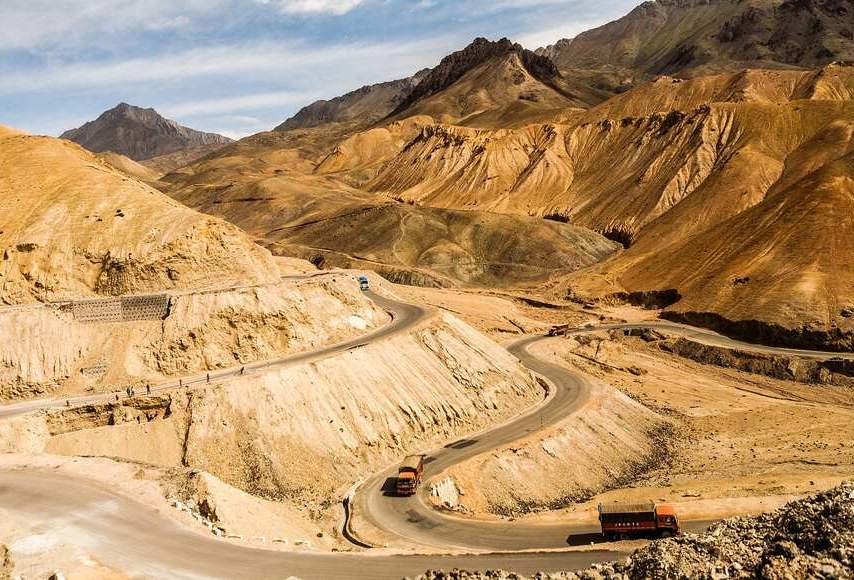
Srinagar-Leh Highway: This route connects Srinagar in Jammu and Kashmir with Leh in Ladakh. It crosses the high-altitude Zoji La pass and is an important road link for both civilian and military movement.
Manali-Leh Highway: This highway connects Manali in Himachal Pradesh with Leh in Ladakh. It passes through challenging mountain terrain and high passes, including Baralacha La, Lachulung La and Tanglang La. Weather conditions can affect its accessibility.
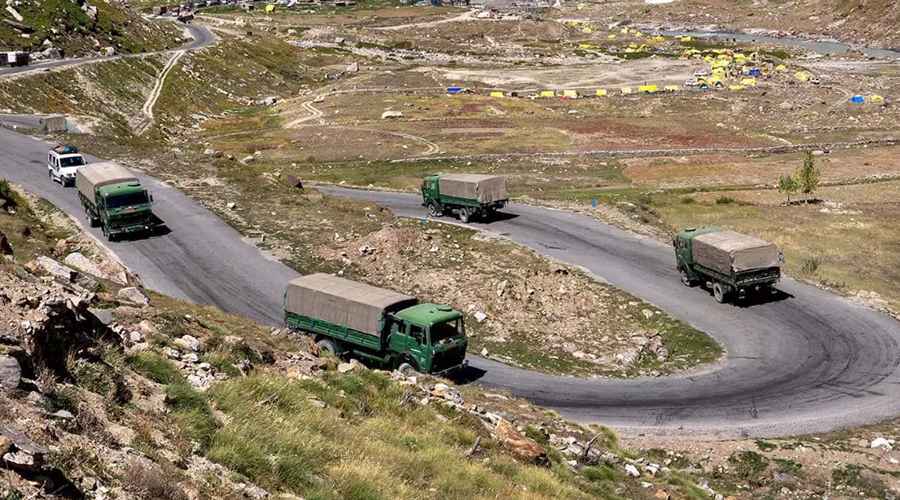
Nimmu-Padum-Darcha Road: This route connects Nimmu in Ladakh with Darcha in Himachal Pradesh through the Zanskar Valley. It provides an additional road corridor towards Ladakh and reduces dependence on the two traditional approaches.
Chardham Mahamarg Vikas Pariyojana: This road development programme in Uttarakhand aims to improve connectivity to the four important pilgrimage destinations of Yamunotri, Gangotri, Kedarnath and Badrinath. The BRO is involved in constructing and upgrading sections of the network.
Trans-Arunachal Highway: This highway development project aims to improve connectivity across Arunachal Pradesh, a state located along India’s northeastern border. Improved road links are important for remote communities and access to strategically significant areas.
Together, these road networks support transportation and development in regions where difficult terrain has traditionally limited movement.
Nimmu-Padum-Darcha Road and Shinku La Tunnel
The Nimmu-Padum-Darcha Road is an important addition to Ladakh’s road connectivity. The BRO completed the 298-kilometre route in March 2024. It links Nimmu in Ladakh with Darcha in Himachal Pradesh through the Zanskar Valley.
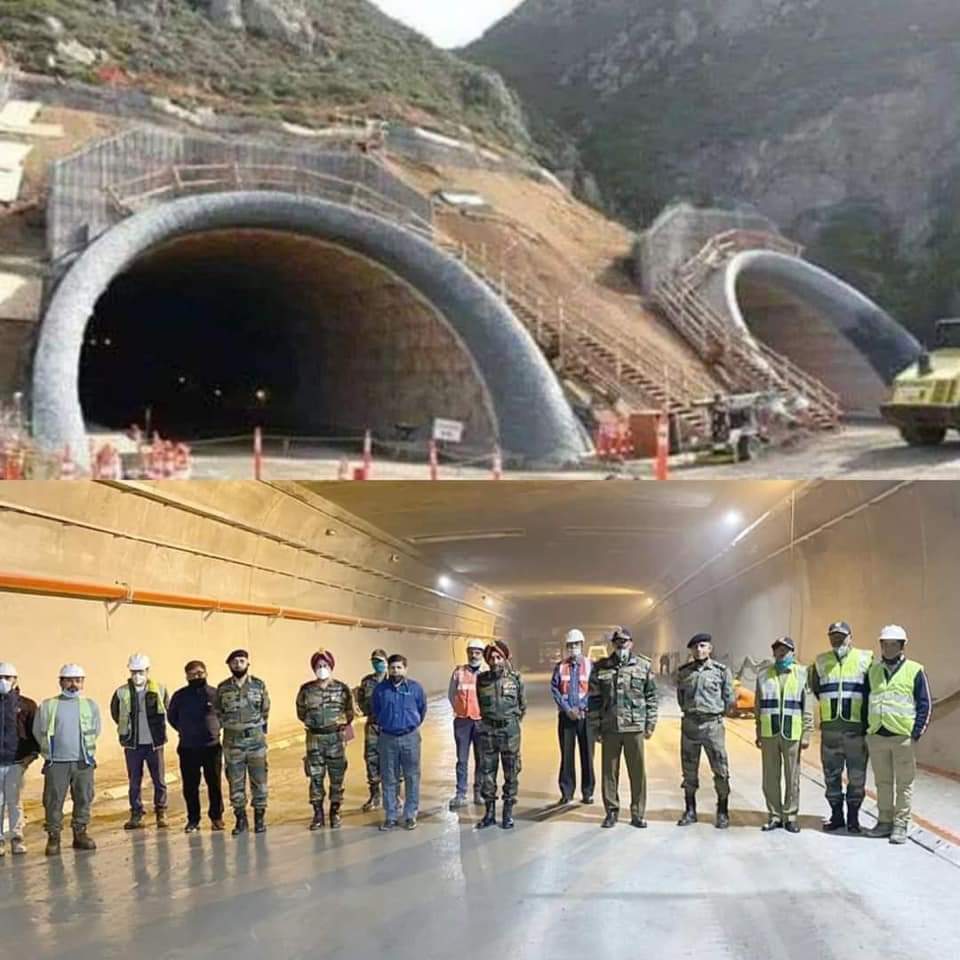
The route provides an additional connection alongside the Srinagar-Leh and Manali-Leh highways. However, the road’s full all-weather potential depends on the Shinku La Tunnel, also known as the Shinkun La Tunnel.
According to the supplied report, the tunnel was under construction as of September 2026, with completion projected for 2028-2029. Until the tunnel is completed, the crossing remains seasonal.
The tunnel is expected to improve year-round connectivity by reducing the difficulties caused by heavy snowfall and severe winter conditions. It could also make the Nimmu-Padum-Darcha route more useful for transporting supplies and reaching remote settlements.
Engineering Challenges in Border Areas
Building roads in the Himalayas requires specialised engineering because of steep slopes, unstable soil, landslides, avalanches and extreme temperatures. Heavy snowfall can block roads, while earthquakes and changing weather conditions can damage bridges and road surfaces.
The BRO uses different engineering methods to address these challenges. Soil stabilisation techniques, including geotextiles, can help strengthen vulnerable slopes and surfaces. Prefabricated bridges can speed up construction in difficult locations, while tunnels allow roads to pass through mountains instead of crossing exposed high-altitude routes.
Environmental protection is another important consideration. Himalayan ecosystems are sensitive to construction activity, changes in drainage and the removal of vegetation. Careful planning and maintenance are necessary to reduce damage to fragile landscapes.
Maintaining existing roads is just as important as building new ones. Regular repairs, snow clearance and restoration after landslides help keep essential routes usable for local communities and emergency services.
Recent Infrastructure Developments in Ladakh
The supplied report states that Prime Minister Narendra Modi virtually inaugurated and dedicated five projects worth approximately ₹3,350 crore in Ladakh on 15 October 2026. These included the Leh airport terminal and the BRO-built Nimmu-Padum-Darcha Road, alongside projects related to power, heritage conservation and water security.
These developments reflect a wider focus on improving transport, public facilities and essential services in Ladakh. Better connectivity can support tourism, local businesses and access to services, while also helping government agencies reach remote areas.
Ladakh became a Union Territory on 31 October 2019. Since then, infrastructure in the region has remained an important part of discussions about connectivity, public services and development in high-altitude areas.
The BRO’s work demonstrates how road construction and maintenance can improve access in some of India’s most challenging landscapes. As new tunnels and road links develop, the main priorities will include reliable transport, public safety, environmental protection and long-term maintenance.