



Bab-el-Mandeb Transit Security

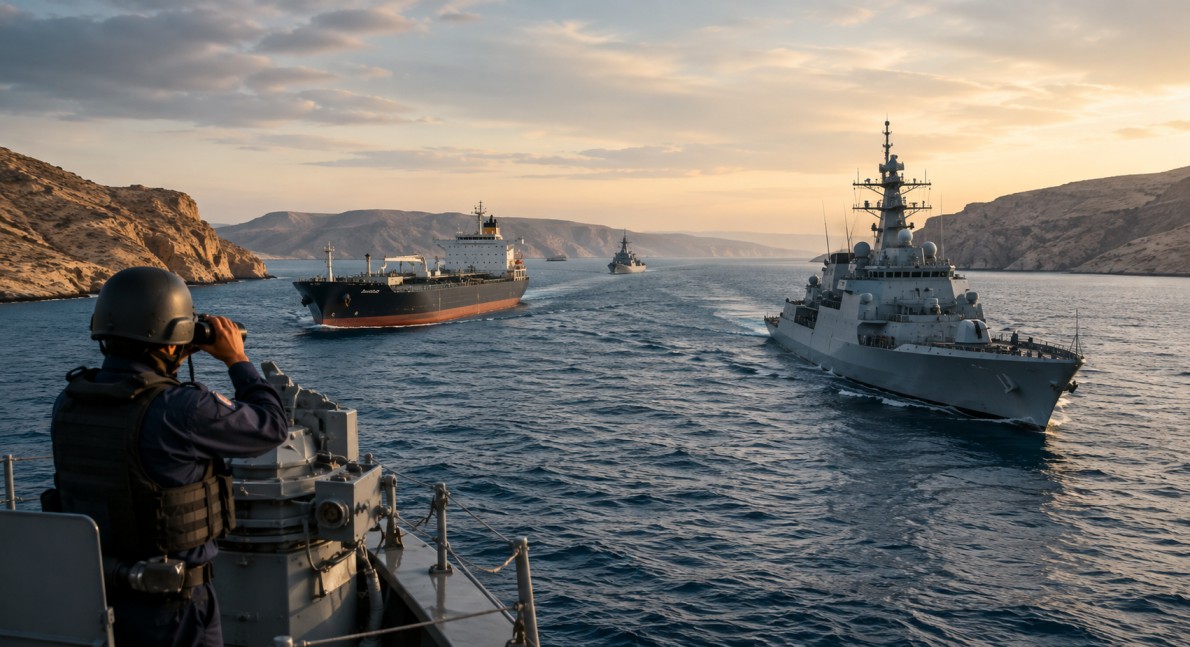
Bab-el-Mandeb Transit has become an important focus for the Indian Navy as commercial shipping continues to face security concerns in the Red Sea and Gulf of Aden region. In August 2026, the Indian Navy monitored and supported the movement of merchant vessels through the strategically important Bab-el-Mandeb Strait. The operations included surveillance, escort duties and protection of Indian and foreign commercial ships travelling through one of the world’s busiest maritime routes.
The increased naval presence comes at a time when shipping companies are facing risks from piracy, attacks on commercial vessels and wider regional tensions. The safety of merchant ships is especially important for India because a large share of its trade and energy supplies moves through international sea routes.

Why Bab-el-Mandeb Transit Is Important
The Bab-el-Mandeb Strait is located between Yemen on the Arabian Peninsula and Djibouti and Eritrea in the Horn of Africa. It connects the Red Sea with the Gulf of Aden and forms an important route linking the Mediterranean Sea, the Suez Canal and the Indian Ocean.
Thousands of commercial ships use this route to transport crude oil, petroleum products, containers and other goods between Asia, Europe and Africa. Any disruption in this region can force ships to take longer routes around southern Africa, increasing travel time and shipping costs.
For India, the security of the Bab-el-Mandeb region is closely linked with energy security and international trade. Indian ships, cargo vessels and tankers regularly operate through these waters.
Indian Navy Continues Escort Operations
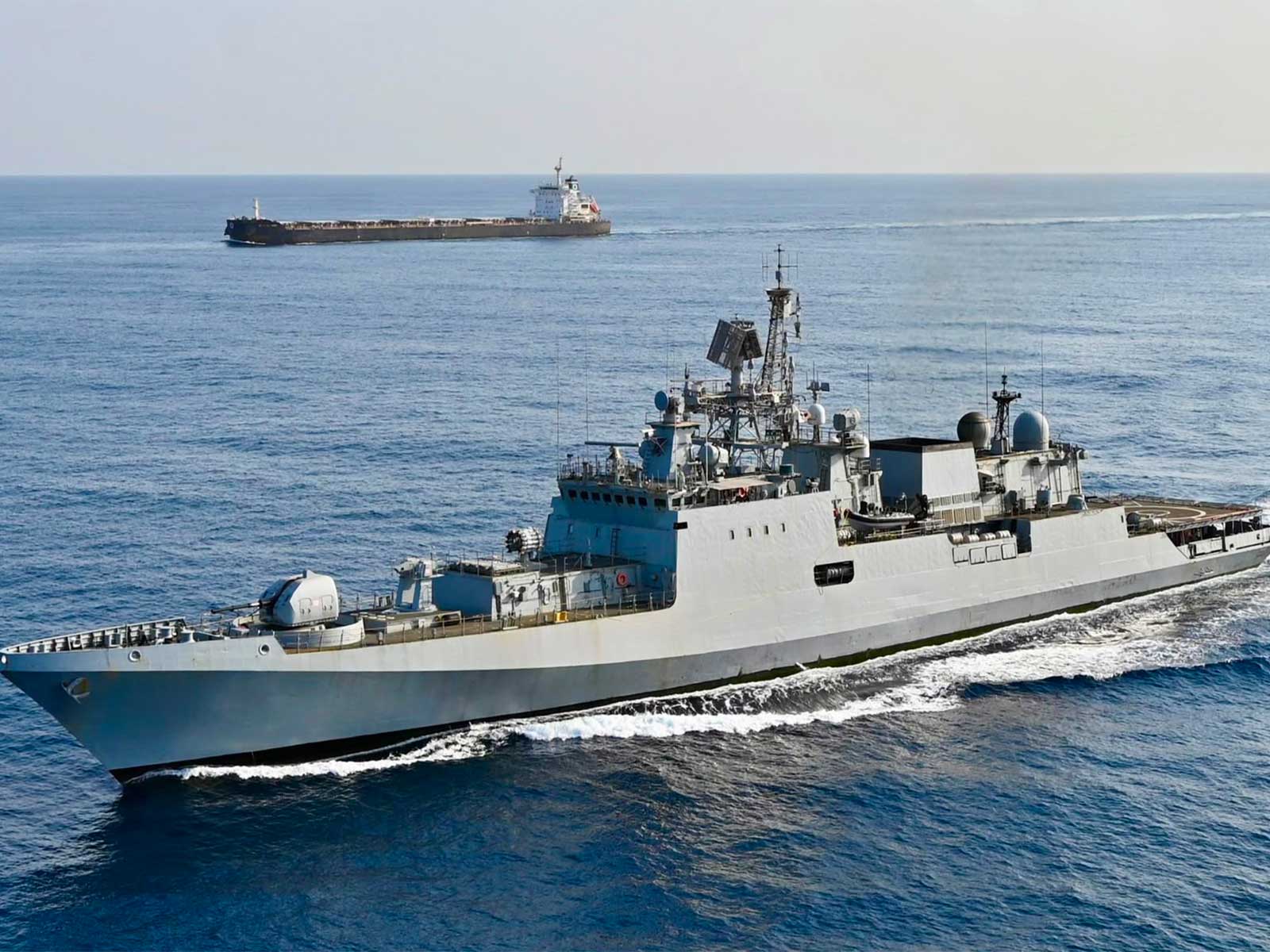
The Indian Navy carried out several monitoring and escort operations during August 2026. On August 25, naval forces monitored the safe movement of merchant vessels MV Union Mariner and MV Dagher through the Bab-el-Mandeb Strait. Earlier, on August 22, the crude oil tanker MT Sanmar Herald was escorted through the same strategic waterway.
In another operation on August 9 and 10, INS Trishul and INS Aditya provided support to merchant vessels MT Compass and MT Thalatta during their passage through the region.
INS Trishul is a Talwar-class guided-missile frigate, while INS Aditya is a replenishment ship that can provide fuel, supplies and logistical support to naval vessels during long deployments. Such operations help warships remain active in distant waters for extended periods.
Operation Sankalp and Maritime Security
India’s maritime security efforts in the region are supported by Operation Sankalp, which was launched in June 2019. The operation focuses on protecting India’s commercial interests and maintaining security in important sea routes in the Gulf region.
The Indian Navy works with government agencies to monitor the movement of merchant vessels and energy cargoes. This coordination has become increasingly important as instability in the Red Sea region affects global shipping.
India has also maintained a continuous naval presence in the Gulf of Aden since 2008, initially focusing heavily on anti-piracy operations. Over the years, the role has expanded as new threats to commercial shipping have emerged.
Recent Security Incidents Raise Concerns
The need for stronger maritime monitoring has increased after several recent incidents involving commercial vessels. Reports in August 2026 highlighted piracy incidents involving ships carrying Indian crew members in waters near Yemen and Somalia.
Another incident involved an Indian-linked vessel that reportedly sank near Yemen after being hit by a projectile. The crew members were rescued, but the event highlighted the continuing dangers faced by merchant ships operating in the region.
These incidents show how quickly security conditions can change along major international shipping routes. Naval surveillance and escort operations can help provide early warning and support to vessels moving through high-risk areas.
A Vital Route for Global Trade
The Bab-el-Mandeb Strait remains one of the world’s most important maritime chokepoints. Along with routes such as the Strait of Hormuz, the Malacca Strait and the Suez Canal, it plays a major role in the movement of global trade and energy supplies.
The Indian Navy’s continued monitoring of merchant vessels reflects India’s growing role in protecting maritime trade routes. As shipping security remains a major international concern in 2026, naval deployments in the Red Sea and Gulf of Aden are likely to remain important for the safe movement of commercial vessels.