



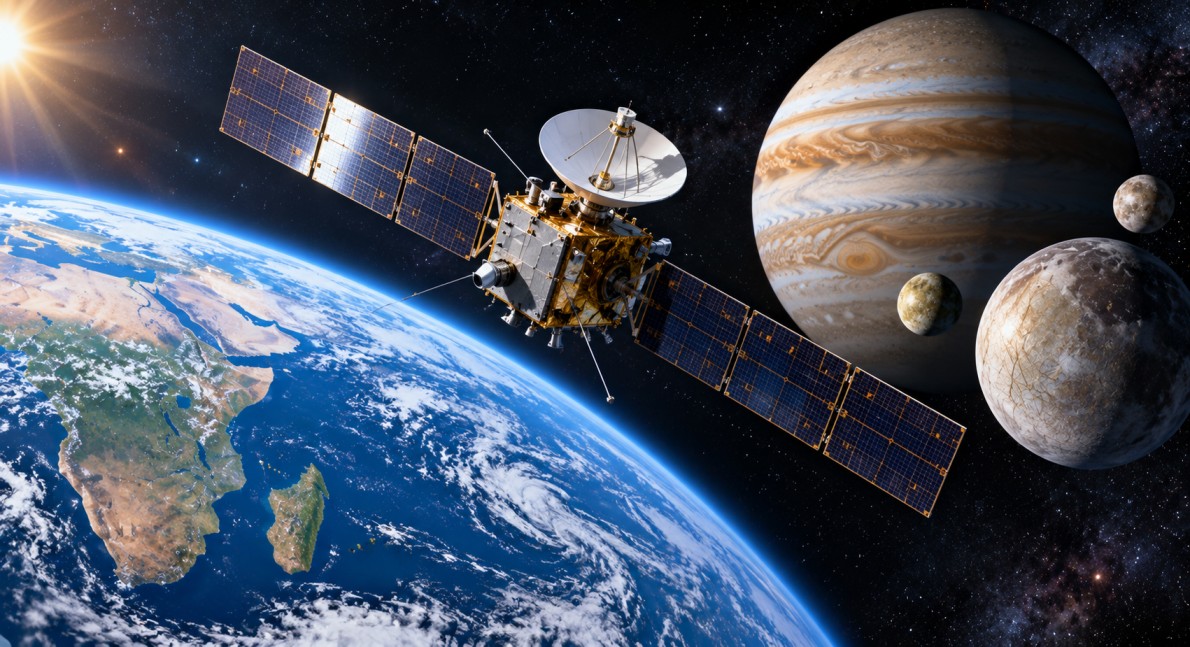
JUICE Mission Gets Earth Boost

JUICE Mission successfully completed its third Earth gravity-assist flyby on September 28, 2026, as the European Space Agency spacecraft continued its long journey towards Jupiter. JUICE passed about 8,640 km above the Indian Ocean and used Earth’s gravity to change its trajectory by around 20 degrees and increase its velocity by 3.5 km/s. The carefully planned manoeuvre will help the spacecraft reach Jupiter while saving valuable fuel for its future scientific work.
Thank you for reading this post, don't forget to subscribe!JUICE Uses Earth’s Gravity
A gravity assist is a spaceflight technique in which a spacecraft uses the gravity and motion of a planet or moon to change its path and speed. Instead of using large amounts of fuel to make every major change in its trajectory, a spacecraft can pass close to a moving planet and gain or lose energy relative to the Sun.
For JUICE, the September flyby was designed to place the spacecraft on the right trajectory for another Earth flyby in January 2029. That future manoeuvre will help put the spacecraft on the best path to intercept Jupiter in July 2031.
The latest flyby was therefore not simply a close pass of Earth. It was an important navigation step in a journey that began with the spacecraft’s launch in April 2023.
Close Approach Over the Indian Ocean
The spacecraft made its closest approach at 13:45 CEST, or 11:45 UTC, on September 28. At that time, JUICE was approximately 8,640 km above the Indian Ocean.
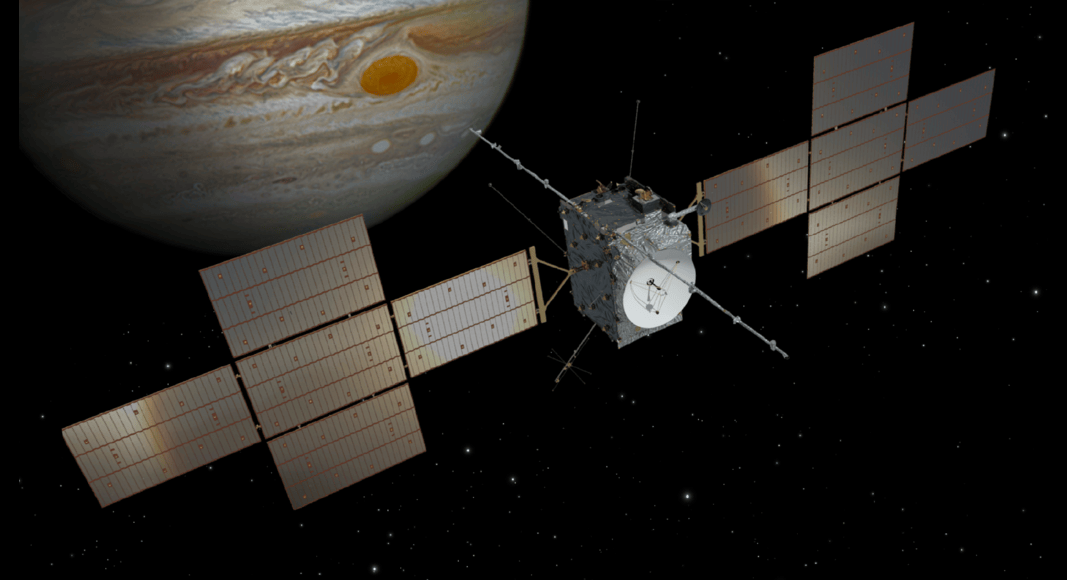
The encounter changed the direction of the spacecraft’s path by about 20 degrees and increased its velocity by approximately 3.5 km/s. ESA said the spacecraft used only a small amount of propellant during the operation.
The precision of the manoeuvre was especially important because the spacecraft had to reach Earth at the correct position, speed and angle to gain the desired effect from the planet’s gravity.
Only One Small Course Correction Was Needed
ESA had planned six opportunities to make small navigation adjustments during the four weeks before the flyby. However, mission controllers needed to perform only one small manoeuvre to place JUICE on its planned approach path.
The navigation campaign began on August 17, with flight controllers carefully tracking the spacecraft and checking its trajectory.
ESA said the successful preparation meant that the spacecraft used only a small amount of the propellant reserved for the flyby. This is important because fuel saved during the cruise can be used later when JUICE reaches the Jupiter system and begins its scientific operations.
JUICE Mission Targets Jupiter and Its Icy Moons
The JUICE Mission is designed to study Jupiter and three of its large ocean-bearing moons: Ganymede, Europa and Callisto.
The spacecraft will investigate the moons as planetary bodies and examine whether their environments could have conditions suitable for life. It will also study Jupiter’s magnetic field, radiation environment and plasma activity.
Ganymede is the main target of the mission. ESA plans for JUICE to enter orbit around Jupiter in July 2031 and later move into orbit around Ganymede in 2034. The spacecraft will make multiple flybys of Jupiter’s large moons during its mission.
Earth Flyby Also Supports Science
The main purpose of the September 2026 flyby was to change JUICE’s trajectory. However, the encounter also provided an opportunity to test and operate the spacecraft’s scientific instruments.
ESA’s 10 science instruments were switched on at different times between September 23 and October 3 to collect observations of Earth and the Moon.
The spacecraft’s navigation camera was also used to observe the Moon’s horizon. These observations can help test techniques that may improve optical navigation when JUICE is operating around Jupiter and its moons.
This makes the Earth encounter useful beyond its role as a navigation manoeuvre. Scientists and engineers can use observations of familiar objects such as Earth and the Moon to test instruments and improve their understanding of how the spacecraft performs during its long cruise.
JUICE Captures New Views of Earth
During the flyby, JUICE’s monitoring cameras captured images of Earth from space. One image taken shortly after closest approach showed a large part of Africa, with Madagascar also visible.
The spacecraft’s monitoring cameras were mainly designed to check the condition and deployment of spacecraft equipment rather than conduct scientific observations of Earth. However, the cameras provided an unusual view of our planet during the flyby.
JUICE also tested its navigation camera during the encounter. An image captured shortly after closest approach showed part of Madagascar as the spacecraft moved away from Earth.
A Long Journey to Jupiter
JUICE’s journey uses a series of planetary flybys instead of relying on a direct high-energy trip to Jupiter. The spacecraft previously completed a combined lunar-Earth flyby in 2024 and a Venus flyby in 2025.
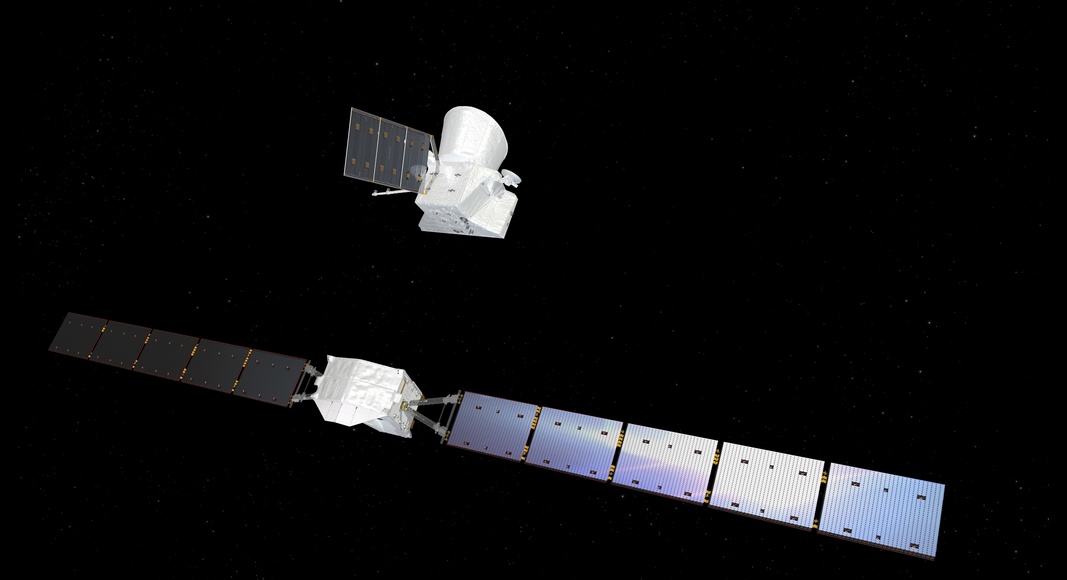
The September 2026 Earth encounter was the next major gravity-assist step. Another Earth flyby is planned for January 2029 before JUICE heads towards Jupiter.
This route allows the spacecraft to build and adjust its trajectory while conserving propellant. Reaching Jupiter directly would require a much larger energy budget, while the gravity-assist strategy allows JUICE to use the natural motion of planets as part of its journey.
What Comes Next for JUICE
After the successful 2026 Earth flyby, the spacecraft will continue its cruise towards Jupiter. The next major gravity-assist event is the planned Earth flyby in January 2029.
JUICE is expected to arrive at Jupiter in July 2031. Once there, the spacecraft will begin a detailed study of Jupiter and its large icy moons, using its suite of scientific instruments to investigate their surfaces, interiors, magnetic environments and possible subsurface oceans.
The mission is led by ESA, with contributions from NASA, JAXA and the Israel Space Agency. Its journey will continue for several more years before it reaches its main destination in the Jupiter system.