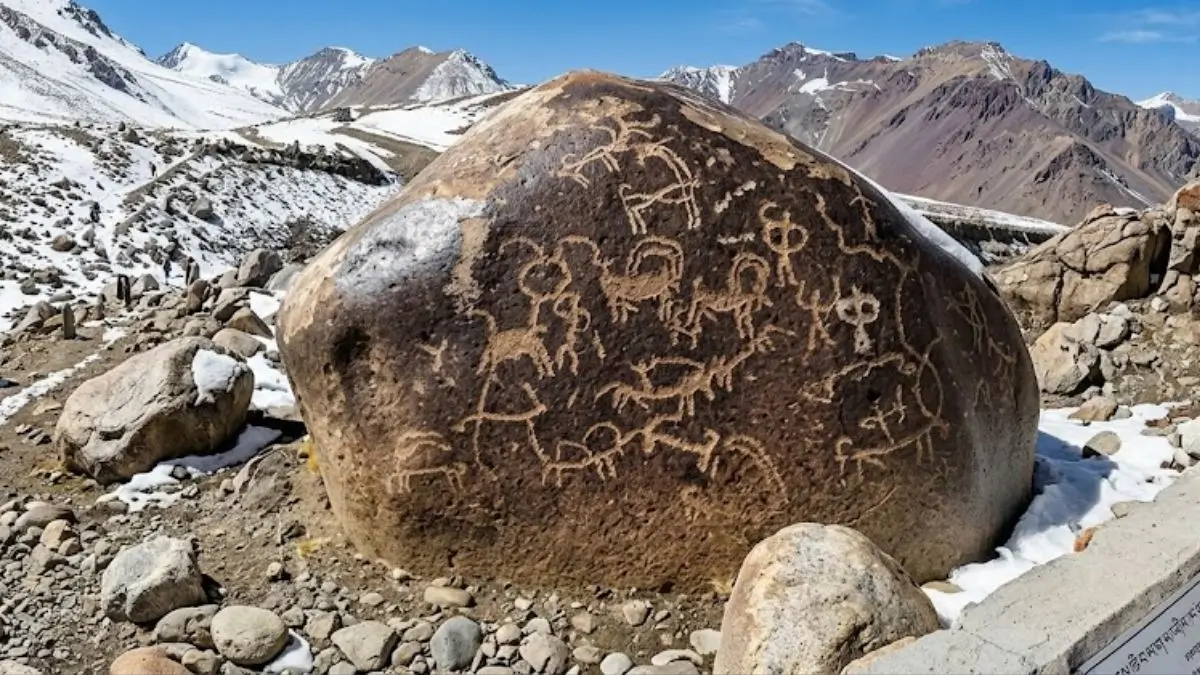
Ladakh Petroglyph Park Preserves Ancient Rock Heritage

In a major step to protect India’s ancient heritage, the foundation stone of the Ladakh Petroglyph Park was laid in Ladakh on 19 April 2026, marking World Heritage Day. The project was inaugurated by Vinai Kumar Saxena along the banks of the Indus River. The aim is to protect centuries-old rock carvings that face threats from tourism, development, and environmental damage.
Thank you for reading this post, don't forget to subscribe!What Are Petroglyphs
Petroglyphs are ancient carvings made directly on rocks by early human communities. These images and symbols tell stories about old lifestyles, beliefs, and movements of people. In Ladakh, these carvings show hunting scenes, animals like ibex and snow leopards, and later Buddhist symbols such as stupas. This reflects how culture changed in the region over time.
Need for Ladakh Petroglyph Park
There are around 400 petroglyph sites across Ladakh. Many are found along the Indus and Zanskar River. While some are in groups and easier to protect, many are isolated and at risk from road building, blasting, and lack of awareness. The Ladakh Petroglyph Park will help move endangered carvings to a safer place where they can be preserved and displayed properly.
Partnership for Conservation
A key step in this project is the partnership between the Department of Archives, Archaeology and Museums and the Archaeological Survey of India. This agreement ensures scientific care and long-term protection of the petroglyphs. Some carvings include inscriptions in Chinese, Arabic, and Sanskrit, showing Ladakh’s importance as a historic trade route.
Heritage Tourism and Local Role
The Ladakh Petroglyph Park is expected to boost heritage tourism. Officials described these carvings as open-air museums and suggested creating tourism circuits that include petroglyph and Buddhist sites. Local communities, monks, and youth are encouraged to take part in protecting this shared heritage. The project aims to balance tourism, development, and conservation in the fragile Himalayan region.