Ladakh Red Sky Solar Storm Stuns Observers and Highlights Space Weather Risks

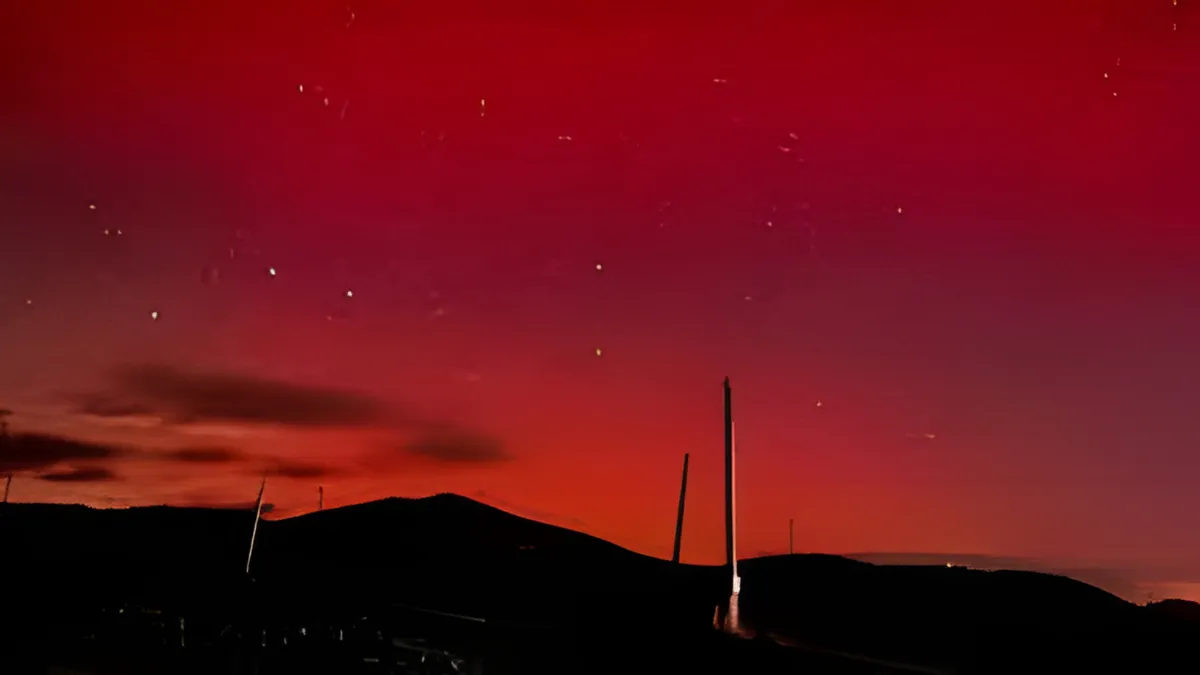
The Ladakh Red Sky Solar Storm left residents and astronomers in awe as the night sky over Hanle turned an unusual shade of blood-red in mid-January. The rare visual spectacle, shared widely across social media, was reminiscent of the Northern Lights, yet scientists quickly clarified that it was more than just a beautiful aurora. This extraordinary event was a result of intense solar activity, with potential consequences for Earth’s technology and space systems.
Thank you for reading this post, don't forget to subscribe!The Stunning Red Glow Over Hanle
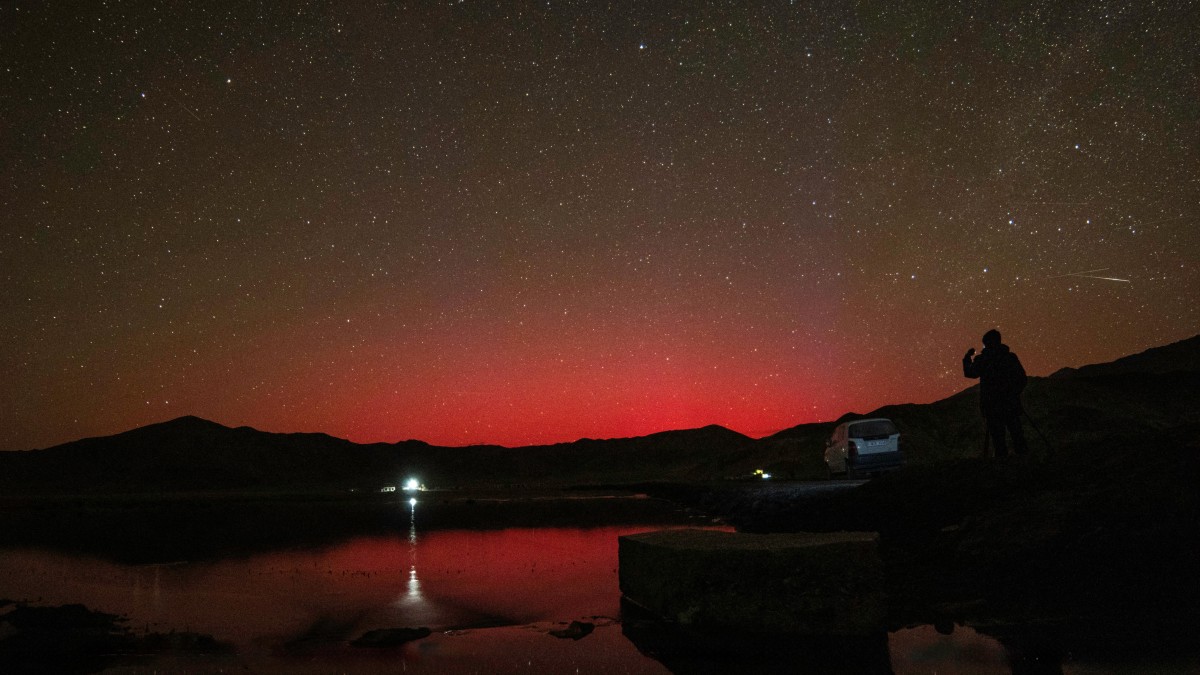
On the nights of January 19 and 20, locals in Hanle, a remote village in Ladakh, witnessed a strange reddish glow stretching across the sky. Images of the sky flooded online platforms, drawing attention from both amateur skywatchers and professional scientists. Unlike the familiar green auroras seen near polar regions, the red hue over Hanle was unusual and remarkable.
This phenomenon was caused by a powerful X-class solar flare that erupted from the Sun on January 18. X-class flares are the most intense category of solar eruptions, capable of sending enormous amounts of charged particles into space. Within hours, these particles formed a fast-moving Coronal Mass Ejection (CME), a cloud of supercharged plasma and magnetic fields traveling at nearly 1,700 kilometers per second. This CME reached Earth in about 25 hours, colliding with our planet’s magnetic shield and triggering a G4-level geomagnetic storm, classified as “severe” on space weather scales.
Why Ladakh Experienced a Rare Red Aurora
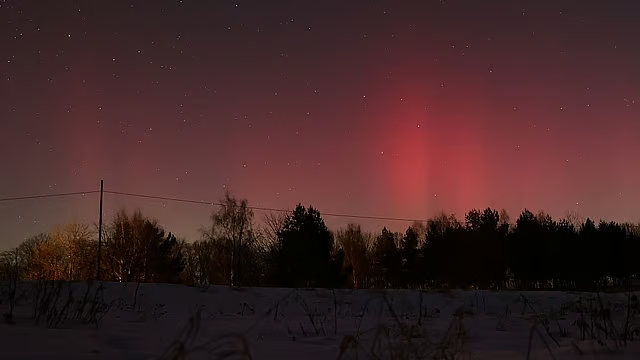
Auroras occur when charged particles from the Sun collide with gases in Earth’s atmosphere, exciting atoms and causing them to glow. Typically, these displays are visible in polar regions, appearing green due to lower-altitude oxygen emissions. However, Hanle is located far south of the usual auroral zones.
The red color observed over Ladakh was due to high-altitude oxygen atoms, located more than 300 kilometers above Earth’s surface. Such high-altitude auroras are extremely rare in India, making the Ladakh sky spectacle a once-in-a-lifetime event for many residents. Observers noted the eerie red bands stretching across the horizon, a sign of the upper fringes of the auroral display reaching unusually low latitudes.
Understanding Solar Maximum and Space Weather Risks
Scientists from the Indian Space Research Organisation (ISRO) explained that such intense solar events are likely to increase as the Sun approaches its solar maximum, the peak phase of its roughly 11-year activity cycle. The January 2026 solar storm was classified not only as a G4-level geomagnetic storm but also as an S4-level solar radiation storm, indicating a significant surge of high-energy protons.
Data from India’s Aditya-L1 mission revealed that the planet’s magnetosphere was compressed unusually close to Earth, briefly exposing even geostationary satellites to intense solar winds. This demonstrates that even satellites and space missions orbiting far from Earth can be affected during strong solar events.
The Significance of Solar Storms for India
While the red sky was mesmerizing, the solar storm had serious implications for modern technology. Strong geomagnetic storms can induce electric currents in power grids, damaging transformers and causing widespread blackouts. Satellites in orbit can face increased drag from the heating of the upper atmosphere, potentially altering their paths.
Critical services like GPS, communication, banking, and navigation systems are all vulnerable during such events. During the Ladakh solar storm, astronauts aboard the International Space Station were advised to remain in shielded areas due to elevated radiation levels.
India’s Aditya-L1 spacecraft, positioned 1.5 million kilometers from Earth, played a key role in monitoring the solar flare and providing early warnings. This early-warning capability is crucial in helping protect satellites, infrastructure, and technology on the ground from severe solar activity.
Key Facts About the Event
- X-class solar flares are the most intense type of solar eruptions.
- G4-level geomagnetic storms are classified as “severe” on space weather scales.
- Red auroras occur at higher altitudes than green auroras.
- Solar maximum is the most active phase of the Sun’s 11-year cycle.
These facts highlight that while the Ladakh Red Sky Solar Storm was visually stunning, it was also a reminder of the Sun’s powerful influence on our planet.
A Lesson in Planetary Awareness
The Ladakh red aurora served as both a natural wonder and a scientific alert. The images of the glowing sky captivated the public, but experts emphasized that solar storms are more than just beautiful phenomena. They can affect technology, communication, and safety across the globe.
With solar activity predicted to increase in the coming years, scientists urge governments, satellite operators, and infrastructure managers to remain prepared. Monitoring systems like Aditya-L1 provide crucial information to safeguard essential services, turning an extraordinary red sky into a lesson about planetary vulnerability and the importance of space weather awareness.