



Micro Gas Turbines Boost Indian Aerospace

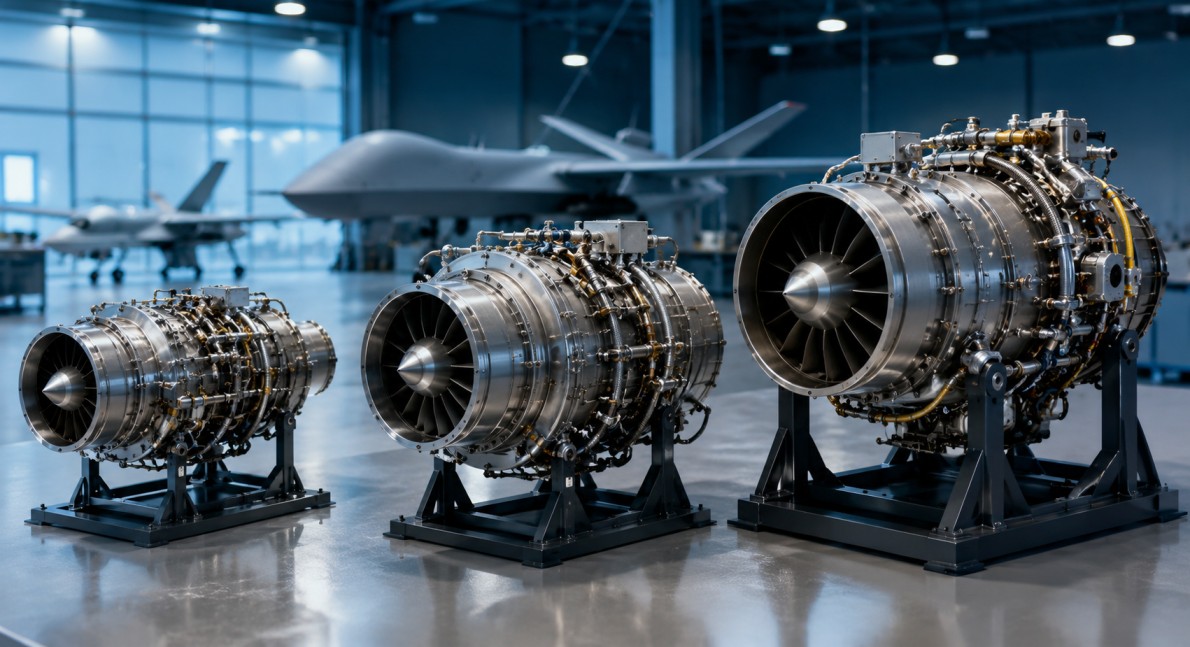
Micro Gas Turbines are becoming increasingly important in modern aerospace and defence technology, and India has taken another step forward in this field. The CSIR-National Aerospace Laboratories (CSIR-NAL) unveiled three indigenous micro and small gas turbine engines in New Delhi on August 25, 2026. The newly developed engines have been named NJ-05, NJ-50, and NJ-100.
The engines have different thrust capacities, ranging from 5 kg to 100 kg. They are designed for use in lightweight aerospace platforms and could support future Indian developments in unmanned aircraft, drones, and other compact airborne systems. The announcement reflects India’s growing focus on developing important aerospace technologies within the country.

Three New Indigenous Engine Models
The three engines unveiled by CSIR-NAL represent different levels of thrust and possible applications. The NJ-05 has a thrust rating of 5 kg, while the NJ-50 can produce 50 kg of thrust. The largest model, NJ-100, has a thrust rating of 100 kg.
Developing engines with different thrust levels gives engineers more options when designing compact flying platforms. Smaller engines may be suitable for lightweight systems, while more powerful versions can support larger and faster platforms.
The NJ-100 has been developed using knowledge and data gained from earlier flight tests involving the scaled-down NJ-5 technology demonstrator. This step-by-step development process allows scientists and engineers to test technologies, improve performance, and apply the results to more advanced engine models.
How Micro Gas Turbines Work
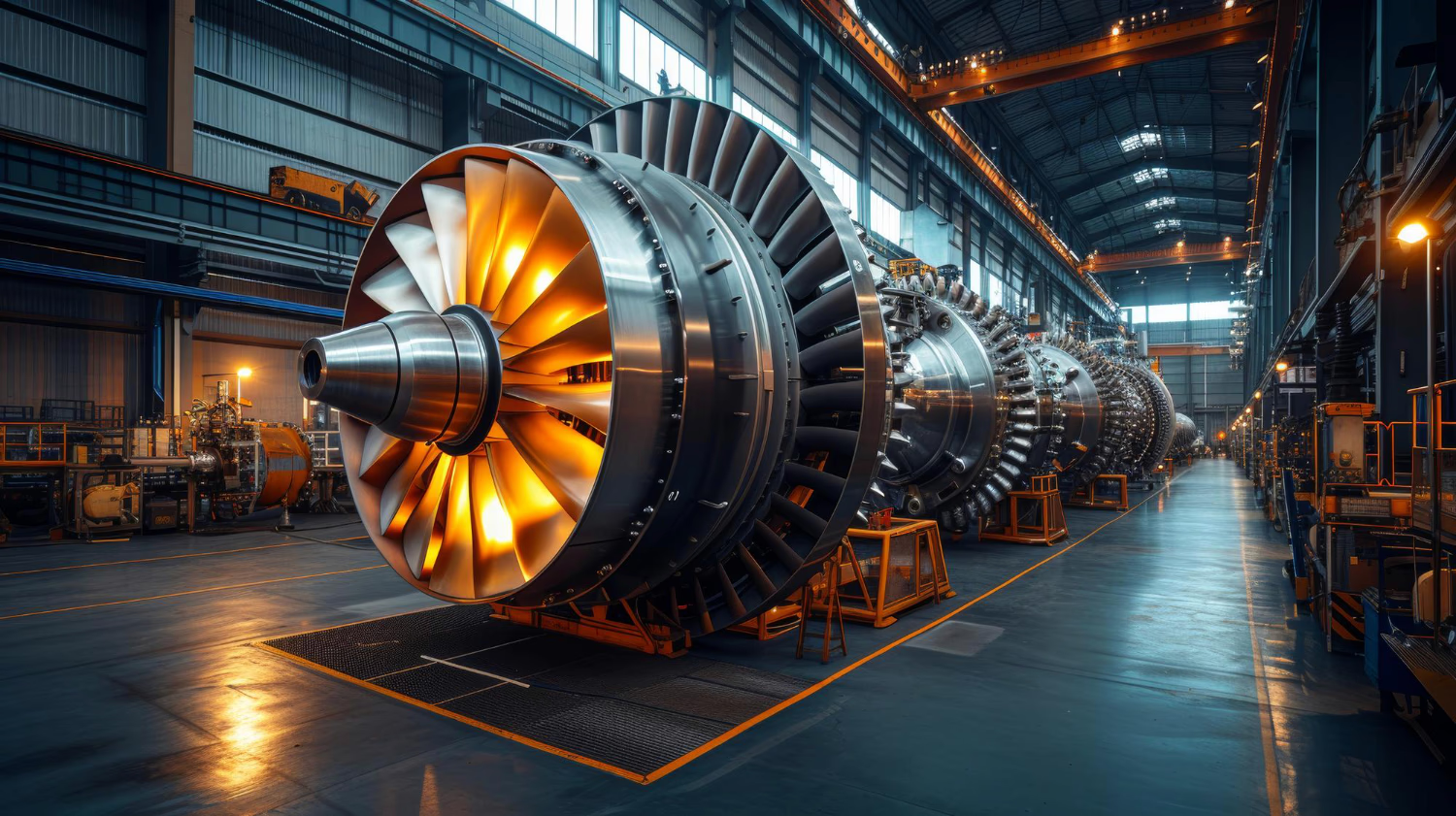
A gas turbine engine produces power by drawing in air and compressing it. Fuel is then mixed with the compressed air and burned inside the engine. The hot gases produced during combustion expand and move through the turbine section at high speed.
This process creates thrust or mechanical power, depending on the engine’s design. Micro and small gas turbines use the same basic principles as larger turbine engines but are designed to fit into compact systems.
Building smaller turbine engines is a complex engineering challenge. The components must operate at very high speeds and temperatures while remaining lightweight and reliable. Engineers also need to carefully manage fuel use, airflow, heat, and the performance of rotating parts.
Potential Role in Modern Aerospace Technology
The new engines have been designed with possible defence and aerospace applications in mind. Compact turbine engines can be useful for tactical unmanned aerial vehicles, drone interceptor systems, target platforms, and other lightweight flying technologies.
The rapid growth of drone technology has created a greater demand for small and efficient propulsion systems. Drones are now used for surveillance, mapping, disaster response, delivery services, agriculture, and many other purposes. In the defence sector, unmanned systems are also becoming an important part of modern military technology.
Compact propulsion systems can help Indian developers create platforms that are designed and manufactured within the country. This can reduce dependence on imported components and encourage greater participation by Indian technology companies.
CSIR-NAL and India’s Aerospace Development
CSIR-NAL is one of India’s leading aerospace research institutions and has worked on several aviation and aerospace technologies. The unveiling ceremony was held at the SSB Auditorium at CSIR Headquarters in New Delhi.
Air Marshal Tejinder Singh, Chief of Integrated Defence Staff, attended the event as the Chief Guest. CSIR-NAL Director Dr. Abhay A. Pashilkar highlighted the importance of cooperation between research laboratories, startups, and Indian manufacturing companies.
The development of advanced technology often requires more than scientific research. Once a new system is successfully developed, it must be tested, improved, manufactured, and supported through a strong industrial network. This is where startups and private companies can play an important role.
Growing Focus on Atmanirbhar Bharat
The unveiling of the NJ series engines also fits into the larger Atmanirbhar Bharat initiative, which focuses on strengthening India’s domestic manufacturing and technology capabilities.
India has recently increased investment and research in areas such as drones, semiconductors, space technology, artificial intelligence, aviation, and advanced manufacturing. Indigenous propulsion technology is especially important because engines are among the most complex parts of aerospace systems.
The NJ-05, NJ-50, and NJ-100 engines represent progress in India’s effort to develop compact propulsion technology. With continued testing and support from industry, such indigenous systems could contribute to the country’s expanding aerospace ecosystem and future technology development.