


Vikram-1 Private Orbital Rocket and India’s New Space Milestone

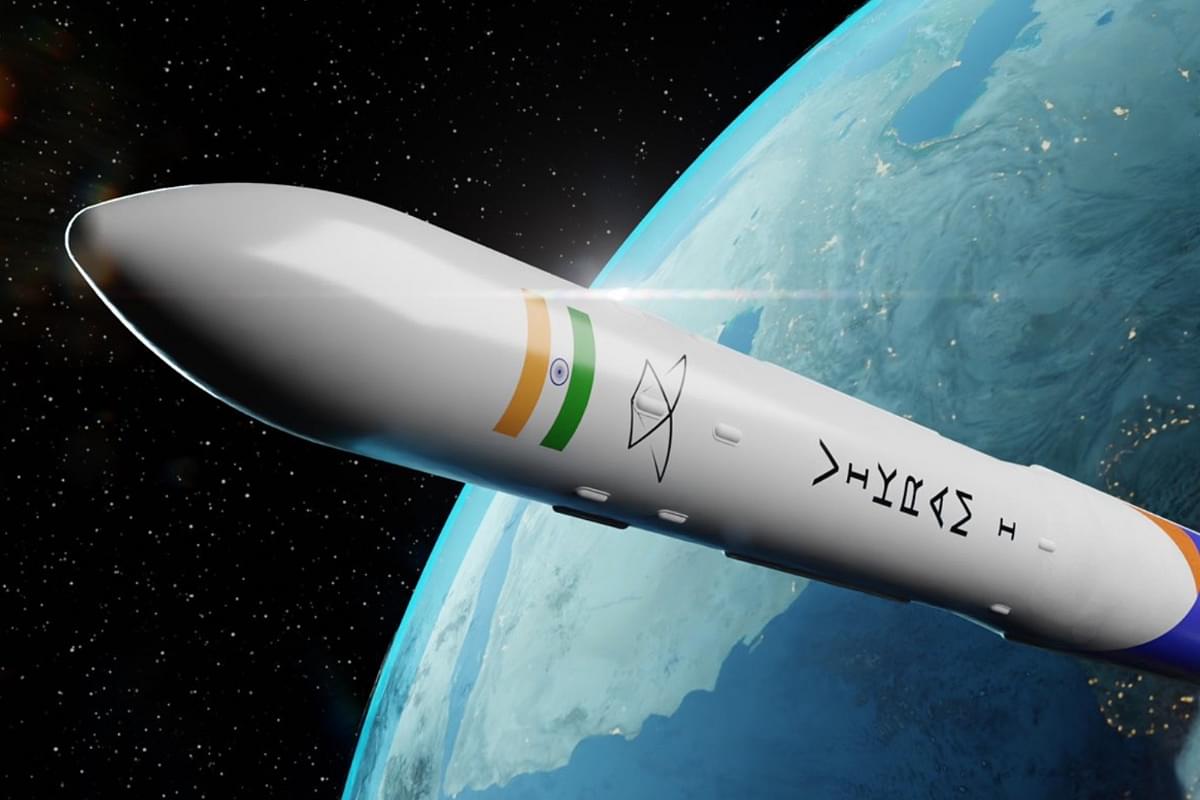
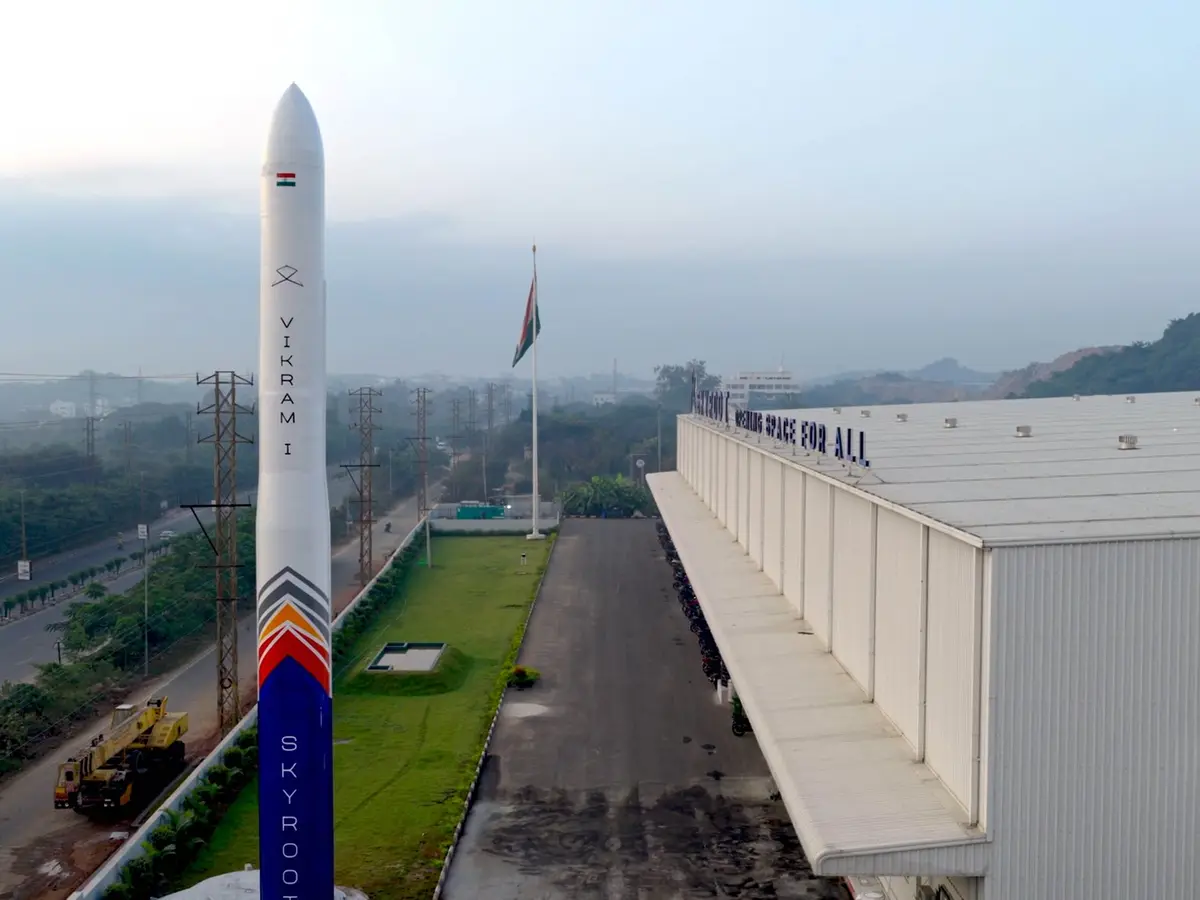
Vikram-1 Private Orbital Rocket is set to mark a major milestone for India’s growing private space sector. Developed by Hyderabad-based startup Skyroot Aerospace, the rocket represents the country’s first privately built orbital launch vehicle. The mission highlights India’s expanding commercial space ecosystem, where startups are working to offer affordable and flexible satellite launch services.
Thank you for reading this post, don't forget to subscribe!Founded in 2018 by former Indian Space Research Organisation engineers Pawan Kumar Chandana and Naga Bharath Daka, Skyroot Aerospace aims to create dedicated launch solutions for small satellites. With the upcoming launch of Vikram-1, the company hopes to position itself in a growing global market for small satellite missions.
Vikram-1 and India’s Private Space Push
The Vikram-1 Private Orbital Rocket is designed as a seven-storey launch vehicle standing around 75 feet tall. It can carry satellites weighing up to 300 kilograms into low Earth orbit. The rocket belongs to the Vikram series of launch vehicles and is named after Vikram Sarabhai, widely regarded as the father of India’s space programme.
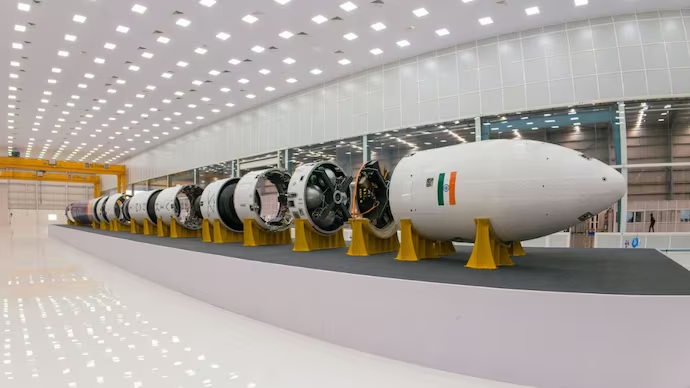
The rocket uses advanced technologies including an all-carbon composite structure and modern propulsion systems. Its three stages Kalam-1200, Kalam-250, and Kalam-125 run on solid propellants, while the upper orbit adjustment module features a 3D-printed liquid engine known as Raman-2.
Currently, the rocket’s components are being integrated and tested at Skyroot’s Max-Q headquarters in Hyderabad. The first launch is expected to take place from the Satish Dhawan Space Centre in Sriharikota.
Focus on Dedicated Small Satellite Launches
A key goal of the Vikram-1 Private Orbital Rocket program is to target the niche market of dedicated launches for small satellites. Many large launch providers combine multiple payloads in a single mission, which can limit flexibility for satellite operators.
Skyroot Aerospace plans to offer customized launch services that place satellites in precise orbits. The company often describes its concept as operating like a “space cab,” allowing satellite operators to reach specific destinations in orbit more efficiently.
Such dedicated missions are becoming increasingly important for communication satellites, Earth observation systems, and scientific research payloads that require exact orbital placements.
Technology and Infrastructure Expansion
Skyroot Aerospace has invested heavily in advanced manufacturing technologies to improve efficiency and reduce launch costs. The company uses carbon fibre structures and additive manufacturing techniques, including 3D printing for key rocket components.
Its Infinity Campus in Hyderabad is being developed to support large-scale production. Once operations reach full capacity, the facility is expected to produce one Vikram-class rocket every month.
The startup has also formed partnerships with several domestic and international space companies. These agreements include satellite launch contracts and collaborations with emerging Indian spacetech startups, helping expand the company’s future launch pipeline.
Future Plans for India’s Commercial Space Industry
Skyroot Aerospace previously launched Vikram-S, India’s first private sub-orbital rocket, in November 2022. Building on that success, the Vikram-1 Private Orbital Rocket aims to open a new chapter for India’s commercial space ambitions.
Policy reforms allowing private participation through IN-SPACe have accelerated the growth of the country’s private space industry. In the coming years, Skyroot plans to develop larger and potentially reusable launch vehicles to make space access more frequent and affordable.
Future missions may also operate from upcoming launch sites such as the planned spaceport in Kulasekarapattinam in Tamil Nadu. Along with companies like Agnikul Cosmos, Skyroot Aerospace represents a new generation of Indian spacetech firms aiming to make India a global hub for small satellite launches.