


Raisina Science Diplomacy Initiative Launched at Raisina Dialogue 2026

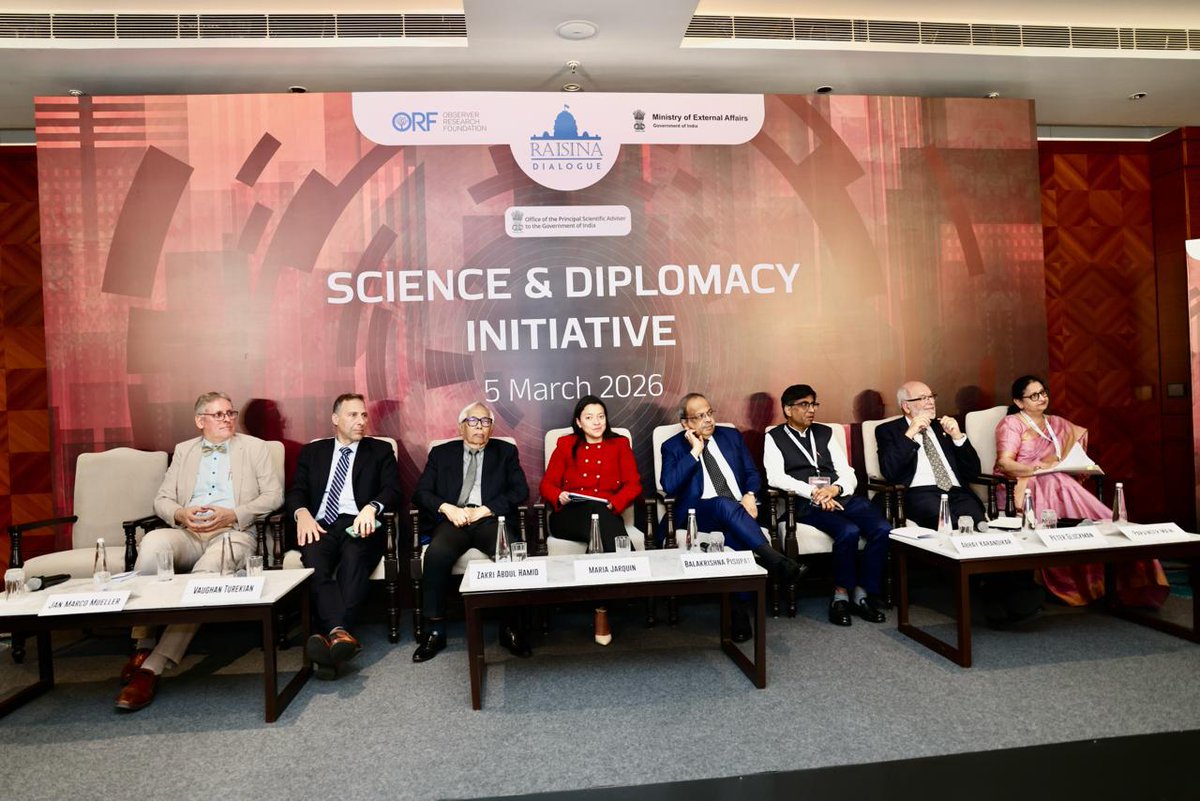
Raisina Science Diplomacy emerged as a new global platform when the inaugural Science Diplomacy Initiative (SDI) was held on 5 March 2026 at Bharat Mandapam in New Delhi. The event took place alongside the globally recognised Raisina Dialogue. The initiative was jointly launched by the Office of the Principal Scientific Adviser to the Government of India and the Observer Research Foundation.
Thank you for reading this post, don't forget to subscribe!The program brought together scientists, diplomats, innovators and policy experts from across the world to discuss how science diplomacy can address global challenges and technological transformation.
Global Experts Gather for the Initiative
Around 80 participants from international organisations, academic institutions and policy circles joined the closed-door discussions. The event was chaired by Ajay Kumar Sood, the Principal Scientific Adviser to the Government of India. It was co-chaired by Peter Gluckman, President of the International Science Council, Marilyne Andersen, Director General of the Geneva Science and Diplomacy Anticipator, and Vijay Chauthaiwale from the Bharatiya Janata Party Foreign Affairs Department.
The gathering aimed to encourage open dialogue on how scientific collaboration can strengthen diplomatic engagement and global cooperation.
Science Diplomacy in a Changing World
Experts at the event highlighted the growing importance of science and technology in shaping economic competitiveness, national development strategies and global security priorities. In this evolving global landscape, science diplomacy has become an important tool for international collaboration.
Participants stressed that Raisina Science Diplomacy must adapt to emerging technologies and global challenges. The initiative seeks to build frameworks that connect scientific research with diplomatic policy-making to support global stability and innovation.
Strategic Autonomy and Scientific Collaboration
The first roundtable discussion focused on the theme “Science Diplomacy in the Era of Strategic Autonomy.” The session was chaired by Parvinder Maini, Scientific Secretary in the Office of the Principal Scientific Adviser.
Experts discussed how nations can balance strategic interests with the collaborative nature of scientific research. They noted that scientific partnerships often continue even during geopolitical tensions, helping to maintain communication and cooperation.
Participants also emphasised the need for trusted research networks, transparent scientific systems and stronger science advisory mechanisms to support international cooperation.
Governing Disruptive Technologies
Another key session explored the governance of disruptive and emerging technologies. Chaired by Marilyne Andersen, the discussion focused on developing global frameworks to regulate frontier technologies responsibly.
Experts highlighted the need for coordinated international efforts to manage technological risks while encouraging innovation. Ethical considerations, multilateral cooperation and collaborative research were identified as essential for ensuring that emerging technologies benefit societies worldwide.
Future Vision of the Initiative
The discussions also examined the historical development of science diplomacy and the growing role of research organisations, global alliances and policy institutions. Experts emphasised that scientific foresight and collaboration can significantly influence global governance systems.
The Raisina Science Diplomacy initiative is expected to become an annual platform that promotes dialogue on science, technology and international cooperation. Future editions may also involve greater participation from the private sector and explore ways to ensure fair global access to technological advancements.