Bhakti Movement in India: Origin, Features, Saints and Impact on Society

Introduction
The Bhakti Movement was one of the most important religious and social movements in the history of India. It started during the medieval period and brought a new way of thinking about religion and devotion. The main idea of the Bhakti Movement was pure love and devotion to God. It taught that people could reach God through love, faith, and devotion rather than through complicated rituals or ceremonies.
Thank you for reading this post, don't forget to subscribe!The Bhakti Movement also played a big role in changing society. During that time, Indian society had many strict rules related to caste and religion. Only certain groups of people were allowed to perform religious practices. The Bhakti saints challenged these ideas and said that every person is equal in the eyes of God.
The movement began in South India around the 8th century and later spread to other parts of India such as North India, Maharashtra, Bengal, and Assam. Many saints and poets helped spread the message of Bhakti. They travelled from village to village and taught people about devotion through songs, poems, and simple teachings.
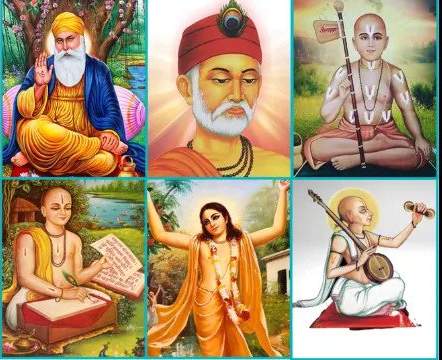
Famous saints like Ramanuja, Ramananda, Kabir, Guru Nanak, Mirabai, Tulsidas, Surdas, and Srimanta Sankardeva helped make the Bhakti Movement popular across India.
The Bhakti Movement had a deep influence on religion, society, language, and literature. It encouraged equality, love, unity, and spiritual freedom.
Origin of the Bhakti Movement
The Bhakti Movement began in South India during the early medieval period. At that time, religious life was dominated by rituals, sacrifices, and strict caste rules. Many people felt that religion had become too complicated and difficult for common people.
Because of this situation, many saints started teaching a simpler path to reach God. They said that true devotion (bhakti) and love for God were more important than rituals and ceremonies.
The earliest supporters of the Bhakti tradition were the Alvars and Nayanars of Tamil Nadu.
- Alvars were devotees of Lord Vishnu.
- Nayanars were devotees of Lord Shiva.
These saints wrote devotional songs in the Tamil language, which common people could understand. Their songs expressed deep love and devotion for God.
Gradually, the Bhakti ideas spread to other parts of India. Different saints and religious teachers helped expand the movement across the country.
The Bhakti Movement reached North India between the 14th and 17th centuries, where it became very powerful. Saints like Ramananda, Kabir, Guru Nanak, Mirabai, Surdas, and Tulsidas played important roles in spreading its message.
In Assam, the movement was strongly promoted by Srimanta Sankardeva, who started the Neo-Vaishnavism movement and taught devotion to Lord Krishna.
Reasons for the Rise of the Bhakti Movement
Several social, political, and religious factors led to the rise of the Bhakti Movement in India.
1. Complex Religious Rituals
During medieval times, religion became full of rituals and ceremonies. Only priests were allowed to perform these rituals. Common people found it difficult to follow such practices.
The Bhakti saints offered a simpler method of worship through love and devotion to God.
2. Rigid Caste System
Indian society was divided into strict caste groups. Lower castes were often treated badly and were not allowed to participate fully in religious life.
Bhakti saints strongly opposed the caste system. They taught that God does not judge people by caste or birth.
3. Decline of Buddhism and Jainism
During this time, the influence of Buddhism and Jainism was decreasing in India. Many people were searching for new spiritual ideas. The Bhakti Movement provided a new path based on devotion and equality.
4. Influence of Islam
When Islam came to India, it brought ideas such as equality, brotherhood, and direct worship of God. These ideas influenced some Bhakti saints, who also taught that people could connect with God directly without priests.
5. Political Instability
During medieval times, India did not always have strong centralized rulers. In such conditions, spiritual leaders and saints attracted large numbers of followers.
All these factors together helped the Bhakti Movement grow and spread across the country.
Main Features of the Bhakti Movement
The Bhakti Movement had several important characteristics that made it different from earlier religious traditions.
1. Worship of Personal God
Bhakti saints believed in the worship of a personal God. Many of them worshipped Shiva or Vishnu as their main deity.
Devotees developed a deep emotional relationship with God, just like a friend or loved one.
2. Use of Local Languages
One of the most important features of the Bhakti Movement was the use of regional languages.
Instead of Sanskrit, saints used languages like:
- Tamil
- Telugu
- Hindi
- Marathi
- Bengali
- Assamese
This helped common people understand religious teachings easily.
3. Opposition to Caste System
Bhakti saints strongly opposed caste discrimination. They believed that all human beings are equal.
Many saints themselves came from lower castes, yet they became respected spiritual leaders.
4. Simple Worship
Bhakti saints rejected complicated rituals. They believed that pure devotion and love for God were enough to reach salvation.
5. Spread through Songs and Poems
Many Bhakti saints wrote devotional songs, poems, and hymns.
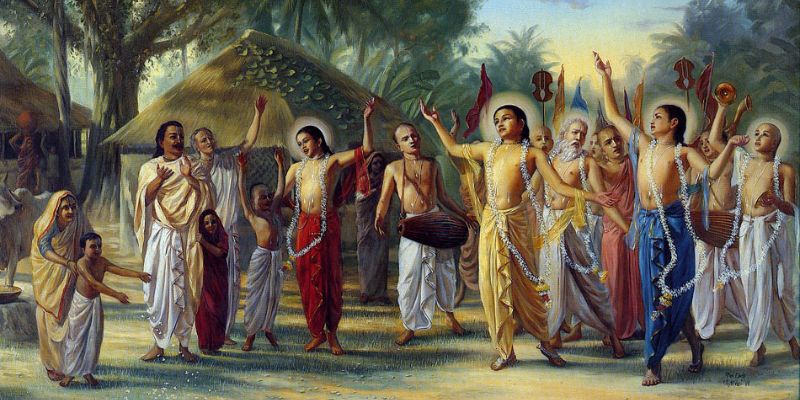
These songs were sung in temples, villages, and public gatherings. Through music and poetry, the message of devotion spread quickly.
6. Travelling Saints
Many Bhakti saints travelled from place to place to spread their teachings. They met people from different communities and shared messages of love and equality.
Philosophy of the Bhakti Movement
The philosophy of the Bhakti Movement focused mainly on devotion (bhakti) as the path to salvation.
Personal Relationship with God
Bhakti saints believed that every person can develop a personal relationship with God through love and faith.
Devotion Over Rituals
They rejected the idea that rituals and sacrifices were necessary to reach God. Instead, they taught that faith and devotion are more powerful.
Equality of All People
Bhakti philosophy promoted equality among all people. It rejected caste discrimination and social inequality.
Simple Life
Bhakti saints encouraged people to live simple, honest, and moral lives.
Salvation through Devotion
According to Bhakti philosophy, salvation or moksha can be achieved through sincere devotion to God.
Concepts of God in the Bhakti Movement
The Bhakti Movement had two main ideas about God.
Saguna Bhakti
Saguna Bhakti means worship of God with form and qualities.
Followers believed in gods such as:
- Lord Rama
- Lord Krishna
- Lord Vishnu
- Lord Shiva
Saints like Tulsidas, Mirabai, and Surdas followed Saguna Bhakti.
Nirguna Bhakti
Nirguna Bhakti means worship of formless God.
Saints who followed this belief said that God has no physical form.
Important Nirguna saints included:
- Kabir
- Guru Nanak
- Dadu Dayal
Both forms of devotion were important parts of the Bhakti Movement.
Important Bhakti Saints of India
Many saints played a major role in spreading the Bhakti Movement across India.
| Saint | Contribution |
|---|---|
| Ramanuja | Promoted devotion to Vishnu and Vishishtadvaita philosophy |
| Ramananda | Spread Bhakti in North India and welcomed followers from all castes |
| Kabir | Opposed caste system and religious differences |
| Guru Nanak | Founder of Sikhism and supporter of equality |
| Mirabai | Famous devotee of Lord Krishna |
| Tulsidas | Author of Ramcharitmanas |
| Surdas | Known for devotional songs about Krishna |
| Chaitanya Mahaprabhu | Spread Krishna Bhakti in Bengal |
| Srimanta Sankardeva | Founder of Neo-Vaishnavism in Assam |
Bhakti Movement in South India
South India was the birthplace of the Bhakti Movement.
The movement was led by two groups of saints:
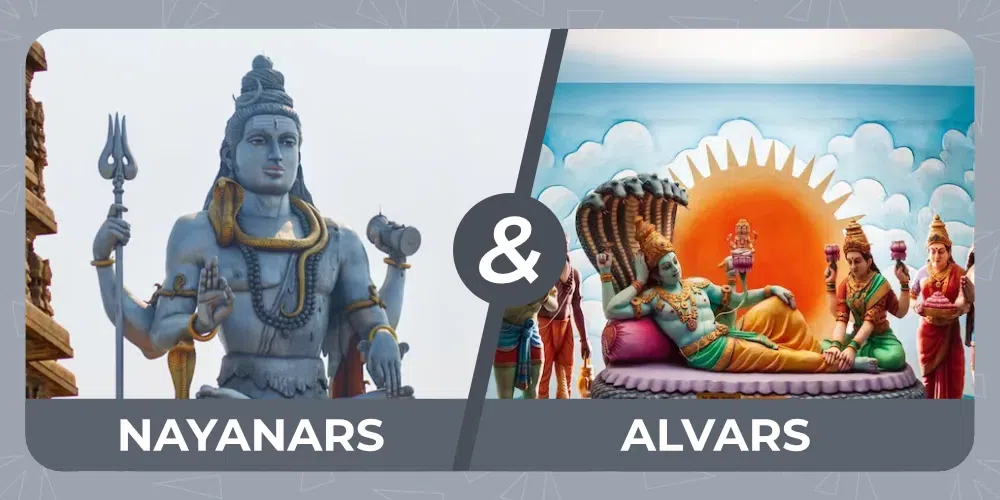
Nayanars
The Nayanars were devotees of Lord Shiva. They travelled across Tamil Nadu spreading devotion and singing hymns.
Alvars
The Alvars were devotees of Lord Vishnu. They composed beautiful devotional songs expressing love for Vishnu.
Their teachings formed the foundation of the Bhakti tradition in India.
Bhakti Movement in Maharashtra
The Bhakti Movement became very strong in Maharashtra. This tradition is often called Maharashtra Dharma.
Important saints from this region include:
Jnaneswar
Jnaneswar wrote a famous commentary on the Bhagavad Gita called Jnaneshwari. He believed that devotion was the best way to reach God.
Namdev
Namdev was another important saint who promoted devotion to Vithoba, a form of Lord Vishnu.
Tukaram
Tukaram wrote devotional poems called Abhangas, which became very popular among people.
Eknath
Eknath contributed to Marathi literature and spiritual teachings.
Bhakti Movement in North India
The Bhakti Movement spread strongly in North India during the 14th to 17th centuries.
Ramananda
Ramananda was one of the first major Bhakti saints of North India. He allowed people of all castes to join his teachings.
Kabir
Kabir was a famous poet and social reformer. He criticized both Hindu and Muslim religious practices and promoted unity.
Guru Nanak
Guru Nanak founded the Sikh religion and taught the importance of devotion, honesty, and equality.
Tulsidas
Tulsidas wrote the famous book Ramcharitmanas, which tells the story of Lord Rama in simple language.
Bhakti Movement in Assam
The Bhakti Movement in Assam was led by Srimanta Sankardeva.
He started the Neo-Vaishnavism movement, which focused on devotion to Lord Krishna.
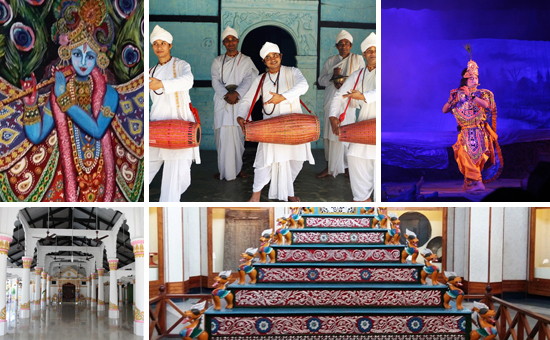
Sankardeva also introduced many cultural activities such as:
- Borgeet (devotional songs)
- Ankiya Naat (religious dramas)
- Satras and Namghars (religious centers)
His teachings helped unite people of different communities in Assam.
Contributions of the Bhakti Movement
The Bhakti Movement had a strong influence on Indian society and culture.
1. Social Equality
The movement challenged the caste system and promoted equality among all people.
2. Religious Reform
Bhakti saints simplified religious practices and made devotion accessible to everyone.
3. Development of Regional Languages
Many devotional poems and songs were written in local languages, which helped develop literature in those languages.
4. Cultural Growth
Bhakti traditions influenced music, dance, literature, and art.
5. Unity Among People
The movement promoted harmony between different religious and social groups.
Impact of the Bhakti Movement on Indian Society
The Bhakti Movement brought many positive changes in India.
- It reduced social discrimination.
- It made religion easier for common people.
- It encouraged moral values and simple living.
- It created unity among people of different communities.
Even today, the teachings of Bhakti saints continue to inspire millions of people.
Conclusion
The Bhakti Movement was a powerful spiritual and social reform movement in medieval India. It focused on devotion, love, equality, and faith rather than rituals and caste divisions.
Through the teachings of many saints and poets, the movement spread across India and influenced religion, society, literature, and culture.
The Bhakti Movement helped bring religion closer to the common people. It taught that anyone can reach God through pure devotion and a sincere heart.
The legacy of the Bhakti saints continues to live in devotional songs, literature, temples, and cultural traditions across India.
Their message of love, equality, humility, and devotion remains relevant even in modern times.
FAQs about Bhakti Movement
1. What is the Bhakti Movement?
The Bhakti Movement was a religious and social reform movement in medieval India that focused on devotion (bhakti) to God. It taught that people could reach God through love, faith, and devotion rather than rituals.
2. When did the Bhakti Movement start?
The Bhakti Movement started in South India around the 8th century and gradually spread to other parts of India between the 14th and 17th centuries.
3. Who started the Bhakti Movement?
The Bhakti Movement did not have a single founder. It developed through the teachings of many saints such as Ramanuja, Ramananda, Kabir, Guru Nanak, Mirabai, and Chaitanya Mahaprabhu.
4. What were the main teachings of the Bhakti Movement?
The main teachings of the Bhakti Movement were:
- Devotion to a personal God
- Equality of all people
- Rejection of caste discrimination
- Simple worship instead of rituals
- Love and faith as the path to salvation
5. Who were some famous Bhakti saints?
Some famous Bhakti saints include Kabir, Guru Nanak, Mirabai, Tulsidas, Surdas, Ramanuja, Ramananda, Chaitanya Mahaprabhu, and Srimanta Sankardeva.