Anglo-Mysore Wars: Complete History, Causes, Battles and Results

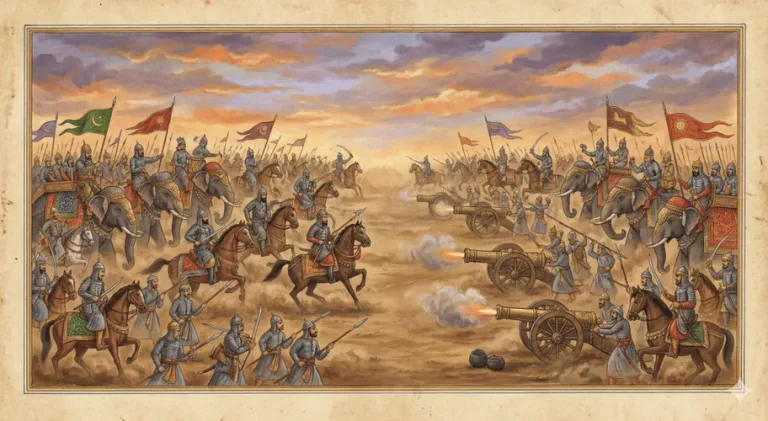
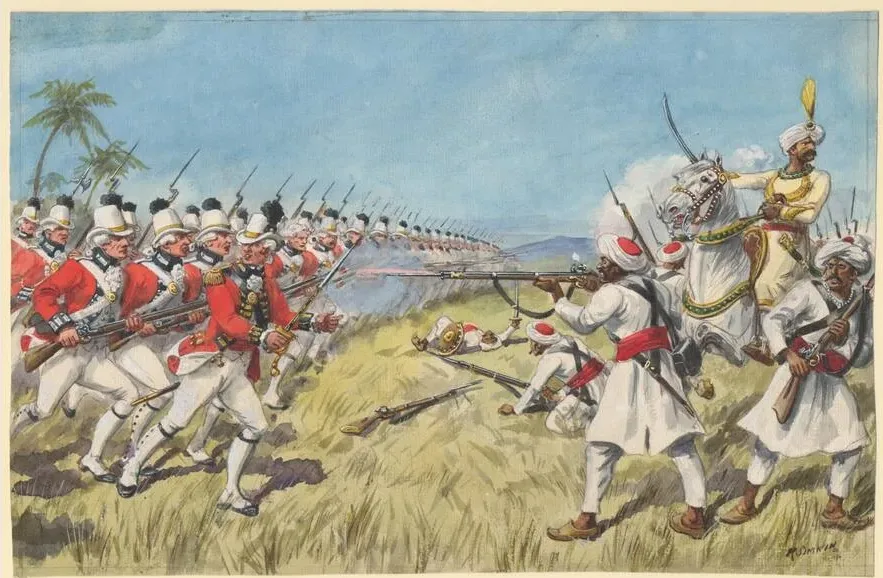
The Anglo-Mysore Wars were a series of four important wars fought in India during the 18th century between the British East India Company and the rulers of Mysore. These wars played a major role in shaping modern Indian history and helped the British expand their control over South India. The main leaders from Mysore were Haider Ali and his son Tipu Sultan, while the British were supported by Indian powers like the Marathas and the Nizam of Hyderabad.
Thank you for reading this post, don't forget to subscribe!These wars were not just battles for land, but also struggles for political power, trade control, and dominance in India. In simple words, the Anglo-Mysore Wars marked the rise of British power and the fall of Mysore as an independent kingdom.
Background of the Anglo-Mysore Wars
Before understanding the wars, it is important to know the situation in South India during the 18th century.
The kingdom of Mysore was ruled by the Wodeyar dynasty. However, the real power later came into the hands of Haider Ali, who rose from a simple soldier to become the ruler due to his intelligence and military skills. Under his leadership, Mysore became a strong and powerful state.
At the same time, the British East India Company was expanding its control in India after winning important battles like the Battle of Buxar. The British wanted to control trade routes, especially the rich Malabar Coast, which was under Mysore’s influence.
This created tension between Mysore and the British, which finally led to a series of wars known as the Anglo-Mysore Wars.
First Anglo-Mysore War (1767–1769)
Background and Causes
The First Anglo-Mysore War was the result of growing political rivalry and fear of Mysore’s rising power in South India. The kingdom of Mysore had its roots in 1612, when a Hindu state was established under the Wodeyar dynasty. Later, Chikka Krishnaraja Wodeyar II ruled from 1734 to 1766.
During this time, a remarkable leader named Haider Ali rose from a simple soldier to become the real ruler of Mysore. Though he was not formally educated, he was highly intelligent and skilled in both administration and military strategy. By 1761, he became the de facto ruler of Mysore and strengthened the army using modern European techniques with the help of the French.
Under Haider Ali’s leadership, Mysore became a powerful state in the second half of the 18th century. He expanded his territory by capturing places like Dod Ballapur, Sera, Bednur, and Hoskote. He also controlled the rich trade of the Malabar Coast, which made the British worried about their own trade and power in Madras.
The British East India Company, after their success in the Battle of Buxar, started strengthening alliances in South India. They signed agreements with the Nizam of Hyderabad and gained control over the Northern Circars. Since the Nizam and the Marathas already had conflicts with Haider Ali, the British formed a triple alliance with them against Mysore.
However, Haider Ali used his diplomatic skills cleverly. He managed to make peace with the Marathas and even turned the Nizam into his ally, weakening the British position. This shifting of alliances created tension and finally led to war.
Another important factor was Haider Ali’s friendship with the French, which increased British fears. The British saw Mysore as a serious threat to their political and commercial interests in India.
Haider Ali’s Strength and Challenges
Haider Ali was a strong and capable ruler. He reorganized the Mysore army and introduced modern weapons and training methods. He also suppressed rebellious local chiefs known as Poligars (or Palaiyakkarars), who were powerful military governors during the time of the Vijayanagara Empire.
However, he faced challenges from the Marathas. Under the leadership of Madhavrao, the Marathas defeated him several times between 1764 and 1771. To maintain peace, Haider Ali had to pay large sums of money. But after Madhavrao’s death in 1772, Haider Ali regained his strength and recovered lost territories by attacking the Marathas again between 1774 and 1776.
Course of War
The First Anglo-Mysore War lasted for about one and a half years. In the beginning, neither side could achieve a clear victory.
Then Haider Ali made a bold and surprising move. He suddenly marched towards Madras (present-day Chennai) and reached its gates. This unexpected attack created fear and confusion among the British forces and showed Haider’s military brilliance.
The British realized that continuing the war could be dangerous and costly, so they decided to make peace.
Result
The war ended with the Treaty of Madras, signed on April 4, 1769.
Main Points of the Treaty:
- Both sides returned the territories they had captured
- Prisoners of war were exchanged
- The British promised to help Haider Ali if he was attacked by any other power
However, this promise was not kept by the British later, which became one of the main reasons for the Second Anglo-Mysore War.
Second Anglo-Mysore War (1780–1784)
Causes / Background
The Second Anglo-Mysore War began mainly because the British did not follow the promises they made in the Treaty of Madras. In 1771, when the Marathas attacked Mysore, the British failed to support Haider Ali, even though they had promised to help him. This made Haider Ali very angry, and he accused the British of betrayal.
Another important reason was the growing friendship between Mysore and the French. Haider Ali realized that the French were more helpful in supplying war materials like guns, saltpetre, and lead. So, he started importing these materials through Mahe, a French-controlled port on the Malabar Coast.
The British saw this friendship as a big threat to their power in India. As a result, they tried to capture Mahe, even though it was under the protection of Haider Ali. This action further increased tension and finally led to war.
Course of War
The war started with strong military action from Mysore.
- Haider Ali formed a powerful alliance with the Marathas and the Nizam of Hyderabad
- He attacked the Carnatic region and captured important places like Arcot
- He defeated the British army led by Colonel Baillie in 1781
However, the British did not give up easily.
- The British army, under Sir Eyre Coote, managed to break the alliance of Haider Ali by separating the Marathas and the Nizam from his side
- Haider Ali fought bravely but suffered a defeat at the Battle of Porto Novo (present-day Parangipettai, Tamil Nadu) in November 1781
Even after this defeat, Haider Ali did not lose hope.
- He reorganized his army
- He again attacked the British forces
- He defeated them and even captured their commander Braithwaite
This shows his strong leadership and determination.
In 1782, Haider Ali died of cancer on December 7. After his death, his son Tipu Sultan took control and continued the war. However, even after fighting for another year, neither side could achieve a clear victory.
Result
Both sides were tired of the long and costly war. So, they decided to make peace.
The war ended with the Treaty of Mangalore in March 1784.
Main Points:
- Both sides returned all captured territories
- No side gained any major advantage
- It was one of the rare occasions when the British treated an Indian ruler as an equal
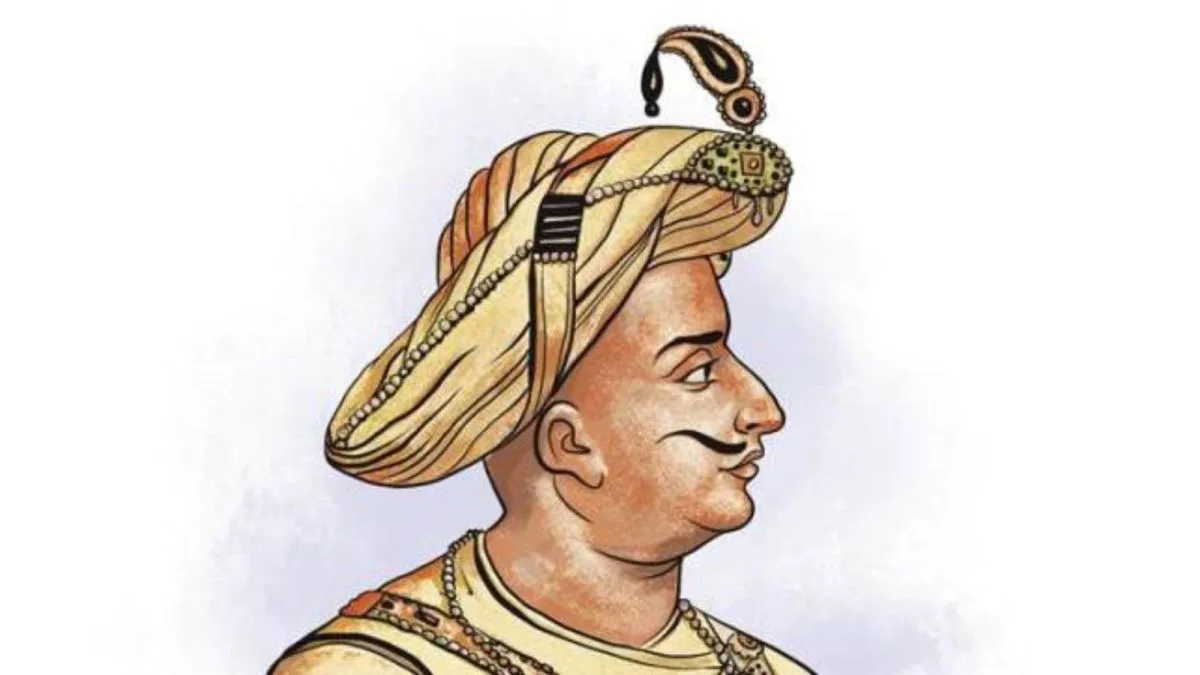
Tipu Sultan: The Tiger of Mysore
Tipu Sultan was one of the most powerful and inspiring rulers in Indian history. He was not only a brave soldier but also a skilled administrator and innovator.
Early Life and Personality
- Born in November 1750
- Son of Haider Ali
- Well educated and fluent in Arabic, Persian, Kannada, and Urdu
Military Strength
- Like his father, he focused on building a strong and disciplined army
- Organized the army on European lines with Persian commands
- Took help from French officers for training but never allowed them too much influence
Naval and Military Innovations
- Understood the importance of naval power
- In 1796, he created a Board of Admiralty
- Planned a navy with 22 battleships and 20 frigates
- Established dockyards at Mangalore, Wajedabad, and Molidabad (though these plans were not fully successful)
Scientific and Economic Contributions
- Known as a pioneer of rocket technology in India
- Wrote a military manual on rocket usage
- Promoted industries like silk production (sericulture)
- Encouraged science and technology development
Political and Revolutionary Ideas
- Planted the Tree of Liberty as a symbol of freedom
- Supported democratic and revolutionary ideas
- Allowed French soldiers to form a Jacobin Club at Seringapatam in 1797
- Became a member himself and was called “Citizen Tipu”
Third Anglo-Mysore War (1790–1792)
Causes / Background
The Third Anglo-Mysore War started due to growing conflicts between Tipu Sultan and the British.
The earlier Treaty of Mangalore failed to solve the disputes between them. Both Tipu Sultan and the British wanted to establish their political supremacy over the Deccan region.
The immediate cause of the war was Tipu Sultan’s attack on Travancore, which was:
- An ally of the British
- An important source of pepper trade for the British East India Company
Travancore had also purchased Jalkottal and Cannanore from the Dutch in the Cochin state. Since Cochin was under Tipu’s influence, he considered this action as a violation of his authority and sovereignty.
The British used this situation as an excuse to declare war against Mysore.
Course of War
The British formed a strong alliance with the Marathas and the Nizam of Hyderabad, who were already jealous of Tipu Sultan’s growing power.
- In 1790, Tipu Sultan defeated the British army led by General Meadows
- However, in 1791, Lord Cornwallis took command of the British forces
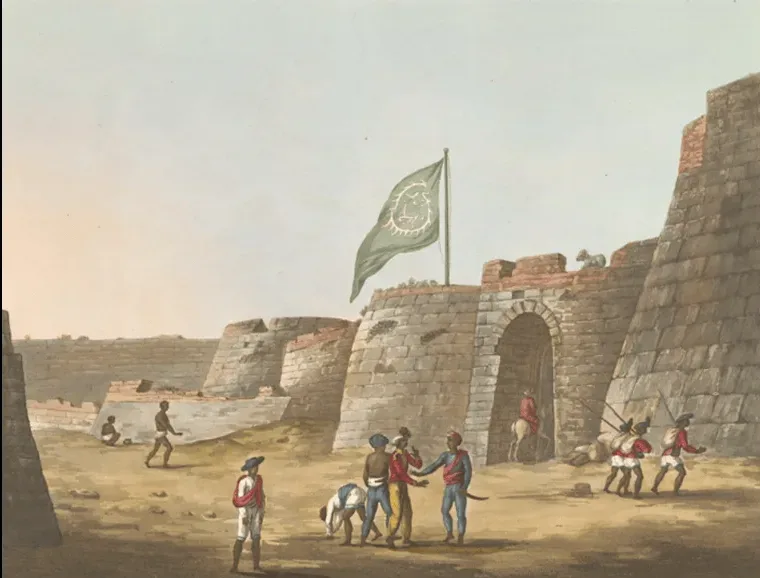
- He marched through Ambur and Vellore and captured Bangalore in March 1791
- From there, he advanced towards Seringapatam, the capital of Mysore
During the war:
- Coimbatore was captured by the British but later retaken by Tipu
- Eventually, with the help of the Marathas and the Nizam, the British attacked Seringapatam again
Tipu Sultan fought bravely and gave strong resistance, but he was outnumbered and surrounded by powerful enemies.
Result
The war ended with the Treaty of Seringapatam.
Main Points of the Treaty:
- Tipu Sultan lost nearly half of his territory
- British, Marathas, and Nizam divided the conquered lands among themselves
- Baramahal, Dindigul, and Malabar went to the British
- The Marathas received regions around the Tungabhadra river
- The Nizam got territories between the Krishna and Pennar rivers
- Tipu had to pay a heavy war indemnity of about three crore rupees
- Half of the amount was paid immediately, and the rest in installments
- Tipu’s two sons were taken as hostages by the British until full payment
Impact
This war was a major turning point:
- It destroyed Tipu Sultan’s dominant position in South India
- It greatly weakened the power of Mysore
- It firmly established British supremacy in the southern part of India
Fourth Anglo-Mysore War (1799)
Background and Causes
The Fourth Anglo-Mysore War was the final and most decisive conflict between the British and Mysore. The period between 1792 and 1799 was used by both sides to recover from their earlier losses after the Treaty of Seringapatam.
Tipu Sultan fulfilled all the conditions of the treaty and even managed to secure the release of his sons, who had been taken as hostages by the British. However, he never forgot the humiliation he suffered and was determined to take revenge.
In 1796, after the death of the Hindu ruler of the Wodeyar dynasty, Tipu declared himself the Sultan of Mysore. Around the same time, in 1798, Lord Wellesley became the new Governor-General of India. He was a strong supporter of British expansion and wanted to completely destroy Tipu Sultan’s independent rule.
Tipu Sultan maintained friendly relations with the French, which worried the British. Lord Wellesley believed that Tipu was planning against the British. Tipu was even accused of sending messengers to places like Arabia, Afghanistan, Mauritius (Isle of France), and Versailles to form alliances. Although Tipu denied these claims, Wellesley was not satisfied.
Another major reason for the war was Tipu’s refusal to accept the British policy known as the Subsidiary Alliance.
Subsidiary Alliance
The Subsidiary Alliance system was introduced in 1798 by Lord Wellesley. Under this system:
- Indian rulers had to accept British troops in their territory
- They had to pay money (subsidy) for maintaining these troops
- They could not make alliances or declare war without British permission
- A British Resident was placed in their court
- Rulers could not hire Europeans without British approval
Sometimes rulers had to give away part of their land instead of paying money. The first Indian ruler to accept this system was the Nizam of Hyderabad.
Although the system promised protection, it actually reduced the independence of Indian rulers. It also weakened their economy because they had to pay heavy subsidies. At the same time, the British strengthened their army using the resources of Indian states.
Course of War
The war began on April 17, 1799, and ended on May 4, 1799.
- The British attacked Mysore from different directions
- General Stuart and General Harris led the British forces
- Arthur Wellesley, the brother of Lord Wellesley, also took part in the war
- The Marathas and the Nizam supported the British
The British forces finally attacked and captured Seringapatam, the capital of Mysore.
Tipu Sultan fought bravely till the end but was killed during the battle. His death marked the fall of Mysore’s resistance against the British.
Result and Aftermath
- Tipu Sultan was killed in battle
- All his treasures were taken by the British
- Mysore lost its independence
- The British placed a young ruler from the Wodeyar family on the throne
- The Subsidiary Alliance system was imposed on Mysore
It took the British around 32 years to completely defeat Mysore. This victory also ended the possibility of French influence in South India.
Post-War Scenario
After the war, the territories of Mysore were divided:
- The British took control of important regions like Kanara, Wayanad, Coimbatore, Dwaraporam, and Seringapatam
- The Nizam received areas like Gooty and Gurramkonda
- Lord Wellesley offered some regions to the Marathas, but they refused
Finally, the reduced state of Mysore was handed back to the Wodeyar dynasty under a young ruler, Krishnaraja III, who accepted British control through the Subsidiary Alliance.
Aftermath of the Anglo-Mysore Wars
After the defeat of Tipu Sultan, the British became the dominant power in South India.
Important Effects:
- Mysore was divided among the British, Marathas, and Nizam
- The British gained control over important regions like Malabar and Coimbatore
- The threat of French influence in India was removed
- The Subsidiary Alliance system expanded
The Anglo-Mysore Wars took nearly 32 years and completely changed the political situation of India.
Conclusion
The Anglo-Mysore Wars were a turning point in Indian history. These wars showed the bravery and resistance of Indian rulers like Haider Ali and Tipu Sultan against British expansion.
Although Mysore was eventually defeated, the courage and determination of its rulers are still remembered today. These wars also helped the British establish their control over India, which later led to British colonial rule.
Understanding the Anglo-Mysore Wars helps us learn how India gradually came under British control and how Indian leaders tried to resist foreign domination.
FAQs
1. What were the Anglo-Mysore Wars?
The Anglo-Mysore Wars were four wars fought between the British East India Company and the rulers of Mysore in the 18th century.
2. Who were the main leaders of Mysore?
The main leaders were Haider Ali and Tipu Sultan.
3. How many Anglo-Mysore Wars were fought?
There were four Anglo-Mysore Wars between 1767 and 1799.
4. Which treaty ended the Third Anglo-Mysore War?
The Treaty of Seringapatam (1792) ended the Third Anglo-Mysore War.
5. What happened after the Fourth Anglo-Mysore War?
Tipu Sultan was killed, and Mysore came under British control.