Tipu Sultan: The Tiger of Mysore

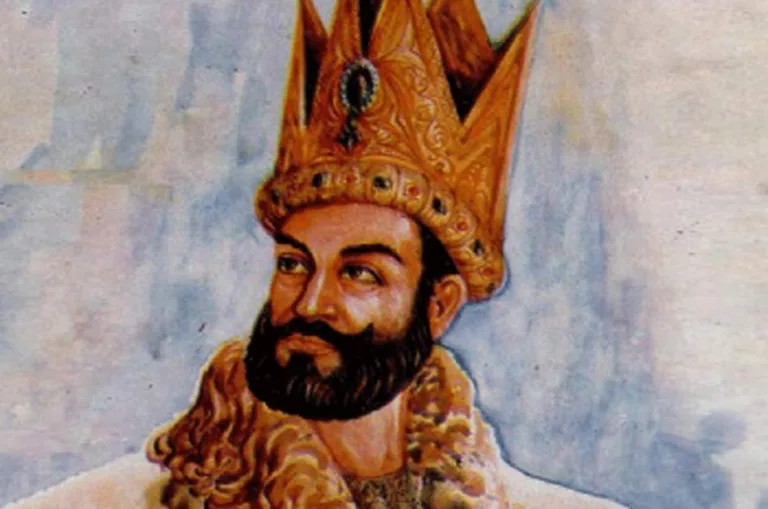
Tipu Sultan was one of the most powerful and courageous rulers in Indian history. He ruled the Kingdom of Mysore in the late 18th century and is remembered for his strong resistance against British colonial rule, his modern army, and his reforms in administration and economy. Popularly known as Sher-e-Mysore or the Tiger of Mysore, Tipu Sultan was a fearless leader who fought several wars to protect his kingdom and Indian sovereignty.
Thank you for reading this post, don't forget to subscribe!Introduction to Tipu Sultan
Tipu Sultan, the ruler of Mysore, was a brave warrior, skilled administrator, and a visionary king. He strongly opposed British expansion in India and fought four major wars against the British East India Company, known as the Anglo-Mysore Wars. Tipu Sultan believed that foreign rule would destroy Indian culture, economy, and independence. Because of this belief, he dedicated his entire life to defending his kingdom.
Tipu Sultan was not only a soldier but also a reformer. He improved agriculture, encouraged trade, introduced new coins, modernized the army, and supported science and technology. His rule showed that Indian kingdoms could be strong, organized, and modern even before British control.
Tipu Sultan Early Life and Background
Tipu Sultan, whose full name was Sultan Fateh Ali Sahab Tipu, was born in 1750 at Devanahalli, near present-day Bengaluru in Karnataka. He was the son of Hyder Ali, a powerful military commander who later became the ruler of Mysore.
From a young age, Tipu Sultan grew up in a military environment. His father ensured that he received the best education possible. Tipu was trained in horse riding, sword fighting, archery, and military tactics. He also studied administration, diplomacy, and economics.
Tipu Sultan was fluent in several languages such as Persian, Arabic, Urdu, Kannada, and French. This helped him communicate with foreign powers and understand global politics. His exposure to European military methods, especially French techniques, played an important role in shaping his future strategies.
As a young prince, Tipu Sultan accompanied his father in many battles. These early experiences made him a confident and skilled warrior. When Hyder Ali died in 1782, Tipu Sultan became the ruler of Mysore and continued his father’s fight against British domination.
Tipu Sultan as the Ruler of Mysore
After becoming the ruler, Tipu Sultan strengthened the administration and army of Mysore. He believed that a strong state required discipline, justice, and economic stability. He worked day and night to protect his kingdom from foreign threats, especially the British East India Company.
Tipu Sultan declared himself a defender of Indian independence. He refused to accept British supremacy and rejected their attempts to interfere in Mysore’s internal matters. This strong stand made him one of the biggest enemies of British colonial power in South India.
Tipu Sultan and the Anglo-Mysore Wars
The most important part of Tipu Sultan’s life was his involvement in the Anglo-Mysore Wars. These wars were fought between the Kingdom of Mysore and the British East India Company, often involving other Indian powers like the Marathas and the Nizam of Hyderabad.
First Anglo-Mysore War (1767–1769)
The First Anglo-Mysore War began when the British tried to expand their influence in South India. Hyder Ali led Mysore’s army, and young Tipu Sultan supported his father during this war.
Although Tipu Sultan had a limited role, he learned valuable lessons in warfare and diplomacy. Mysore successfully resisted British attacks, and the war ended with the Treaty of Madras. This treaty restored captured territories and brought temporary peace.
This war showed that Indian rulers could defeat British forces if they were united and well-organized.
Second Anglo-Mysore War (1780–1784)
The Second Anglo-Mysore War was more intense and important. It started when Hyder Ali accused the British of breaking the Treaty of Madras by not helping him against the Marathas. Feeling betrayed, Hyder Ali turned to the French for support.
The situation worsened when the British attacked Mahe, a French-controlled port under Mysore’s protection. This action angered Hyder Ali and led to open war.
Hyder Ali formed alliances with the Marathas and the Nizam of Hyderabad. Mysore forces captured important areas like Arcot and defeated the British in several battles.
In 1782, Hyder Ali died during the war. After his death, Tipu Sultan took command of the Mysore army. Despite facing many challenges, Tipu Sultan continued the fight with great courage and skill.
The war ended in 1784 with the Treaty of Mangalore. Both sides returned conquered territories, and prisoners were released. This treaty is important because it was one of the few treaties in which the British had to negotiate on equal terms with an Indian ruler.
Third Anglo-Mysore War (1790–1792)
The Third Anglo-Mysore War began due to conflicts between Tipu Sultan and the Kingdom of Travancore. Travancore purchased forts like Jalkottal and Cannanore from the Dutch, which Tipu Sultan considered a threat to Mysore’s security.
Tipu Sultan attacked Travancore in 1790, which led the British to declare war against him. This time, the British formed a strong alliance with the Marathas and the Nizam of Hyderabad.
At first, Tipu Sultan achieved success. He defeated British forces led by General Meadows and defended his territories bravely. However, the situation changed when Lord Cornwallis took command of the British army.
Cornwallis captured Bangalore in 1791 and marched toward Seringapatam, the capital of Mysore. Although Tipu Sultan managed to recapture Coimbatore, the combined forces of the British, Marathas, and Nizam laid siege to Seringapatam.
Facing heavy pressure, Tipu Sultan was forced to sign the Treaty of Seringapatam in 1792. According to this treaty, Mysore lost nearly half of its territory and had to pay a large war compensation. Tipu also had to give his two sons as hostages until the payment was completed.
Fourth Anglo-Mysore War (1799)
After the Third Anglo-Mysore War, Tipu Sultan spent several years rebuilding his kingdom. He strengthened the army, improved administration, and fulfilled the terms of the Treaty of Seringapatam to secure the release of his sons.
During this period, Tipu Sultan declared himself the Sultan after the death of the Wodeyar ruler. This decision, along with his friendly relations with the French, worried the British Governor-General Lord Wellesley.
Lord Wellesley followed an aggressive policy to eliminate Tipu Sultan. The Fourth Anglo-Mysore War began in April 1799. British forces advanced rapidly toward Seringapatam.
On May 4, 1799, British troops attacked Seringapatam. Tipu Sultan fought bravely on the battlefield and refused to surrender. He was killed while defending his capital. With his death, the Kingdom of Mysore lost its independence, and British control expanded further in South India.
Tipu Sultan’s final words and actions made him a symbol of bravery and sacrifice.
Tipu Sultan Military Innovations
One of the most remarkable aspects of Tipu Sultan was his contribution to military technology. He believed that modern weapons were necessary to defeat powerful European armies.
Mysorean Rockets
Tipu Sultan improved rocket technology by introducing iron-cased rockets. These rockets were more powerful and had a longer range compared to earlier versions. They could travel nearly 2 kilometers and caused fear among British soldiers.
The Mysorean rockets were used effectively in battles like the Battle of Pollilur. The British were so impressed that they later developed their own rocket systems based on Mysore’s designs.
Modern Army
Tipu Sultan organized his army on modern lines. He introduced regular salaries, uniforms, and training programs. French officers helped train Mysore soldiers in European military methods.
He also strengthened fort defenses and improved artillery, making Mysore one of the most advanced military states in India at that time.
Tipu Sultan Administration and Governance
Tipu Sultan was not only a warrior but also a capable administrator. He introduced several reforms to improve governance and efficiency.
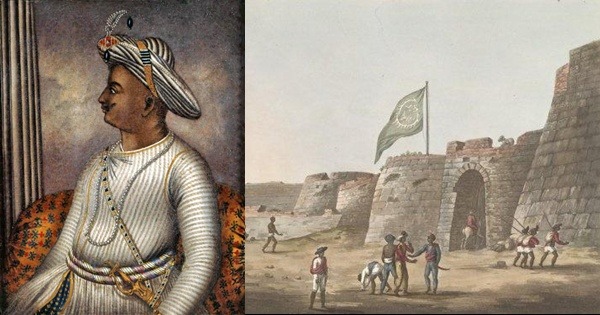
Administrative Reforms
Tipu Sultan divided his kingdom into administrative units and created seven major government departments to manage revenue, defense, trade, and justice. He introduced a new calendar and revised land revenue systems to reduce corruption.
Coinage System
Tipu Sultan introduced a unique coinage system with Persian inscriptions. He issued gold pagodas, silver rupees, and copper coins called paisa. This helped standardize trade and strengthen the economy.
Law and Order
Tipu Sultan ensured strict law enforcement. He believed that justice was essential for a strong state. Officials were held accountable, and corruption was punished severely.
Tipu Sultan and Economic Development
Under Tipu Sultan, Mysore became one of the most prosperous regions in India. He focused on agriculture, trade, and industry.
Agriculture
Tipu Sultan encouraged farmers by providing irrigation facilities and reducing unnecessary taxes. He supported the construction of dams and canals, including early plans for the Kannambadi dam.
Trade and Industry
Tipu Sultan promoted textile manufacturing, especially silk production. He introduced sericulture and improved weaving techniques. Mysore silk later became famous across India.
He also encouraged trade with foreign countries and established state-run trading companies to protect Indian merchants from exploitation.
Tipu Sultan Religious Policy
The religious policy of Tipu Sultan has been widely debated. Some historians describe him as a tolerant ruler, while others mention instances of harsh actions.
Tipu Sultan made donations to many Hindu temples and appointed Hindus to important administrative positions. Historical records show that he supported around 156 Hindu temples with land grants and financial aid.
At the same time, there are accounts of forced conversions and strict measures during military campaigns. These actions are often linked to political and military situations rather than purely religious motives.
Overall, Tipu Sultan’s religious policy was complex and influenced by the challenges of his time.
Death and Legacy of Tipu Sultan
Tipu Sultan died fighting on the battlefield, defending his capital Seringapatam. His death marked the end of independent Mysore rule and strengthened British dominance in South India.
Despite his defeat, Tipu Sultan is remembered as a hero who stood against colonialism. His bravery, military innovations, administrative reforms, and vision for a strong and independent India continue to inspire people.
Tipu Sultan’s life teaches us the importance of courage, patriotism, and resistance against injustice.
Conclusion
Tipu Sultan was one of the greatest rulers in Indian history. As the Tiger of Mysore, he fought bravely against British colonial expansion and worked tirelessly to modernize his kingdom. His military campaigns, administrative reforms, economic policies, and technological innovations made Mysore a powerful state.
Although he ultimately lost his kingdom, Tipu Sultan’s legacy lives on as a symbol of resistance, sacrifice, and national pride. His life reminds us that freedom is worth fighting for, even against powerful enemies.
FAQs on Tipu Sultan
Q1. Who was Tipu Sultan?
Tipu Sultan was the ruler of the Kingdom of Mysore and a strong opponent of British colonial rule in India.
Q2. Why was Tipu Sultan called the Tiger of Mysore?
He was called the Tiger of Mysore because of his bravery, fearless nature, and strong resistance against the British.
Q3. How many Anglo-Mysore Wars did Tipu Sultan fight?
Tipu Sultan fought four Anglo-Mysore Wars against the British East India Company.
Q4. Which treaty ended the Second Anglo-Mysore War?
The Second Anglo-Mysore War ended with the Treaty of Mangalore.
Q5. What were Mysorean rockets?
Mysorean rockets were advanced iron-cased rockets used by Tipu Sultan’s army, which had a long range and strong impact.
Q6. How did Tipu Sultan die?
Tipu Sultan died fighting bravely during the Fourth Anglo-Mysore War at Seringapatam.
Q7. Was Tipu Sultan a good administrator?
Yes, Tipu Sultan introduced reforms in administration, coinage, military organization, and economic development.
Q8. What is Tipu Sultan remembered for today?
Tipu Sultan is remembered as a symbol of resistance, bravery, and early Indian opposition to British rule.