
Micron Gujarat Semiconductor Facility Begins DRAM Module Production

India has taken an important step in strengthening its semiconductor industry with the launch of the Micron Gujarat Semiconductor Facility in Sanand, Gujarat. The advanced memory plant has started operations and shipped its first finished DRAM module to Dell Technologies, marking a milestone for India’s electronics manufacturing sector.
Thank you for reading this post, don't forget to subscribe!The facility was inaugurated by Narendra Modi and represents India’s first advanced memory Assembly, Testing, Marking and Packaging (ATMP) site. This project supports India’s vision of becoming a global hub for semiconductor manufacturing and technology innovation.
World’s Largest Raised-Floor Clean Room
One of the most impressive features of the Micron Gujarat Semiconductor Facility is its massive 500,000 square foot raised-floor clean room. It is considered the largest single semiconductor assembly clean room of its type in the world.
The clean room is specially designed to suit Gujarat’s soil and climate conditions, helping reduce moisture-related risks that can affect semiconductor production. It follows a Class 1000 clean room standard, meaning the environment allows no more than 1,000 particles per cubic metre of air. To maintain this purity, the air inside the facility is circulated around 120 times every hour.
This controlled environment is necessary because semiconductor components contain extremely delicate integrated circuits and bonding wires that are thinner than a fraction of a human hair.

Advanced Memory Assembly and Testing
The Micron Gujarat Semiconductor Facility focuses on assembling and testing DRAM and NAND flash memory products. DRAM (Dynamic Random Access Memory) acts as working memory in computers, smartphones, and data centres, while NAND flash memory is widely used for storage in solid-state drives (SSDs) and mobile devices.
The production process follows a wafer-in to finished-product-out model. Semiconductor wafers are shipped from Micron’s global fabrication plants. These wafers are then thinned, cut into individual chips, assembled, tested, and mounted onto modules before undergoing final quality checks and shipment.
Initial shipments from the plant include DRAM modules supplied to Dell Technologies, and the facility is expected to provide products to other technology companies such as Asus and Qualcomm.
Investment and Production Expansion
The total investment planned for the Micron Gujarat Semiconductor Facility across two phases is about $2.7 billion. Production at the plant is expected to reach tens of millions of integrated circuits in its early stage.
By 2027, the facility is projected to scale up production to nearly one billion units annually. While a large share of the output will be exported, the plant will also help meet growing domestic demand for semiconductor components in India.
Skilled Workforce and Modern Technology
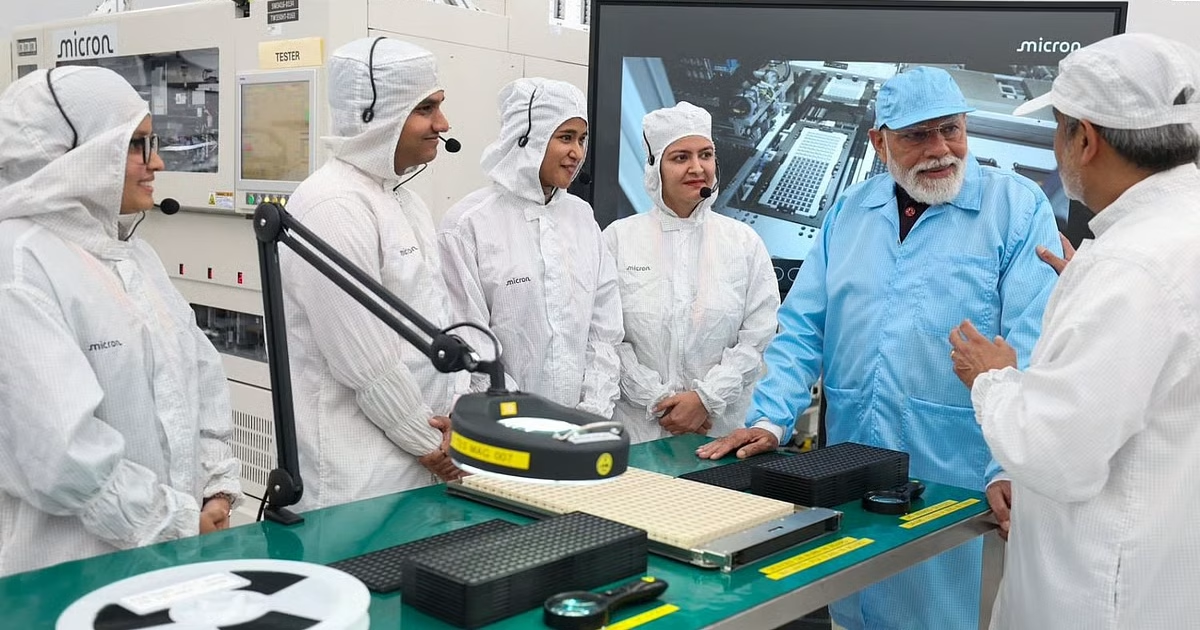
The semiconductor plant currently employs around 1,300 people. Nearly half of the workforce consists of fresh engineering graduates from Gujarat and nearby states. To prepare them for advanced manufacturing roles, specialised semiconductor training programs were developed in collaboration with universities.
Some employees also received hands-on training for three to six months at Micron facilities in Malaysia and Singapore. The plant uses modern automation systems, AI-driven factory intelligence, and advanced yield engineering tools to maintain global manufacturing standards.
Strengthening India’s Semiconductor Ecosystem
The launch of the Micron Gujarat Semiconductor Facility marks a major step in India’s semiconductor journey. The plant expands the country’s role from semiconductor design into advanced memory packaging and testing, helping build a stronger and more resilient electronics manufacturing ecosystem.