



World’s Highest Road Built Mig La Pass Ladakh Road 2025

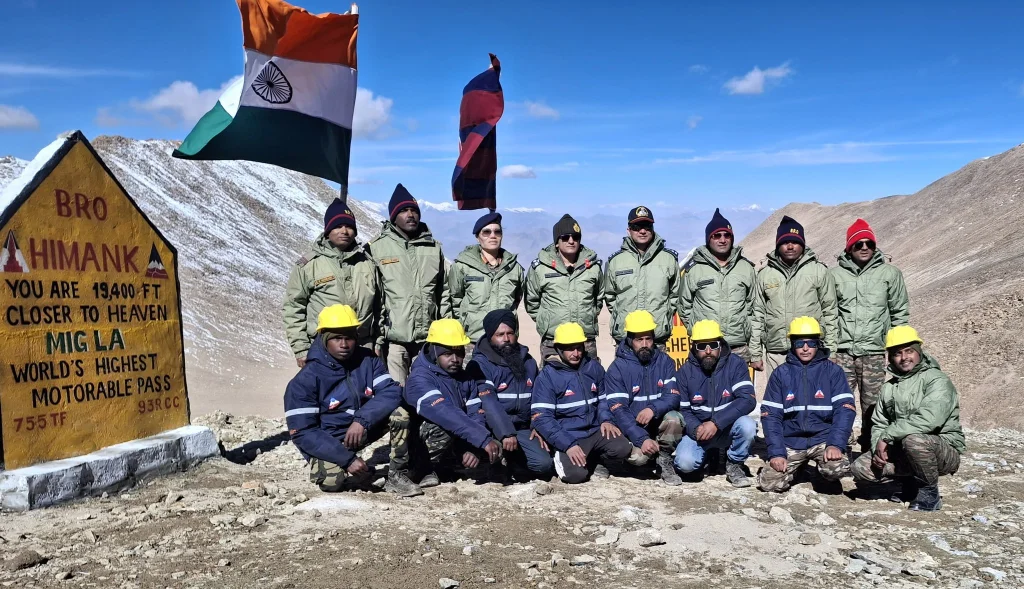
India has achieved an extraordinary milestone in high-altitude infrastructure development with the completion of the Mig La Pass Ladakh Road 2025, now recognized as the world’s highest motorable road. The Border Roads Organisation (BRO) successfully constructed this engineering marvel at an altitude of 19,400 feet (5,913 metres), surpassing its previous record at Umling La Pass. This newly completed route connects Hanle to Fukche village near the Line of Actual Control (LAC), marking a significant achievement under Project Himank, led by Brigadier Vishal Srivastava.
Thank you for reading this post, don't forget to subscribe!Mig La Pass Ladakh Road 2025: A Landmark in High-Altitude Engineering
The Mig La Pass Ladakh Road 2025 stands higher than the base camps of Mount Everest both the South Base Camp (17,598 feet) and the North Base Camp (16,900 feet). Its construction in one of the harshest terrains on Earth demonstrates India’s growing capabilities in high-altitude engineering and border connectivity.
This road serves as a critical lifeline for both strategic defence and civilian access in eastern Ladakh. During severe winters, when snow blocks traditional routes, the new road ensures continuous movement of essential supplies and personnel. By linking remote settlements like Hanle and Fukche, the road brings these regions closer to the national mainstream, addressing years of geographic isolation.
Engineering Challenges Behind Mig La Pass Ladakh Road 2025
Constructing a road at such an extreme altitude presented unparalleled engineering and environmental challenges. Temperatures in the Mig La Pass zone often plunge below -30°C, while oxygen levels drop to nearly half that of sea level.
Engineers and workers had to battle:
- Low oxygen conditions, which impacted human endurance and machinery performance.
- Unstable terrain, consisting of permafrost and loose glacial soil.
- Icy winds and sudden snowstorms, which often halted construction.
- Logistical hurdles, as transporting heavy machinery and materials to such heights required precision and planning.
Despite these obstacles, the BRO’s Project Himank team displayed exceptional resilience, completing the project using advanced engineering solutions and adaptive technologies. Specialized road-laying equipment, acclimatized crews, and innovative methods like soil stabilization using geotextiles made this success possible.
Project Himank’s Role in Mig La Pass Ladakh Road 2025
Project Himank, launched by the Border Roads Organisation, focuses exclusively on constructing and maintaining infrastructure in Ladakh’s challenging terrain. Over the years, it has delivered iconic projects like the Umling La Pass Road, the Khardung La route, and key supply lines to forward military bases.
The Mig La Pass Ladakh Road 2025 stands as the latest testament to Project Himank’s expertise. The BRO’s dedication to building resilient infrastructure under extreme conditions has not only strengthened India’s defence readiness but also improved civilian mobility in the Himalayas.
The Indian Army has applauded the BRO’s accomplishment, recognizing it as a crucial advancement in national security and a lifeline for remote communities. The road also symbolizes the synergy between military engineering and civilian progress in India’s northernmost frontiers.
Socio-Economic Impact of Mig La Pass Ladakh Road 2025 on Border Communities
The Mig La Pass Road is expected to transform the lives of residents in Hanle, Fukche, and nearby settlements. These regions, often cut off during winters, will now enjoy year-round connectivity, ensuring consistent access to:
- Medical services, including emergency evacuations.
- Educational facilities, improving opportunities for local youth.
- Essential supplies, reducing dependence on air drops or limited convoy access.
Moreover, improved accessibility will boost tourism in the scenic Hanle region, known for the Indian Astronomical Observatory and its breathtaking night skies. Adventure enthusiasts and researchers are likely to visit more frequently, promoting eco-tourism and cultural exchange.
Local trade and small-scale industries will also benefit from smoother transportation, helping diversify the region’s economy. The road thus serves as both an infrastructural and socio-economic lifeline for one of India’s most remote areas.
Strategic Importance of Mig La Pass Ladakh Road 2025
From a defence perspective, the Mig La Pass Ladakh Road 2025 is of immense strategic significance. It allows for rapid troop mobilization, faster movement of logistics, and greater control over border operations near the Line of Actual Control (LAC).
The route’s proximity to key frontier posts ensures that supply chains remain uninterrupted even during heavy snowfall or geopolitical tensions. Enhanced road infrastructure acts as both a logistical advantage and a strategic deterrent, reaffirming India’s commitment to safeguarding its territorial integrity.

Additionally, the project strengthens India’s ability to respond swiftly to emergencies or natural disasters in these high-altitude zones, further emphasizing the importance of sustainable infrastructure in national security planning.
Broader Implications of Mig La Pass Ladakh Road 2025
The success of Mig La Pass Ladakh Road 2025 represents a major step toward India’s vision of self-reliance in infrastructure and strategic preparedness. It reinforces the message that India can execute world-class engineering feats even in the most challenging environments.
Environmental sustainability has been kept at the core of the project, with measures to minimize ecological disruption and preserve the fragile Himalayan ecosystem. The use of renewable energy sources and eco-friendly construction materials highlights the government’s commitment to green development.
As global attention turns toward climate-resilient and sustainable infrastructure, the Mig La Pass Road serves as an inspiration demonstrating that innovation, courage, and determination can overcome the limits imposed by nature.