


Moran Emergency Landing Facility Inaugurated in Assam

Moran Emergency Landing Facility has marked a historic moment for Northeast India as the region received its first highway airstrip designed for emergency aircraft operations. Prime Minister Narendra Modi inaugurated the facility at Moran in Assam, located in Dibrugarh district. Built on the Moran Bypass, the project strengthens India’s defence readiness while also improving disaster response capability in a region that often faces natural challenges.
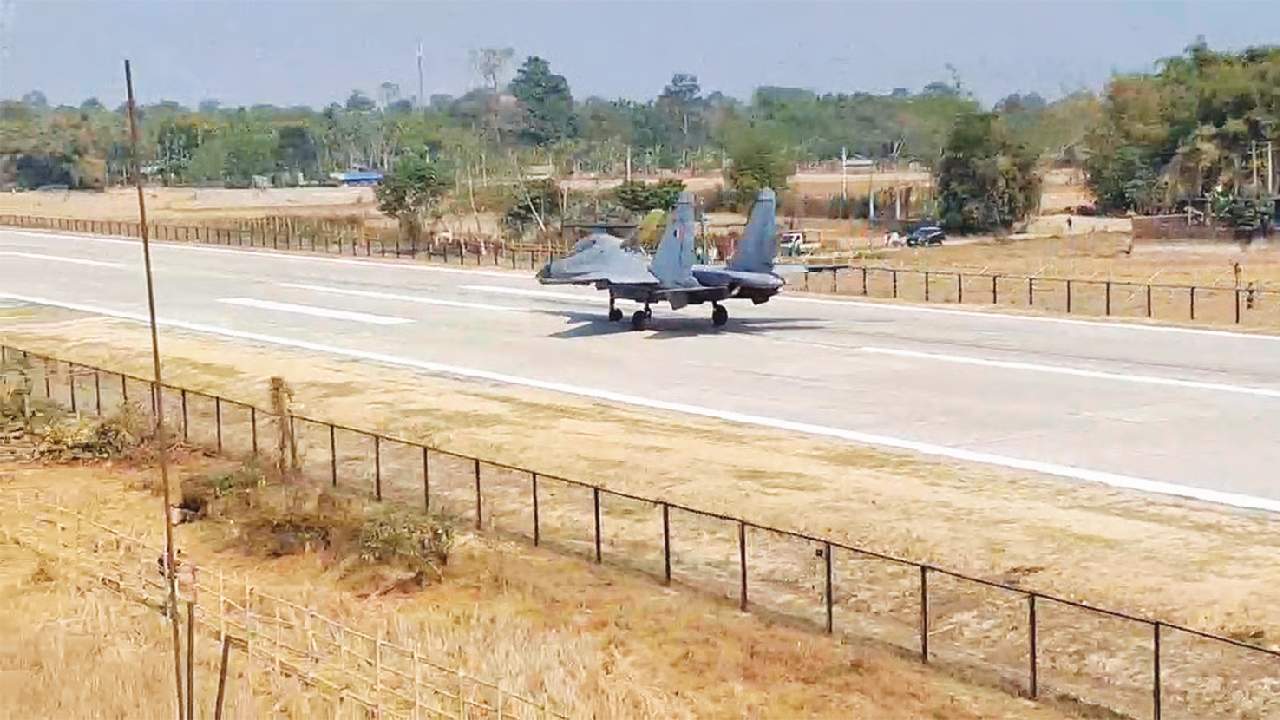
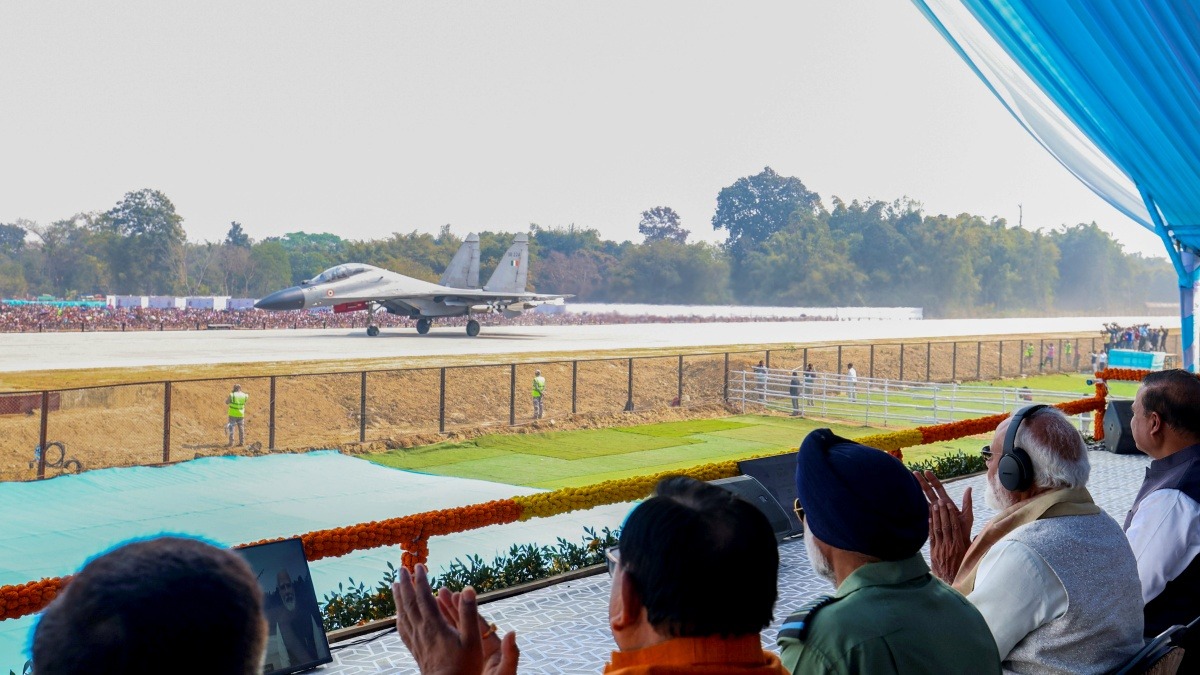
During the inauguration ceremony, the Prime Minister made a special landing at the new strip, highlighting its operational capability. The event included an impressive 40-minute aerial display by the Indian Air Force, featuring fighter jets, transport aircraft, and helicopters. The demonstration showed how the facility can support both military missions and emergency operations when needed.

What Is an Emergency Landing Facility?
An Emergency Landing Facility, or ELF, is a specially designed stretch of highway that can function as a temporary runway for aircraft. These airstrips are constructed with strong surfaces, precise dimensions, and safety features that allow planes to land and take off even outside conventional airports.
The Moran facility is the first of its kind in Northeast India, a region that holds high strategic importance due to its location near international borders. In situations where regular airbases are unavailable, damaged, or overcrowded, such highway strips can provide an alternative landing option.
This kind of infrastructure reflects India’s growing focus on dual-use projects facilities that serve both civilian needs and defence requirements. It also improves preparedness for emergencies such as natural disasters, rescue missions, or urgent supply operations.
Key Features of the Moran Facility
The Moran Emergency Landing Facility is about 4.2 kilometres long, making it suitable for a wide range of aircraft. Built at an estimated cost of around ₹100 crore, the project uses advanced engineering to ensure durability and safety.
One of the most important aspects of the facility is its ability to handle heavy aircraft. Fighter jets weighing up to 40 tonnes can operate from the strip, while transport aircraft with a maximum take-off weight of around 74 tonnes can also use it. This allows the facility to support troop movement, equipment transport, medical evacuation, and relief operations.
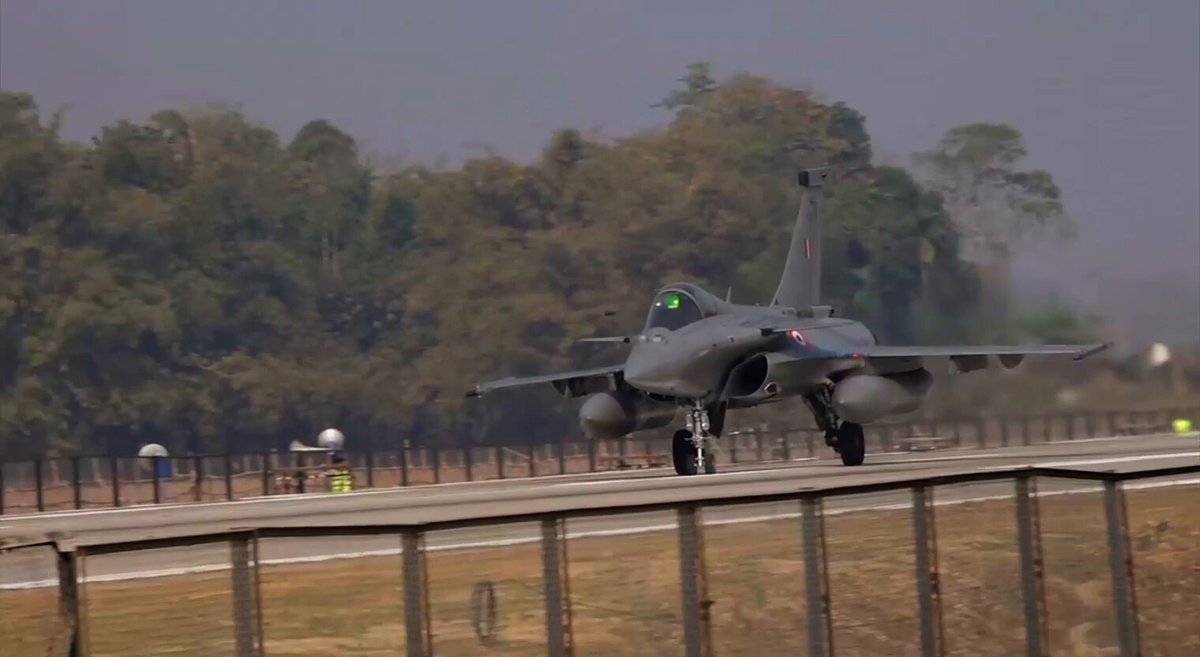
During the inauguration, advanced fighter aircraft such as the Sukhoi Su-30MKI and Dassault Rafale successfully operated from the airstrip. Their smooth landing and take-off demonstrated that the facility is fully ready for real-world use.
Special surface treatment ensures that the runway can withstand heavy loads and repeated use without damage. Safety zones, lighting arrangements, and support infrastructure have also been incorporated to meet operational standards.
Strategic Importance for National Security
Northeast India plays a vital role in the country’s defence strategy because of its proximity to several international borders. Quick movement of aircraft in this region can be crucial during security situations or humanitarian missions.
The Moran ELF enhances rapid deployment capability, allowing forces to respond quickly to unexpected events. It provides flexibility by adding another operational point beyond traditional airbases. This can be particularly useful if existing bases are temporarily unavailable or under pressure.
Such facilities are part of a broader effort to strengthen infrastructure in border regions. Improved connectivity, communication, and mobility help ensure that remote areas remain well protected and integrated with the rest of the country.
Support During Natural Disasters
Apart from defence uses, the facility is expected to play a major role in disaster management. Assam and other Northeastern states frequently face floods, landslides, and earthquakes. In many cases, road connectivity gets disrupted, making air access essential for relief operations.
With the Moran airstrip, aircraft carrying food, medicines, rescue teams, and equipment can land quickly even if nearby airports are not operational. It also allows injured people to be evacuated to better medical facilities without delay.
Rapid response is often the difference between life and death during disasters. By reducing travel time and improving accessibility, the facility strengthens the region’s ability to cope with emergencies.
Boost to Civil-Military Cooperation
The project highlights close coordination between civilian authorities and the armed forces. Built on a public highway but designed for military use, the facility reflects an integrated approach to infrastructure development.
Such cooperation ensures that resources are used efficiently while maintaining readiness for unexpected situations. It also demonstrates how modern infrastructure can serve multiple purposes without disrupting daily life.
When not in use for aircraft operations, the highway functions normally for vehicles. Special arrangements allow it to be quickly cleared and prepared whenever needed.
Development Projects Alongside the Inauguration
The inauguration of the Moran Emergency Landing Facility was part of a wider set of development initiatives in Assam. Several projects aimed at improving connectivity, digital infrastructure, and education were also announced or launched.
A new National Data Centre for the Northeastern region is expected to strengthen digital services and governance. In addition, the establishment of Indian Institute of Management Guwahati aims to expand higher education opportunities and support economic growth in the region.
Urban mobility improvements and road projects are also underway, reflecting a broader push to modernize infrastructure across the Northeast. These efforts are intended to boost trade, tourism, and employment while improving quality of life.
Impact on Regional Growth
Infrastructure projects of this scale often bring long-term benefits beyond their primary purpose. Improved connectivity can attract investment, support local businesses, and create job opportunities. It also helps remote areas become more accessible for tourism and commerce.
For residents of Upper Assam, the new facility symbolizes progress and national attention to the region’s needs. It shows that strategic areas are being equipped with modern infrastructure comparable to other parts of the country.
Local communities have welcomed the development, seeing it as a step toward stronger integration with national growth plans.
A Milestone for Northeast India
The Moran Emergency Landing Facility represents a significant achievement for Assam and the entire Northeast. It combines defence preparedness, disaster resilience, and infrastructure development in a single project.
By enabling aircraft operations on a highway, the facility showcases innovative planning and engineering. It also reflects India’s commitment to strengthening critical infrastructure in regions that play a key role in national security and connectivity.
As the Northeast continues to develop rapidly, projects like this are likely to shape its future by improving safety, accessibility, and economic potential. The Moran ELF stands as a symbol of readiness, progress, and the growing importance of the region in India’s development journey.